Ascension Cathedral
Almaty, Kazakhstan
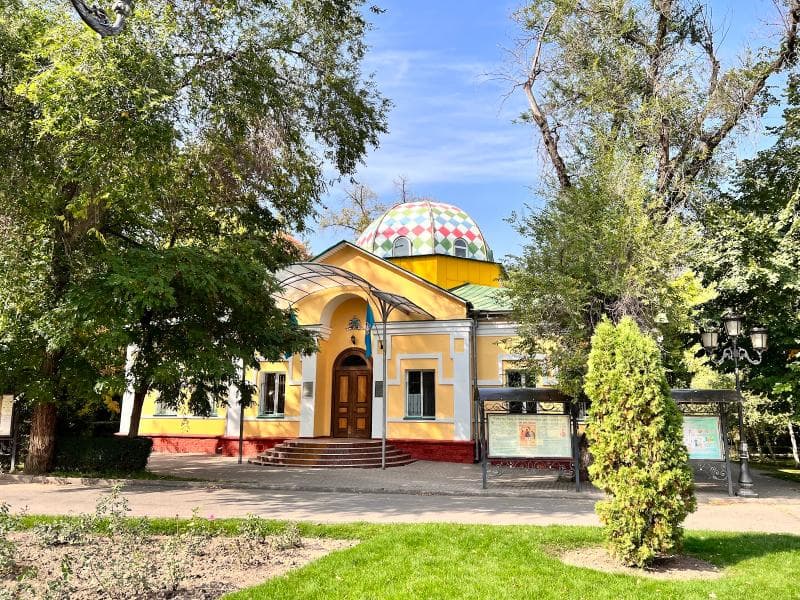
Discover Ascension Cathedral in Almaty, Kazakhstan – a stunning, colorful wooden Russian Orthodox church famous for surviving the 1911 earthquake. Explore its unique architecture and rich history.
Overview
Nestled within the tranquil expanse of Panfilov Park in Almaty, Kazakhstan, stands the majestic Ascension Cathedral, often affectionately known as Zenkov Cathedral. This vibrant Russian Orthodox church is an architectural marvel, renowned globally as one of the tallest wooden buildings in the world. Its striking, colorful facade and distinctive onion domes immediately capture attention, offering a captivating glimpse into both spiritual devotion and historical resilience in the heart of Central Asia. A visit here offers more than just a visual spectacle; it provides a journey into a rich cultural tapestry.
History & Cultural Background
The story of the Ascension Cathedral dates back to the early 20th century. Construction commenced in 1904 and concluded in 1907. Initially designed by Constantin Arkadyevich Borisoglebsky, the project was significantly influenced and overseen by regional engineer Andrei Pavlovich Zenkov, after whom the cathedral earned its popular alternative name. Built when Kazakhstan was part of the Russian Empire, the cathedral served the spiritual needs of the growing Russian Orthodox community in Almaty, then known as Verny. Its history reflects Kazakhstan's broader transformations; during the Soviet era, the cathedral faced suppression. In the 1920s, it was closed and repurposed, serving various secular functions such as a museum, an exhibition center, and even a concert hall. Remarkably, its bell tower housed Kazakhstan's first radio transmission center in the early 1930s. Following Kazakhstan's independence in 1991, the cathedral was returned to the Russian Orthodox Church, and extensive restoration efforts in the mid-1990s brought it back to its original glory as an active place of worship.
What Makes It Special
What truly sets the Ascension Cathedral apart is its extraordinary construction. Standing approximately 56 meters (184 feet) tall, it is recognized as one of the tallest wooden buildings globally. The entire structure is predominantly built from Tian Shan spruce, sourced from the surrounding mountainous forests, utilizing advanced carpentry techniques. A widely circulated belief is that it was constructed without a single metal nail, showcasing incredible traditional joinery. While some sources suggest a minimal number of metal fasteners were used in later renovations or decorative elements, the main load-bearing structure heavily relies on wooden fasteners and flexible joints. This innovative design proved revolutionary during the devastating 1911 Verny earthquake, which had a magnitude estimated between 7.7 and 8.0. The earthquake leveled most brick and adobe buildings in the city, yet the Ascension Cathedral stood nearly undamaged, experiencing only minor cracks or broken windows. Engineer Zenkov's ingenious use of flexible wooden joints and a special foundation designed to absorb seismic energy allowed the building to sway like a tree in the wind, making it an enduring symbol of engineering brilliance and resilience.
Stories, Fun Facts & Local Details
The miraculous survival of the Ascension Cathedral during the 1911 earthquake led many to attribute its endurance to divine intervention, though architectural historians credit Zenkov's masterful engineering. Its role as a radio station during the Soviet era is a curious chapter in its history, highlighting its adaptability through changing political landscapes. The cathedral's architecture is a fascinating blend of traditional Russian Orthodox styles, characterized by its onion domes and cross-shaped plan, with subtle local Central Asian influences visible in its decorative elements. The interior is as breathtaking as the exterior, adorned with stunning frescoes, gilded iconostases, and intricate wooden carvings, many of which were restored or brought from other churches. The use of vibrant colors – bright yellow walls, turquoise domes, and golden accents – gives the cathedral a distinctive, almost fairytale-like appearance against the lush greenery of Panfilov Park.
Visitor Perspective
Visiting the Ascension Cathedral offers a profound experience for any traveler. Located within the serene Panfilov Park, it provides a peaceful escape from the bustling city. The park itself is ideal for leisurely strolls, featuring monuments and green spaces that complement the cathedral's beauty. Inside, the atmosphere is one of serene reverence, filled with the scent of incense and illuminated by light filtering through its many windows, creating a tranquil environment for contemplation. As an active place of worship, visitors are encouraged to dress modestly, covering shoulders and knees, and women are often advised to cover their heads with a scarf as a sign of respect. Photography is generally allowed, but visitors should be mindful and respectful of ongoing services and those who are there for worship. There is no entrance fee, though donations are appreciated, making it an accessible and enriching cultural stop in Almaty.
Coordinates: 76.9532, 43.2588
View on Google Maps💬 How Travelers Describe This Place
Based on community votes
Beautiful
982Interesting
876Photogenic
648Unique
235Must See
197
Traveler Stories
Discover memorable experiences shared by travelers who have visited this place.
No traveler stories yet.
Be the first traveler to share what made this place memorable.
Things to see at Ascension Cathedral



Tour
By
Spot
Discover amazing places around the world. Your journey starts here.
Explore
© 2026 TourBySpot. All rights reserved.