Main Cathedral Hall
Almaty, Kazakhstan
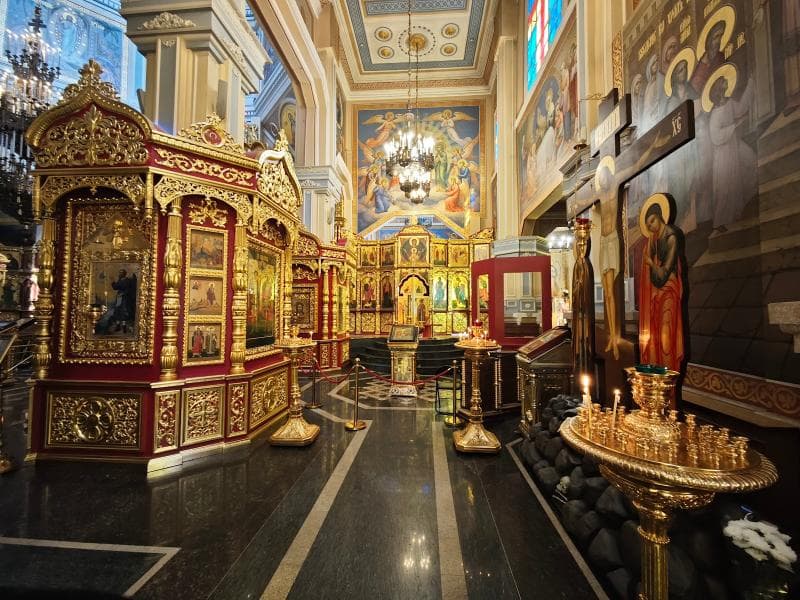
Explore the vibrant Main Cathedral Hall of Ascension Cathedral in Almaty, Kazakhstan, a nail-less wooden marvel boasting stunning frescoes and rich history.
Overview
Stepping into the Main Cathedral Hall of the Ascension Cathedral in Almaty, Kazakhstan, is to enter a world where architectural ingenuity meets spiritual grandeur. This magnificent Russian Orthodox cathedral, often affectionately known as Zenkov Cathedral, stands as a vibrant testament to resilience and artistry in the heart of Panfilov Park. It's not just a place of worship; it's a living museum of history, engineering, and cultural fusion. The interior, bathed in a soft, ethereal light, immediately captivates with its intricate decorations and soaring wooden structure.
As one of the world's tallest wooden buildings, the cathedral's main hall reveals the genius of its early 20th-century builders. Visitors are welcomed into a spacious central nave that leads the eye towards the impressive altar and iconostasis. The vibrant frescoes, glistening gold, and detailed carvings within this hall tell stories of faith and tradition, offering a profound experience for both the devout and the curious traveler alike.
History & Cultural Background
The history of the Ascension Cathedral's main hall is intrinsically linked to the larger story of the cathedral itself, a tale of ambition and survival. Construction began in 1904 and was completed by 1907, designed by the prominent engineer Andrei Pavlovich Zenkov. What makes this structure, and consequently its main hall, particularly remarkable is its construction predominantly without metal nails, a method chosen for its flexibility in an earthquake-prone region. This unique building material, primarily local Tian Shan spruce, allowed the cathedral to famously withstand a devastating 7.7 to 8.0 magnitude earthquake in 1911, suffering only minor damage while most other buildings in the then-city of Verny (Almaty) were destroyed.
Culturally, the main hall served as a vital spiritual center for the Russian Orthodox community in Almaty. Its design reflects a beautiful blend of traditional Russian church architecture, characterized by its ornate details and onion domes, with subtle Central Asian influences. Over the decades, the hall witnessed significant transformations. During the Soviet era, religious services were banned, and the cathedral was repurposed, at various times serving as a museum, an exhibition center, and even a concert hall. Its bell tower even housed the city's first radio transmitters. Following Kazakhstan's independence, the cathedral was returned to the Russian Orthodox Church in 1995 and underwent extensive restoration, allowing its main hall to regain its original spiritual splendor.
What Makes It Special
The Main Cathedral Hall is an unparalleled display of craftsmanship and spiritual devotion. At its heart lies a grand, multi-tiered iconostasis, a screen adorned with intricately painted icons, shimmering gold leaf, and often embedded with precious stones that catch the light. This breathtaking focal point separates the sanctuary from the main body of the church, drawing the eye upwards.
Above, the towering ceiling and central dome are alive with vibrant frescoes depicting biblical scenes, many of which were painted by the renowned local artist and ethnographer Nikolay Khludov. The wooden structure itself, primarily crafted from resilient Tien Shan spruce, is an engineering marvel. Zenkov's innovative 'seismic basket' design, utilizing flexible joints, allowed the building to sway with seismic movements rather than collapse, a principle beautifully demonstrated in its earthquake survival. The interior is divided into three main aisles or chapels: the central one dedicated to the Ascension of Christ, the southern to the Annunciation of the Virgin Mary, and the northern to Saints Faith, Hope, Charity, and their mother Sophia, the patron saints of Semirechie.
Stories, Fun Facts & Local Details
The Nail-less Wonder: While widely celebrated as being built entirely without nails, historical accounts suggest that while the main structural framework relied on advanced carpentry techniques and wooden fasteners, a small number of metal elements were used in later renovations or decorative sections. Nonetheless, the predominant use of wood without metal fasteners remains a remarkable feat.
Dancing in the Quake: Engineer Zenkov himself noted with awe that during the catastrophic 1911 earthquake, the cathedral's bell tower swayed 'like the top of a tall tree in a high wind,' bending but not breaking. This vivid description captures the incredible flexibility and durability of its wooden construction.
A Symbol of Harmony: In a country with a Muslim majority, the enduring presence and active use of the Ascension Cathedral, particularly its vibrant main hall, stands as a powerful symbol of cultural diversity and religious coexistence in Kazakhstan.
Hidden Voices: During its period as the Central State Museum of the Kazakh Soviet Socialist Republic, the cathedral's bell tower housed the first radio transmitters in Almaty, briefly turning a spiritual beacon into a communication hub.
Visitor Perspective
For visitors, entering the Main Cathedral Hall is an immersive experience. The quiet reverence often found within its walls, combined with the visual feast of its art and architecture, creates a peaceful atmosphere for contemplation. Standing in the central nave, looking up at the high, painted dome and the massive, suspended chandeliers, one can truly appreciate the scale and intricacy of the building. The golden iconostasis, with its detailed holy icons, beckons attention, inviting a moment of reflection.
While photography is generally permitted inside, visitors are encouraged to be mindful and respectful, especially during services, often avoiding flash. The vibrant colors of the interior, the warm glow of the wood, and the detailed imagery are best absorbed slowly, allowing the stories and spirit of the place to unfold. Situated within the serene Panfilov Park, the cathedral offers not just an internal sanctuary but also a beautiful external setting, making a visit to its main hall a deeply enriching part of any journey to Almaty.
Coordinates: 76.9531, 43.2588
View on Google Maps💬 How Travelers Describe This Place
Based on community votes
Photogenic
912Beautiful
875Interesting
820Unique
718Must See
648
Traveler Stories
Discover memorable experiences shared by travelers who have visited this place.
No traveler stories yet.
Be the first traveler to share what made this place memorable.

Tour
By
Spot
Discover amazing places around the world. Your journey starts here.
Explore
© 2026 TourBySpot. All rights reserved.