Historic Plaques
Almaty, Kazakhstan
Discover the unique wooden Ascension Cathedral (Zenkov Cathedral) in Almaty, Kazakhstan, renowned for surviving an earthquake without nails.
Overview
Nestled within the serene embrace of Panfilov Park in Almaty, Kazakhstan, stands the majestic Ascension Cathedral, often affectionately known as Zenkov Cathedral. This vibrant Russian Orthodox church is not merely a place of worship; it is a profound testament to architectural ingenuity and historical resilience. Constructed entirely from wood, with a remarkable claim of being built without metal nails in its primary structure, it is one of the tallest wooden buildings in the world. Its colorful domes and intricate designs offer a captivating sight, inviting travelers to delve into a story woven from faith, engineering, and cultural transformation.
History & Cultural Background
The story of the Ascension Cathedral began in the early 20th century, with construction taking place between 1904 and 1907. Designed by engineer Andrei Pavlovich Zenkov, who oversaw the project and made significant additions to an earlier design, the cathedral was intended to serve Almaty's burgeoning Russian Orthodox community. At the time, Almaty was known as Verny and was part of the Russian Empire. This period saw the blending of cultures, a characteristic that the cathedral itself embodies through its architectural style. After the Russian Revolution, like many religious institutions, the cathedral faced a dramatic shift in its purpose. From 1927, it was closed to worship and repurposed during the Soviet era. It served various secular functions, including housing the Central State Museum of the Kazakh Soviet Socialist Republic, an exhibition center, and even a concert hall. Its belfry notably hosted Almaty's first radio transmitters. Following Kazakhstan's independence in 1991, the cathedral was returned to the Russian Orthodox Church in 1995, and extensive restoration efforts were undertaken to reinstate its religious significance and restore its original splendor.
What Makes It Special
The Ascension Cathedral's enduring appeal lies in its extraordinary construction and its remarkable ability to defy natural disasters. Standing at 56 meters tall, it is recognized as one of the world's tallest wooden structures. What truly sets it apart is the widespread belief that its main framework was built without a single metal nail, employing traditional joinery techniques and wooden fasteners. While some later renovations and decorative elements might involve minor metal parts, the core structure's reliance on wood exemplifies an advanced carpentry skill from its era. This unique construction was not merely an aesthetic choice; it was a stroke of genius by Zenkov. He incorporated a 'seismic basket' design, allowing the flexible wooden beams to sway and absorb the shock of earthquakes. This innovative engineering was put to the ultimate test shortly after its completion.
Stories, Fun Facts & Local Details
The most compelling story associated with the Ascension Cathedral is its miraculous survival of the devastating 1911 Almaty earthquake. This powerful tremor, estimated between 7.7 and 8.0 magnitude, leveled most brick buildings in the city, then known as Verny. Yet, the wooden cathedral stood firm with only minor damage, such as broken windows or slight cracks, earning it a legendary status. Locals and many bishops at the time attributed its survival to divine intervention, while engineer Zenkov himself noted with awe how the bell tower swayed 'like the top of a tall tree in a high wind, bent but unbroken'. The primary material for its construction, Tian Shan spruce, was sourced from the mountainous forests around Almaty, linking the building intimately with its natural surroundings. The cathedral's vibrant exterior, adorned with colorful onion domes and intricate patterns, reflects a blend of Russian Orthodox traditions with subtle Central Asian influences, making it a visual feast within the tranquil setting of Panfilov Park. Its dual nomenclature, 'Ascension Cathedral' and 'Zenkov Cathedral,' tells its own story, honoring both its spiritual dedication and the engineering marvel behind its creation.
Visitor Perspective
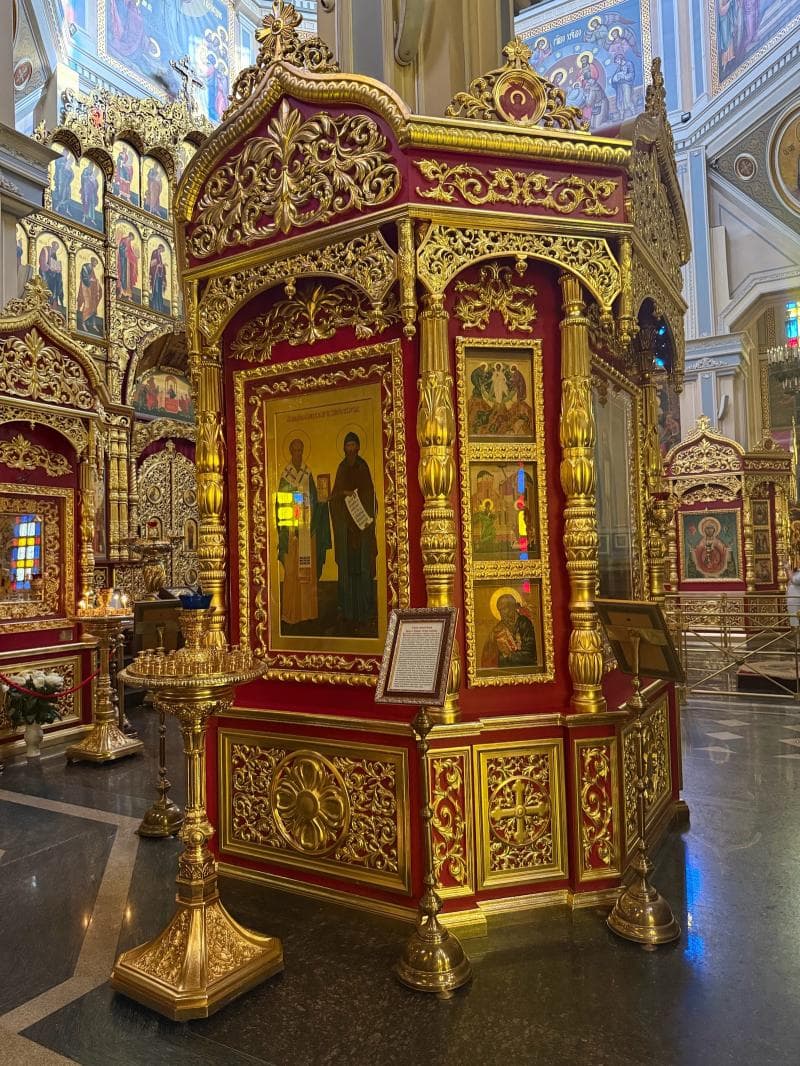
Visiting the Ascension Cathedral today offers a profound journey through history and spirituality. As an active Russian Orthodox church, it continues to serve its community, with religious ceremonies held regularly. Travelers can step inside to admire its breathtaking interior, adorned with restored icons and detailed frescoes that illustrate religious narratives. The atmosphere is one of serene reverence, providing a peaceful escape from the bustling city outside. Observing the intricate wooden carvings and the sheer scale of the interior space, which can accommodate up to 5,000 worshippers, offers a tangible connection to the craftsmanship and faith that built this monumental structure. Beyond its architectural grandeur, the cathedral stands as a powerful symbol of cultural diversity and religious coexistence in Kazakhstan, inviting visitors from all backgrounds to appreciate its unique heritage and the stories embedded within its very timbers.
Coordinates: 76.9532, 43.2588
View on Google Maps💬 How Travelers Describe This Place
Based on community votes
Unique
995Photogenic
839Beautiful
603Must See
581Interesting
388
Traveler Stories
Discover memorable experiences shared by travelers who have visited this place.
No traveler stories yet.
Be the first traveler to share what made this place memorable.

Tour
By
Spot
Discover amazing places around the world. Your journey starts here.
Explore
© 2026 TourBySpot. All rights reserved.