Prayer Rooms
Almaty, Kazakhstan
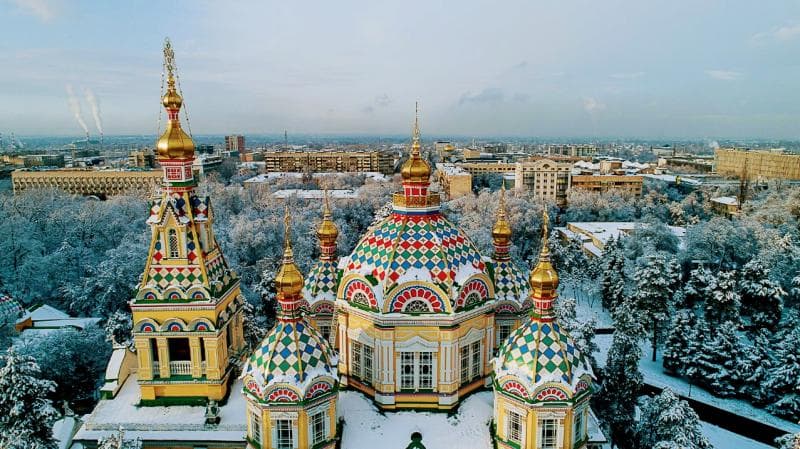
Explore Ascension Cathedral (Zenkov Cathedral) in Almaty, Kazakhstan – a stunning wooden marvel, earthquake survivor, and vibrant Orthodox prayer space.
Overview
Nestled within the peaceful expanse of Panfilov Park in Almaty, Kazakhstan, stands the majestic Ascension Cathedral, often affectionately known as Zenkov Cathedral. This vibrant Russian Orthodox cathedral is not merely an architectural marvel; it is a profound spiritual heart for the city's Orthodox community and a beacon of resilience. While visitors may inquire about specific 'prayer rooms', it is important to understand that the entire cathedral, with its awe-inspiring interior and serene atmosphere, functions as a grand space for prayer, contemplation, and religious services. As an active house of worship, it invites all who enter to experience its spiritual tranquility and witness centuries-old traditions unfold. Its striking wooden construction and colorful domes make it an unmissable landmark, drawing travelers from across the globe to admire its beauty and historical significance.
History & Cultural Background
The history of the Ascension Cathedral dates back to the early 20th century, with construction commencing in 1904 and concluding in 1907. Designed by engineer Andrei Pavlovich Zenkov, whose name it commonly bears, the cathedral was conceived with an extraordinary vision: to withstand the seismic activity prevalent in the region. A remarkable testament to this foresight occurred on January 3, 1911, when a massive earthquake, estimated between 7.7 and 8.0 magnitude, devastated much of Almaty (then known as Verny). While most brick and adobe structures crumbled, the wooden Ascension Cathedral stood firm, suffering only minor cracks. This miraculous survival cemented its legendary status and showcased the ingenuity of its construction. During the Soviet era, the cathedral faced a period of secularization. In the 1920s, it was closed and repurposed, serving at various times as a museum, a concert hall, and even housing Almaty's first radio transmitters in its belfry in the 1930s. Its bells were removed and melted down. Following Kazakhstan's independence in 1991, the cathedral was returned to the Russian Orthodox Church in 1995, undergoing extensive restoration to reclaim its sacred purpose and historical splendor.
What Makes It Special
What truly sets the Ascension Cathedral apart is its unique wooden construction. Standing at an impressive 56 meters tall, it is recognized as one of the tallest wooden structures in the world, built predominantly without metal nails in its main framework, utilizing advanced carpentry techniques and wooden fasteners. This method of construction, employing Tian Shan spruce from local mountainous forests, was key to its resilience against earthquakes, allowing the building to flex with tremors rather than collapse. The cathedral's exterior is a vibrant tableau of Russian Orthodox architectural styles, featuring bright, multi-colored facades, intricate patterns, and gleaming golden onion domes that sparkle against the Almaty skyline. Inside, visitors are greeted by an equally breathtaking display of artistry. The interior boasts stunning frescoes, detailed iconostasis (a screen adorned with icons), and beautifully restored icons, some brought from other churches. These elements combine to create a deeply spiritual and aesthetically rich environment, where the faithful gather for liturgies, prayers, and special ceremonies, making the entire edifice a living, breathing sanctuary.
Stories, Fun Facts & Local Details
A persistent, cherished legend surrounding the Ascension Cathedral claims it was built entirely without a single nail. While historical records and later renovations indicate the presence of some metal fasteners in certain sections, the vast majority of its primary wooden structure indeed relies on sophisticated interlocking joinery and wooden wedges. This ingenious technique not only contributed to its earthquake resistance but also adds to its mystique. Another fascinating detail is its role during the Soviet era; its use as a museum and even a radio transmission center inadvertently helped preserve the structure during a period when many religious buildings faced demolition. Today, the sounds of its bells, reinstalled in 1995, echo through Panfilov Park, calling the faithful to prayer and adding to the city's auditory tapestry. The cathedral's enduring presence in a country with a Muslim majority and a significant Orthodox Christian minority symbolizes Kazakhstan's cultural diversity and religious coexistence, standing as a historical witness to many transformations.
Visitor Perspective
For visitors, exploring the Ascension Cathedral offers a profound journey into history, architecture, and spirituality. Upon entering, one is immediately enveloped in an atmosphere of peace and reverence, a stark contrast to the bustling city outside. As an active place of worship, visitors are encouraged to maintain a respectful demeanor. Modest attire is recommended, and women may wish to cover their heads as is customary in Orthodox churches. Photography might be restricted or discouraged during services, so it is wise to observe and ask if unsure. While there are no specifically designated 'prayer rooms' in a separate sense, every corner of this magnificent cathedral serves as a space for quiet reflection and prayer for Orthodox believers. Attending a service, even as an observer, can be a deeply moving cultural experience, offering a glimpse into the vibrant spiritual life of Almaty. The cathedral's central location within Panfilov Park also makes it an ideal starting point for further exploration of Almaty's attractions, providing a tranquil escape in the heart of the city.
Coordinates: 76.95311, 43.25879
View on Google Maps💬 How Travelers Describe This Place
Based on community votes
Unique
445Interesting
416Must See
289Beautiful
141Photogenic
33
Traveler Stories
Discover memorable experiences shared by travelers who have visited this place.
No traveler stories yet.
Be the first traveler to share what made this place memorable.

Tour
By
Spot
Discover amazing places around the world. Your journey starts here.
Explore
© 2026 TourBySpot. All rights reserved.