Acropolis Of Athens
Athens, Greece
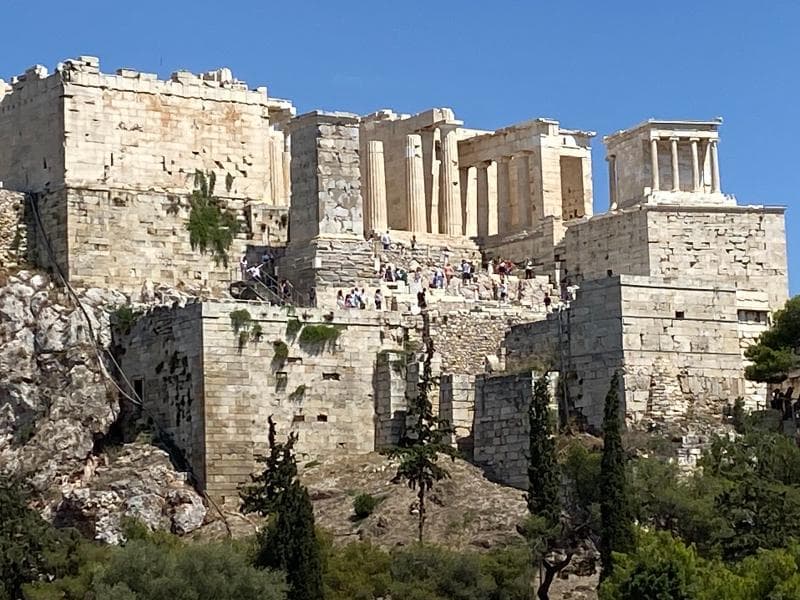
Explore the Acropolis of Athens, Greece, a UNESCO World Heritage site featuring the iconic Parthenon. Discover its rich history and cultural significance.
Overview
Perched majestically on a rocky outcrop high above the modern city, the Acropolis of Athens in Greece is an ancient citadel renowned worldwide. Its name, derived from the Greek words 'akros' (highest point) and 'polis' (city), perfectly describes its commanding position. While many ancient Greek cities had their own acropoleis, the Athenian Acropolis stands as the most famous and significant example.
This iconic UNESCO World Heritage site is a monumental complex that houses some of the most enduring symbols of classical antiquity, including the Parthenon, the Erechtheion, the Propylaea, and the Temple of Athena Nike. It is not merely a collection of ancient ruins, but a powerful emblem of ancient Greek civilization, democracy, and the ideals that have profoundly shaped the Western world.
History & Cultural Background
The history of the Acropolis stretches back thousands of years, with evidence of habitation dating to the Neolithic Age. By the Mycenaean period around 1700 BCE, it had evolved into a fortified citadel and sacred site. However, the Acropolis truly entered its 'Golden Age' in the 5th century BCE, under the visionary leadership of the statesman Pericles. Following the destruction wrought by the Persian invasion in 480 BCE, which saw earlier temples burned, a massive rebuilding program was initiated.
The structures we admire today, primarily constructed in the latter half of the 5th century BCE, were dedicated to Athena, the patron goddess of Athens. This period marked the apex of classical Greek architectural development and served as a testament to Athens' power, wealth, and cultural supremacy after their victory in the Greco-Persian Wars. Over centuries, the Acropolis adapted to various occupiers, serving as a Christian church under Byzantine rule and later a mosque during the Ottoman Empire. The Parthenon, for instance, was used as a church dedicated to the Virgin Mary before its conversion into a mosque. Tragically, a Venetian bombardment in 1687 caused severe damage to the Parthenon, which was being used to store gunpowder at the time.
What Makes It Special
The Acropolis of Athens is recognized as 'the most striking and complete ancient Greek monumental complex' still in existence. Its exceptional influence on architecture and art globally is immense. The structures here represent the supreme expression of adapting architecture to a natural site, creating a perfectly balanced monumental landscape.
The Parthenon, a masterpiece of the Doric architectural order, is a prime example of this genius. The use of glistening white Pentelic marble from nearby Mount Pentelicus for its construction, along with intricate sculptures and friezes depicting mythological scenes, showcased Athens' artistic prowess. The Propylaea, the monumental gateway, and the Erechtheion, with its distinctive Caryatid columns, further exemplify the ingenuity and aesthetic sensibilities of ancient Greek builders and artists. The Acropolis stands as a tangible link to the origins of democracy, philosophy, and freedom of expression, providing an intellectual and spiritual foundation for the contemporary world.
Stories, Fun Facts & Local Details
- For a long time, the Acropolis hill was known as 'Cecropia', named after the legendary mythical king Cecrops, who was believed to be the first Athenian king.
- Contrary to its current appearance, the buildings of the Acropolis, including the Parthenon, were once vibrantly painted in bold blues, reds, and yellows. The statues also gleamed with bronze, gold, and precious stones, a striking contrast to the bare marble seen today.
- The Parthenon, while a temple dedicated to Athena, primarily functioned as a treasury, housing Athens' wealth and important gold and ivory statues. It was not a place for public worship in the same way other Greek temples were.
- The six famous Caryatid statues supporting the porch of the Erechtheion are actually replicas; five of the originals are preserved in the Acropolis Museum, and one is in the British Museum, removed to protect them from environmental damage.
- A lesser-known fact is the presence of the Cave of Zeus on the northern slope of the Acropolis, a shrine older than the Parthenon itself, where ancient Greeks made offerings to Zeus and Pan.
- The Panathenaic procession, Athens' most significant festival, would culminate at the Acropolis, where a new wool robe ('peplos') was ritually placed on a statue of Athena.
Visitor Perspective
Visiting the Acropolis is an unforgettable journey through time, but preparation enhances the experience. The site is situated on a rocky hill, approximately 150 meters (492 feet) above sea level, and requires walking uphill as there is no lift. Therefore, wearing comfortable, sturdy shoes with good grip is essential, as the ancient marble pathways can be surprisingly slippery, especially when polished by millions of visitors.
To avoid large crowds and the strong Greek sun, it's highly recommended to visit either early in the morning right after opening or late in the afternoon. Bringing water, sunscreen, and a hat is crucial, particularly during warmer months, as there is minimal shade on the site. Allocate at least two to three hours to thoroughly explore the Acropolis, allowing time to absorb the history and admire the architectural details without feeling rushed. Many visitors find that a trip to the nearby Acropolis Museum afterward provides valuable context and a deeper understanding of the artifacts found on the hill.
Coordinates: 23.72611, 37.97167
View on Google Maps💬 How Travelers Describe This Place
Based on community votes
Unique
996Photogenic
673Beautiful
585Interesting
143Must See
69
Traveler Stories
Discover memorable experiences shared by travelers who have visited this place.
No traveler stories yet.
Be the first traveler to share what made this place memorable.
Things to see at Acropolis Of Athens



Tour
By
Spot
Discover amazing places around the world. Your journey starts here.
Explore
© 2026 TourBySpot. All rights reserved.