Erechtheion
Athens, Greece
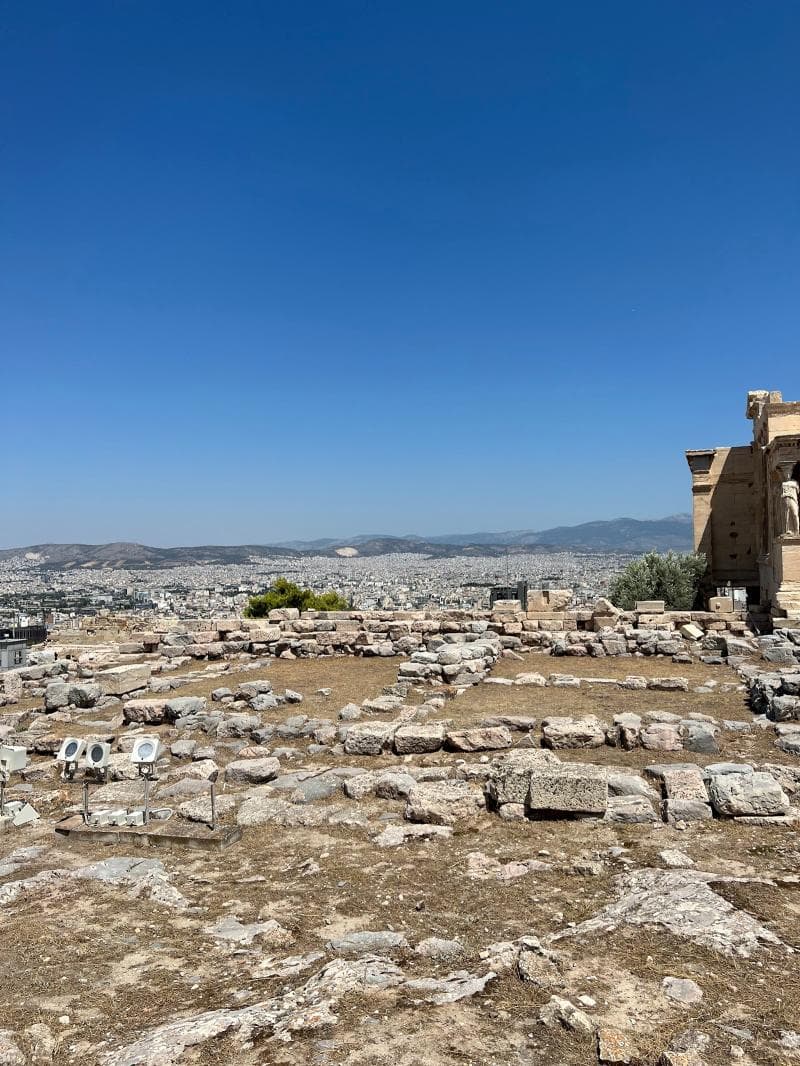
Explore the Erechtheion in Athens, Greece – a unique ancient Greek temple on the Acropolis, famed for its Caryatids and rich mythology.
Overview
Perched gracefully on the sacred rock of the Acropolis in Athens, Greece, the Erechtheion stands as a profound testament to ancient Greek ingenuity and spiritual devotion. Unlike its more symmetrical neighbor, the Parthenon, the Erechtheion is renowned for its distinctive, asymmetrical design and the intricate array of sacred elements it was built to protect. This Ionic temple, constructed from exquisite Pentelic marble, is not dedicated to a single deity but rather served as a multi-purpose sanctuary honoring several gods and mythical heroes, primarily Athena Polias and Poseidon-Erechtheus. Its most iconic feature, the graceful Porch of the Maidens, with its six sculpted female figures known as Caryatids, instantly captivates visitors, offering a unique blend of architectural support and artistic expression.
History & Cultural Background
The Erechtheion's construction unfolded between 421 and 406 BCE, forming a crucial part of Pericles' ambitious building program to restore the Acropolis after its destruction during the Persian Wars. It was erected on a site considered among the most sacred on the Acropolis, replacing an older temple dedicated to Athena Polias. The temple's unique layout was largely dictated by the need to incorporate several revered relics and locations of mythical significance into its structure. It housed the ancient wooden cult statue of Athena Polias and shrines dedicated to Poseidon-Erechtheus, Hephaistos, and the hero Boutes. Over the centuries, the Erechtheion endured damage, notably from Roman general Sulla's siege in the 1st century BCE, and underwent various transformations, serving as a Byzantine church, a palace for Frankish bishops, and even a residence for a Turkish garrison commander's harem.
What Makes It Special
The Erechtheion's individuality stems from its deliberate departure from the standard symmetrical plans of most Greek temples. Its complex, multi-level design ingeniously adapted to the uneven terrain of the Acropolis and the diverse sacred sites it encompassed. Constructed in the Ionic order, it provides a striking contrast to the Doric Parthenon, showcasing slender fluted columns with ornate volute capitals. However, the unquestionable highlight is the Porch of the Maidens, or Caryatid Porch, where six elegant female figures stand as supporting columns. Each Caryatid, carved from Pentelic marble, exhibits subtle individual differences in their drapery, posture, and facial features, giving them a lifelike quality. Five of the original Caryatids are now safely preserved in the Acropolis Museum, while the sixth resides in the British Museum. The ones currently seen on the Erechtheion are meticulously crafted replicas, protecting the originals from environmental damage.
Stories, Fun Facts & Local Details
The Erechtheion is steeped in Athenian myth and legend. It marks the very spot where, according to tradition, Athena and Poseidon vied for the patronage of the city. Poseidon struck the rock with his trident, creating a saltwater spring (the 'Erechtheion Sea'), while Athena produced the first olive tree, a symbol of peace and prosperity. The Athenians chose Athena as their patron, and the olive tree near the temple commemorates her victory. Within the temple's grounds were also said to be the trident marks of Poseidon, the tomb of the mythical King Kekrops, and a sacred snake representing the spirit of Kekrops, whose well-being was vital for the city's safety. The name 'Erechtheion' itself is derived from Erechtheus, a mythical king of Athens, linking the structure to the city's legendary rulers. The Caryatids, originally known as 'Korai' (maidens), are sometimes believed to represent the women of Karyai, a town in Laconia, or priestesses of Artemis Caryatis, famous for their beauty and ritual dances. The single Caryatid in the British Museum is often affectionately referred to by Greeks as 'the Lost Sister,' highlighting ongoing cultural discussions about repatriation.
Visitor Perspective
Experiencing the Erechtheion is an essential part of any visit to the Acropolis. As it is part of the larger Acropolis archaeological site, a single admission ticket grants access. To fully appreciate its historical and cultural depth, many visitors find it beneficial to explore the Acropolis Museum first. The museum houses five of the original Caryatids and provides invaluable context for the monuments on the hill. Walking around the Erechtheion allows for a deep appreciation of its architectural complexity and the intricate details of the Caryatids. It's advisable to visit during the early morning or late afternoon, especially outside the peak summer months, to avoid crowds and the intense Athenian heat. Comfortable footwear is a must for navigating the uneven pathways of the Acropolis. While food and large bags are generally not permitted on the site, water and sun protection are highly recommended.
Coordinates: 23.7265, 37.9721
View on Google Maps💬 How Travelers Describe This Place
Based on community votes
Beautiful
826Must See
387Unique
242Photogenic
125Interesting
82
Traveler Stories
Discover memorable experiences shared by travelers who have visited this place.
No traveler stories yet.
Be the first traveler to share what made this place memorable.

Tour
By
Spot
Discover amazing places around the world. Your journey starts here.
Explore
© 2026 TourBySpot. All rights reserved.