Parthenon
Athens, Greece
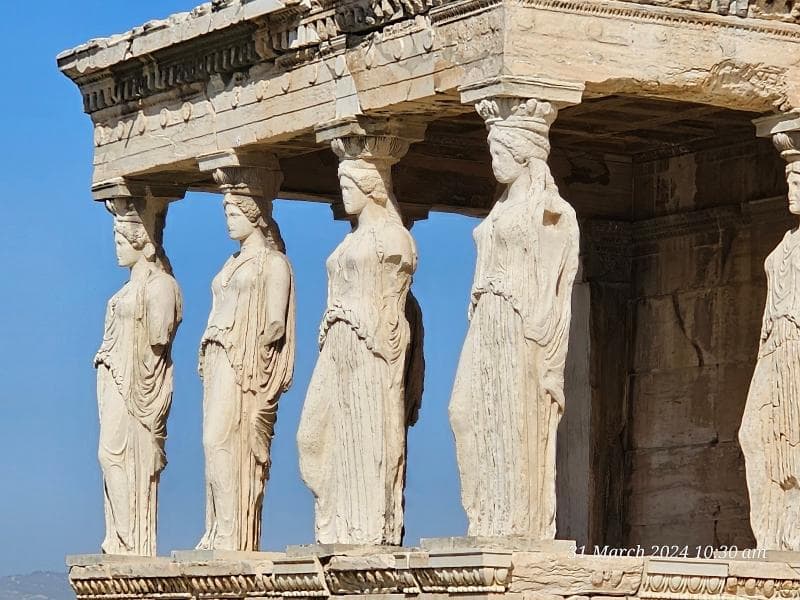
Explore the Parthenon, the iconic ancient temple on the Acropolis of Athens, Greece. Discover its rich history, architectural marvels, and cultural significance.
Overview
Perched majestically atop the Acropolis, the Parthenon stands as an enduring symbol of ancient Greek civilization, democracy, and artistic achievement. Located in Athens, Greece, this iconic Doric temple, dedicated to the goddess Athena, has overlooked the city for over 2,400 years. Its striking white marble structure is visible from many vantage points across Athens, a testament to its commanding presence and historical significance. A UNESCO World Heritage Site, the Parthenon is not merely a ruin but a profound architectural and cultural masterpiece that continues to captivate visitors worldwide.
History & Cultural Background
The Parthenon's story is deeply intertwined with the glory of 5th-century BCE Athens, often referred to as its Golden Age. Construction began in 447 BCE and was largely completed by 432 BCE, a remarkably swift undertaking for a structure of its scale. It was commissioned by the statesman Pericles as part of an ambitious building program to rebuild the Acropolis following its destruction by the Persians in 480 BCE. More than just a temple, the Parthenon served multiple critical roles. Its primary purpose was to honor Athena Parthenos, the patron goddess of Athens, and it once housed a colossal 12-meter-high statue of the goddess, crafted from gold and ivory by the famed sculptor Pheidias. Beyond its religious significance, it also functioned as the city's treasury, safeguarding offerings and the funds of the Delian League. Over centuries, the Parthenon underwent several transformations; it was converted into a Christian church dedicated to the Virgin Mary in the 6th century AD and later into a mosque after the Ottoman conquest. Despite numerous conflicts, including being used as a munitions dump and suffering damage from a Venetian bomb in 1687, extensive restoration efforts continue to this day, preserving its grandeur.
What Makes It Special
The Parthenon is celebrated as the pinnacle of Doric architectural order, renowned for its harmonious proportions and sophisticated 'optical refinements'. Constructed entirely from dazzling white Pentelic marble, sourced from nearby Mount Pentelicus, the temple's design incorporates subtle curvatures and inclinations that correct visual distortions, making straight lines appear perfectly straight to the human eye. For instance, the columns subtly bulge in the middle (entasis), and the corner columns are slightly wider and closer together, while the platform on which it stands is gently curved upwards. These meticulous details, which required immense precision and skill from architects Iktinos and Kallikrates and sculptor Pheidias, give the impression of absolute perfection and lightness, defying the massive scale of the structure. Its decorative sculptures, including the frieze depicting the Panathenaic procession and the mythical scenes on the pediments and metopes, are considered masterpieces of Classical Greek art, showcasing unparalleled artistry and narrative skill.
Stories, Fun Facts & Local Details
Before the current Parthenon, there was an older, unfinished temple dedicated to Athena on the same site, which was destroyed during the Persian Wars. The Parthenon we see today was built directly upon its foundations. The name 'Parthenon' itself is believed to derive from the Greek word 'parthenos', meaning 'maiden' or 'virgin', likely referring to the cult of Athena Parthenos and specifically to the 'parthenon' (maiden's chamber) or the rear room of the temple where precious objects were stored. While today the Parthenon appears as pristine white marble, ancient texts and traces of paint reveal that its sculptures and architectural elements were once vividly painted in colors like blue and red, offering a much more vibrant appearance than we imagine. Many of the Parthenon's original sculptures, famously known as the Elgin Marbles, are now housed in the British Museum, while a significant collection of other decorative elements can be admired at the modern Acropolis Museum in Athens, offering a closer look at their intricate details.
Visitor Perspective
Visiting the Parthenon today is an awe-inspiring experience, connecting you directly with the grandeur of ancient Greece. While direct entry into the interior of the temple is not permitted to preserve the ancient structure, visitors can walk around its perimeter, marveling at its scale, architectural brilliance, and the surviving sculptural details. The Parthenon's Pentelic marble takes on different hues throughout the day, appearing bright white in the morning and glowing with rosy tones at sunset, making it a favorite subject for photographers and a dynamic sight to behold. The journey to the Parthenon involves a walk up the Acropolis hill, often through monumental gateways like the Propylaea. It is advisable to wear comfortable shoes and prepare for crowds, as it remains one of the most visited archaeological sites globally. Exploring the Parthenon is an essential part of any visit to Athens, offering a tangible link to the city's rich history and its profound influence on Western civilization.
Coordinates: 23.726652224872726, 37.97149041997733
View on Google Maps💬 How Travelers Describe This Place
Based on community votes
Photogenic
872Interesting
846Must See
201Beautiful
121Unique
87
Traveler Stories
Discover memorable experiences shared by travelers who have visited this place.
No traveler stories yet.
Be the first traveler to share what made this place memorable.

Tour
By
Spot
Discover amazing places around the world. Your journey starts here.
Explore
© 2026 TourBySpot. All rights reserved.