Propylaea
Athens, Greece
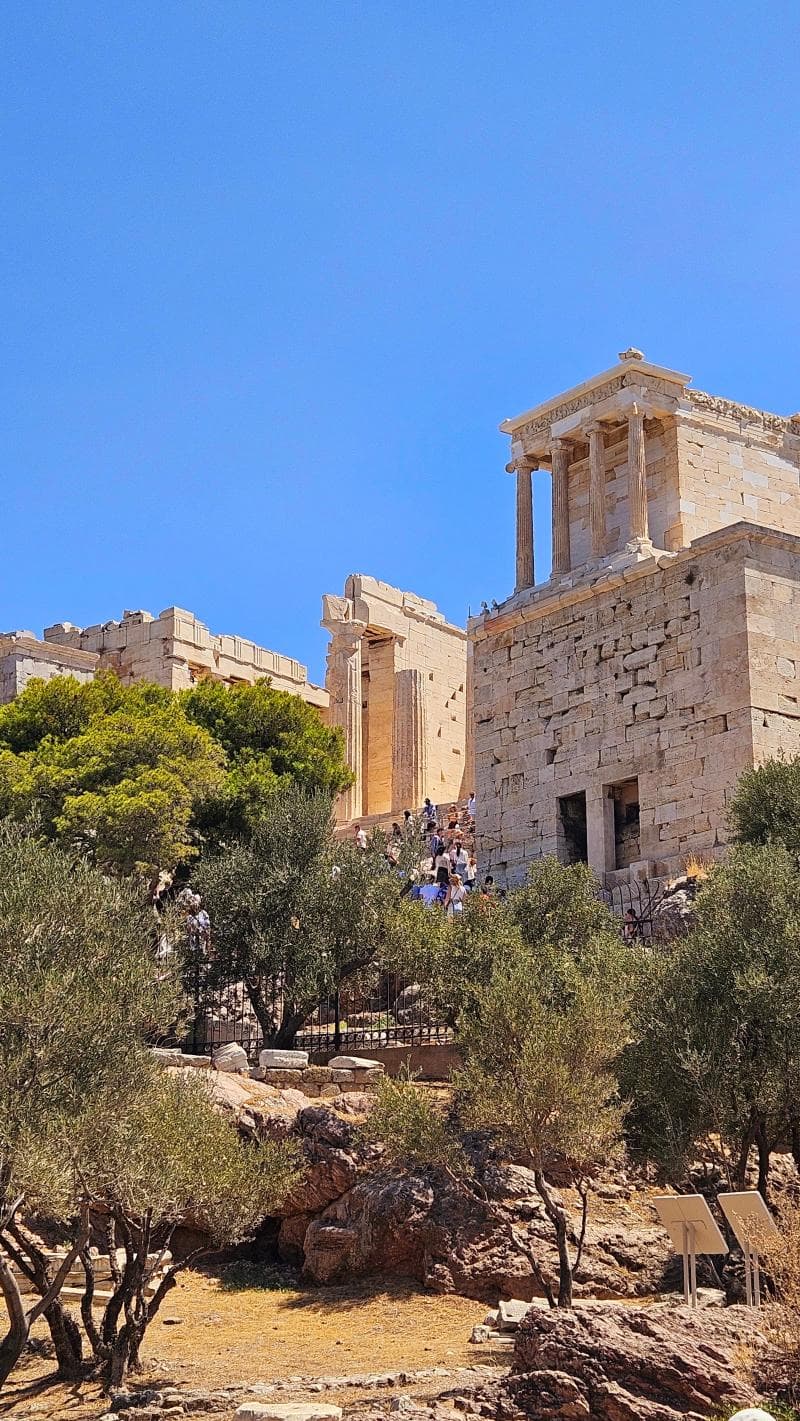
Discover the Propylaea, the monumental gateway to the Acropolis of Athens, Greece. Explore its history, unique architecture, and cultural significance.
Overview
As you approach the majestic Acropolis of Athens, your journey into ancient history begins not with the Parthenon, but with the Propylaea, its monumental gateway. Designed by the visionary architect Mnesicles, this grand structure served as the ceremonial entrance to the sacred precinct, welcoming pilgrims and visitors to the heart of ancient Athenian power and spirituality. Constructed during the Golden Age of Athens under Pericles, the Propylaea stands as a testament to the city's architectural prowess and ambition. It elegantly blends the sturdy Doric order with the more graceful Ionic, creating a visually compelling transition from the secular world below to the divine realm above.
Despite never being fully completed to its original ambitious design, its grandeur is undeniable, shaping the visitor's first impressions of the Acropolis. The name 'Propylaea' itself, derived from Greek words meaning 'before the gates,' perfectly encapsulates its function as the ultimate prelude to the wonders that lie beyond.
History & Cultural Background
The history of the Propylaea is deeply intertwined with the fluctuating fortunes of ancient Athens. Before the current structure, simpler gateways had marked the entrance to the Acropolis, dating back to Mycenaean times. The project for the grand Propylaea began in 437 BC, part of Pericles' ambitious building program to rebuild the Acropolis following its destruction during the Persian Wars. Mnesicles, identified by Plutarch as its architect, envisioned a symmetrical and awe-inspiring entrance.
A groundbreaking aspect of the Propylaea was its use of Pentelic marble throughout, making it the first secular building constructed entirely from this precious material, previously reserved for temples and religious structures. This choice made a powerful statement about the importance of the gateway itself. However, construction was abruptly halted by the outbreak of the devastating Peloponnesian War in 431 BC, leaving Mnesicles' grand vision unfinished. Over the centuries, the Propylaea underwent various modifications and served different purposes; during the Duchy of Athens in the Middle Ages, it even functioned as a palace. It suffered significant damage, notably from a powder magazine explosion in 1656, centuries after its original construction.
What Makes It Special
The Propylaea's uniqueness lies in its innovative architectural composition and its profound symbolic role. It masterfully combines two classical Greek architectural orders: the robust Doric columns adorn the exterior facades, while the more slender, ornate Ionic columns are found within the central hall. This blend was revolutionary for its time, showcasing a sophisticated design sensibility. The central hall featured a remarkably wide passage, specifically designed to accommodate the Panathenaic procession and its sacrificial animals, highlighting its function in major religious festivals.
Another distinctive feature was the Pinakotheke, located in the north wing, which served as an art gallery or reception hall. Here, according to the ancient traveler Pausanias, paintings depicting scenes from Athens' mythical and historical past were displayed, providing a resting place for VIP guests. The Propylaea's intricate system of five doors in the central section further emphasized the controlled and ceremonial passage into the sacred space.
Stories, Fun Facts & Local Details
Imagine stepping back in time, tracing the footsteps of ancient Athenians as they ascended to the Acropolis. The Propylaea wasn't just a gateway; it was a carefully orchestrated architectural experience. One fascinating detail lies in its deliberate incompleteness. The outbreak of the Peloponnesian War meant that Mnesicles' full plan, which included flanking wings, was never realized. This 'unfinished' state, however, tells its own powerful story about the unpredictable nature of history and human ambition.
According to the ancient writer Plutarch, a bronze statue of a lioness without a tongue, dedicated to Leaena, a mythological woman who resisted torture, once guarded the Propylaea. While you won't see this statue today, it speaks to the layers of history and legend embedded within the site. The Propylaea's ceilings were once adorned with painted coffers, possibly depicting golden stars on a blue background, adding to the grandeur of the entrance. It's a reminder that even utilitarian spaces in ancient Greece were often infused with beauty and symbolic meaning.
Visitor Perspective
Today, the Propylaea continues to fulfill its role as the grand entrance to the Acropolis, making it the first significant structure you encounter. As you ascend the gentle slope, passing through its massive Doric columns, you can almost hear the echoes of ancient processions. The scale of the architecture immediately conveys the immense importance of the site you are entering. To experience the Propylaea up close, you need an admission ticket to the Acropolis archaeological site, as it is integral to the main complex. Modern pathways guide you through the historic ruins, offering a tangible connection to a past era. Restoration efforts since 1984 have helped preserve its architectural integrity, allowing visitors to appreciate the intricate details and the ingenious blend of architectural styles. Standing within this ancient gateway, you gain a profound sense of anticipation for the wonders of the Acropolis that await just beyond.
Coordinates: 23.7217, 37.9697
View on Google Maps💬 How Travelers Describe This Place
Based on community votes
Must See
996Beautiful
726Unique
717Interesting
335Photogenic
22
Traveler Stories
Discover memorable experiences shared by travelers who have visited this place.
No traveler stories yet.
Be the first traveler to share what made this place memorable.

Tour
By
Spot
Discover amazing places around the world. Your journey starts here.
Explore
© 2026 TourBySpot. All rights reserved.