Acropolis Walls
Athens, Greece
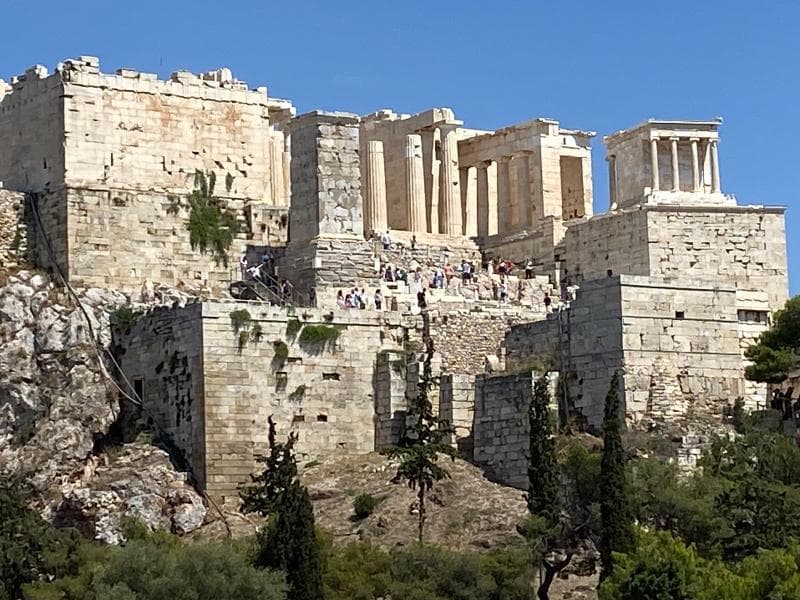
Explore the ancient Acropolis Walls in Athens, Greece, delving into their rich history, cultural significance, and what makes them a special part of this iconic UNESCO World Heritage Site.
Overview
Perched majestically above Athens, Greece, the Acropolis of Athens is a timeless symbol of classical civilization, and its ancient walls are an integral part of its enduring legacy. These impressive defensive structures, often referred to simply as the Acropolis Walls, encircle the sacred rock, defining its perimeter and safeguarding the magnificent temples and sanctuaries within. They are not merely boundary markers but tangible layers of history, speaking volumes about the site's strategic importance and the continuous efforts of its inhabitants to protect their cultural and religious heart. The Acropolis, including its formidable walls, proudly holds the designation of a UNESCO World Heritage Site, drawing visitors from across the globe to witness its grandeur and delve into millennia of human history.
History & Cultural Background
The history of the Acropolis Walls stretches back to prehistoric times, long before the classical marvels we see today. Archaeological evidence suggests that the rocky hill was inhabited as early as the Neolithic period, around 4000-3000 BC. The earliest significant fortification, a defensive wall, was constructed by the Mycenaeans in the 13th century BC, transforming the Acropolis into a formidable citadel and the center of a Mycenaean kingdom. Parts of this ancient Mycenaean wall are still preserved amidst later constructions, a testament to its enduring foundation.
The Acropolis later transitioned from primarily a fortified residence to a sacred precinct in the 8th century BC, establishing cults and religious festivals. A pivotal moment for the walls came in 480 BC when the Persians severely damaged the existing fortifications and structures. In the aftermath of this destruction, a new 2,500-foot circuit wall was erected in the 5th century BC, as part of the ambitious building program initiated by Pericles during Athens's Golden Age. Intriguingly, builders often incorporated fragments of the earlier, destroyed monuments into these new walls, embedding past glories and tragedies directly into the new defenses. Over subsequent centuries, various powers, including the Turks in 1686, undertook reinforcements and modifications, often repurposing materials to strengthen the ramparts in the face of new threats, further layering the history visible in these ancient stones.
What Makes It Special
The Acropolis Walls are more than just ancient stone; they are a profound embodiment of resilience and architectural evolution. They represent continuous efforts by various civilizations to protect what they held sacred, standing sentinel over Athens for thousands of years. As part of the Acropolis, they contribute to its status as a potent symbol of ancient Greek civilization, a beacon of democracy, and a foundational element of Western culture. These walls reflect the immense splendor, power, and wealth that Athens commanded during its 5th-century BC zenith.
Their enduring presence allows modern visitors to appreciate the strategic genius of ancient urban planning, as the natural defenses of the rocky outcrop were enhanced by meticulously constructed fortifications. Furthermore, the walls themselves hold a quiet beauty, often crafted from the same Pentelic marble as the grand temples, and they offer unparalleled panoramic vistas of the sprawling city of Athens below, connecting the ancient citadel to the vibrant modern metropolis. Their ongoing preservation involves advanced techniques, including optical fiber sensors to measure strain and monitor micromovements, showcasing a modern dedication to safeguarding these irreplaceable historical treasures.
Stories, Fun Facts & Local Details
Imagine standing where ancient Athenians once stood, guarding their city from invaders. The very stones of the Acropolis Walls could tell tales of countless sieges, triumphs, and transformations. One fascinating detail is the reuse of older, damaged building materials within the construction of the new walls after the Persian destruction. This practice, known as 'spolia,' meant that pieces of grand temples, once shattered by conflict, found new purpose as protective elements, literally rebuilding strength from ruin. This recycling was both practical and symbolic, demonstrating a determination to rebuild and overcome. The name 'Acropolis' itself is a compound of Greek words: 'akros' meaning 'highest' and 'polis' meaning 'city,' perfectly describing its elevated and commanding position. By the Classical Age, the Acropolis had fully transitioned to a sacred space, considered the dwelling place of the gods, far above the mundane world of mortals.
Visitor Perspective
For any traveler exploring the Acropolis, the walls are an omnipresent and awe-inspiring feature. As you ascend towards the Parthenon and other monuments, you are constantly aware of these ancient defenses that have protected the sacred space for millennia. Walking along pathways near the circuit walls provides a tangible connection to the past, allowing you to appreciate the scale of the fortified area and the formidable challenge it would have presented to any attacking force. From different vantage points along the walls, visitors are treated to breathtaking views of Athens, stretching out to the Saronic Gulf. It's advisable to wear sturdy shoes with good grip, as the ancient stone can be smooth and slippery in places, ensuring a comfortable and safe exploration of this historic perimeter. The walls frame the entire experience, providing essential context for the architectural masterpieces they enclose and serving as a constant reminder of the Acropolis's enduring role as a beacon of civilization.
Coordinates: 23.7266, 37.9715
View on Google Maps💬 How Travelers Describe This Place
Based on community votes
Photogenic
623Must See
363Interesting
302Beautiful
250Unique
88
Traveler Stories
Discover memorable experiences shared by travelers who have visited this place.
No traveler stories yet.
Be the first traveler to share what made this place memorable.

Tour
By
Spot
Discover amazing places around the world. Your journey starts here.
Explore
© 2026 TourBySpot. All rights reserved.