Abanotubani
Tbilisi, Georgia
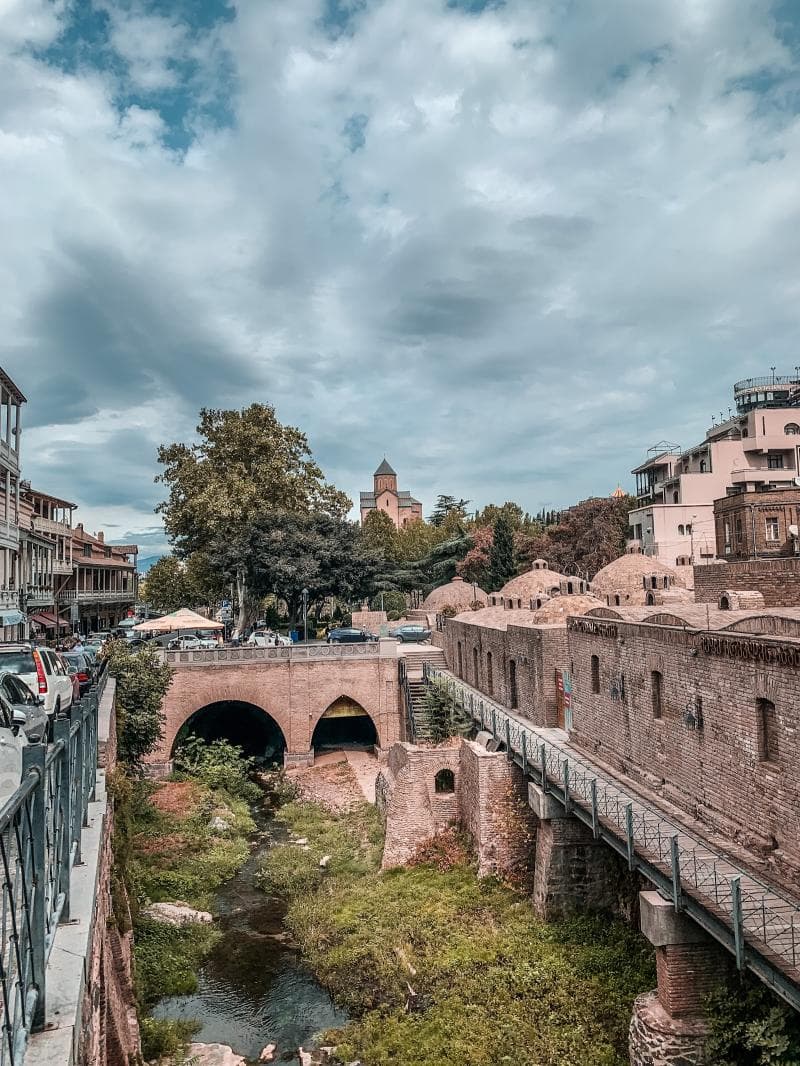
Discover Abanotubani, Tbilisi's ancient sulfur bath district in Georgia. Explore its history, unique domed architecture, and therapeutic waters.
Overview
Nestled in the heart of Tbilisi, Georgia, the ancient district of Abanotubani is renowned for its therapeutic sulfur baths and distinctive architecture. This historic quarter, whose name literally translates to 'bath district' in Georgian, is easily recognized by its unique brick-domed bathhouses that emerge from the ground, resembling molehills. Abanotubani is not merely a collection of bathhouses; it's a living testament to the city's origins and a vibrant hub where history, culture, and wellness converge.
The district sits on the eastern bank of the Mtkvari River, at the foot of the majestic Narikala Fortress, making it a focal point for both historical exploration and relaxation. Visitors are drawn to Abanotubani to experience its warm, mineral-rich waters, which are naturally heated by geothermal springs beneath the city. The area is compact and highly walkable, allowing curious travelers to easily explore its narrow streets, picturesque buildings, and other nearby attractions.
History & Cultural Background
The story of Abanotubani is intricately woven with the very foundation of Tbilisi itself. According to Georgian legend, in the 5th century, King Vakhtang Gorgasali was hunting when his falcon fell into a hot spring. Impressed by the naturally warm waters, he ordered a city to be built on this auspicious spot. This event is said to mark the birth of Tbilisi, and the city's name, derived from the Old Georgian word 'tbili' meaning 'warm,' directly references these thermal springs.
For centuries, the sulfur baths served as far more than just places for hygiene. They evolved into vital social and cultural centers, where people gathered for relaxation, business discussions, and even matchmaking. By the 13th century, Tbilisi reportedly boasted over 60 bathhouses. Historical figures such as the Russian poet Alexander Pushkin and the French writer Alexandre Dumas visited and praised the Abanotubani baths, highlighting their significance in the region.
What Makes It Special
Abanotubani's distinctiveness lies in its unique architectural style and the therapeutic properties of its waters. The subterranean bathhouses are topped with iconic brick domes, designed to allow natural light to stream in while releasing sulfuric steam. This architectural marvel is particularly noticeable in bathhouses like the Orbeliani Baths, also known as Chreli Abano ('Colorful Bath'), which captivates with its stunning blue-tiled, Persian-influenced facade.
The sulfur-rich water, consistently heated to temperatures between 38-45°C (100-113°F), is believed to offer numerous health benefits. Locals and visitors have long sought out these waters for their purported ability to alleviate skin conditions, reduce joint pain, and simply provide a profound sense of rejuvenation and relaxation. The blend of ancient tradition, unique design, and natural wellness makes Abanotubani an unparalleled experience.
Stories, Fun Facts & Local Details
Beyond the founding legend of King Vakhtang Gorgasali, Abanotubani holds many fascinating tales. Imagine a time when these baths were not just for cleansing but also for extended social gatherings, with people dining, celebrating, and sometimes even spending the night. It was also a place where women would socialize and mothers-in-law would discreetly assess potential daughters-in-law.
A notable part of the traditional bathing experience is the 'kisi' scrub, a vigorous exfoliation performed by an attendant called a 'mekise' using a coarse glove. This deep-cleansing ritual leaves the skin incredibly smooth and is considered an integral part of the authentic Georgian bath. Alexander Pushkin famously wrote of feeling 'reborn' after his bath and scrub in Abanotubani, illustrating the profound effect these traditional treatments can have.
Visitor Perspective
A visit to Abanotubani offers a sensory journey. As you approach the district, the distinctive smell of sulfur, often compared to rotten eggs, hints at the experience to come. Most visitors find this smell less overwhelming once inside the bathhouses. Guests can choose between more affordable communal baths or private rooms for a more intimate experience. Booking in advance is often recommended, especially for the more popular establishments like Orbeliani Baths.
The experience typically involves a relaxing soak in the thermal pools, with options for a traditional kisi scrub or a massage. The district's accessibility in Old Tbilisi means it can easily be combined with visits to other landmarks like Narikala Fortress or the nearby Leghvtakhevi waterfall, which is just a short walk away. Abanotubani truly offers a unique blend of historical immersion, cultural tradition, and physical rejuvenation, making it a must-see for anyone exploring Tbilisi.
Coordinates: 44.81111, 41.68778
View on Google Maps💬 How Travelers Describe This Place
Based on community votes
Interesting
556Must See
394Beautiful
269Photogenic
254Unique
145
Traveler Stories
Discover memorable experiences shared by travelers who have visited this place.
No traveler stories yet.
Be the first traveler to share what made this place memorable.
Things to see at Abanotubani



Tour
By
Spot
Discover amazing places around the world. Your journey starts here.
Explore
© 2026 TourBySpot. All rights reserved.