Brick Domes
Tbilisi, Georgia
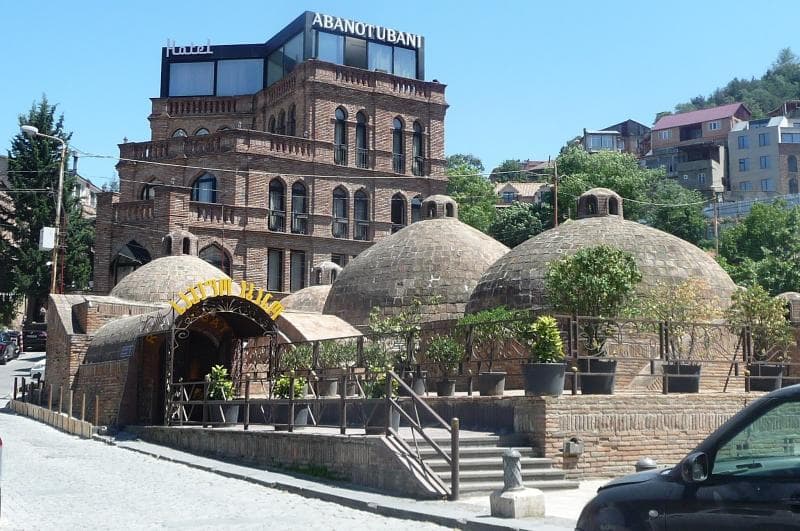
Discover the historic Brick Domes of Abanotubani in Tbilisi, Georgia. Explore ancient sulfur baths, unique architecture, and cultural traditions.
Overview
The Brick Domes are the distinctive, low-lying structures that define the skyline of Abanotubani, Tbilisi's historic sulfur bath district in Georgia. These unique domes are not merely architectural features but are the visible signs of a centuries-old tradition, marking the underground bathhouses fed by natural hot sulfur springs. From street level, they appear as an intriguing terracotta roofscape, often emitting wisps of steam, especially on cooler days. This architectural characteristic is an integral part of Abanotubani's charm and identity, instantly recognizable as the heart of Tbilisi's thermal culture.
Abanotubani, meaning 'bath district' in Georgian, is a vibrant and ancient neighborhood nestled at the foot of Narikala Fortress, along the Mtkvari River. It is a place where the scent of sulfur, often likened to rotten eggs but quickly accustomed to, perfumes the air, inviting curious travelers to explore its unique blend of history, wellness, and local life.
History & Cultural Background
The story of the Brick Domes and Abanotubani is inextricably linked to the very foundation of Tbilisi itself. According to legend, in the 5th century, King Vakhtang Gorgasali was hunting with his falcon when the bird, after chasing a pheasant, fell into a hot spring. Both birds were found cooked by the naturally warm waters, leading the king to discover the therapeutic springs. Impressed by this natural wonder, King Vakhtang ordered a city to be built around the springs.
The city was named Tbilisi, derived from the Old Georgian word 'tbili,' meaning 'warm,' a direct reference to these geothermal waters. Throughout centuries, the sulfur baths of Abanotubani evolved from simple bathing spots into vital social and cultural centers. By the 13th century, historical records suggest there were as many as 65 bathhouses in the city. They served not only for hygiene but also as places for relaxation, conversation, business meetings, and even matchmaking. Various empires, including Persian and Russian, left their architectural and cultural imprints on the bathhouses, with many of the surviving structures dating back to the 17th to 19th centuries, often showcasing Persian-influenced designs.
What Makes It Special
The Brick Domes are truly special due to their distinctive architecture and the natural phenomenon they enclose. Each dome typically covers a semi-underground bathhouse, built directly over the thermal springs. The compact form, heavy walls, and arched niches of these structures were perfectly designed to contain steam and hot water. Small arched vents or lanterns at the top of the domes allow for light and ventilation, releasing the sulfurous steam into the open air.
Unlike Turkish hammams, Georgian baths often feature a unique configuration, with stairs descending from the entrance into chambers housing hot sulfur pools. The naturally occurring hot, mineral-rich water, typically ranging from 35°C to 40°C, is believed to possess numerous therapeutic properties, including relieving skin conditions and joint pain. The Orbeliani Bathhouse, also known as the Colorful Bath or Chreli Abano, stands out with its striking blue tiled facade, reminiscent of a madrasah, showcasing a beautiful fusion of Persian and Georgian design.
Stories, Fun Facts & Local Details
Beyond the founding legend of King Vakhtang Gorgasali, the Brick Domes of Abanotubani have witnessed countless stories and hosted many notable figures. The renowned Russian poet Alexander Pushkin, upon visiting in the 1820s, famously described his bathing experience as more luxurious than anything he had encountered in Russia or Turkey. Later, Alexandre Dumas also penned enthusiastic accounts of his time in the Tbilisi baths.
Historically, these baths were not just for cleansing but were vibrant social hubs. Locals would gather for extended periods, socializing, relaxing, and even conducting business. There was a tradition where future mothers-in-law would scout for potential brides in the baths. A central part of the traditional Georgian bath experience is the 'kisi' scrub, an invigorating full-body exfoliation performed by a 'mekise' (masseur), using a special glove to remove dead skin, leaving the bather feeling exceptionally clean and refreshed. The district's enduring multicultural spirit is also noteworthy, with Orthodox, Armenian, and Catholic churches, as well as a mosque, standing in close proximity, reflecting centuries of coexistence.
Visitor Perspective
A visit to the Brick Domes of Abanotubani offers a truly immersive and authentic Tbilisi experience. As you approach, the unique visual of the domes emerging from the ground, often with steam rising, immediately signals you've arrived at a special place.
Stepping inside one of the bathhouses, you descend into a tranquil, often ornately tiled, subterranean world. Visitors can choose between communal bathing halls, which offer a glimpse into traditional local life, or private rooms for a more secluded experience. The warm, sulfurous water, while initially distinct in smell, quickly becomes part of the sensory experience, offering a deeply relaxing soak. Many bathhouses provide traditional treatments, including the famous 'kisi' scrub and various massages, which are highly recommended for a full appreciation of the bathing ritual.
To ensure a spot, especially for private rooms or during peak tourist seasons, it is advisable to make reservations in advance. Bringing your own towel and toiletries is also a good idea, although these are often available for hire. Exploring the surrounding narrow streets, traditional balconies, and nearby Leghvtakhevi Waterfall further enriches the visit, making it a memorable part of any journey to Tbilisi.
Coordinates: 44.81111, 41.68778
View on Google Maps💬 How Travelers Describe This Place
Based on community votes
Must See
799Photogenic
539Unique
424Interesting
234Beautiful
30
Traveler Stories
Discover memorable experiences shared by travelers who have visited this place.
No traveler stories yet.
Be the first traveler to share what made this place memorable.

Tour
By
Spot
Discover amazing places around the world. Your journey starts here.
Explore
© 2026 TourBySpot. All rights reserved.