Traditional Massage Rooms
Tbilisi, Georgia
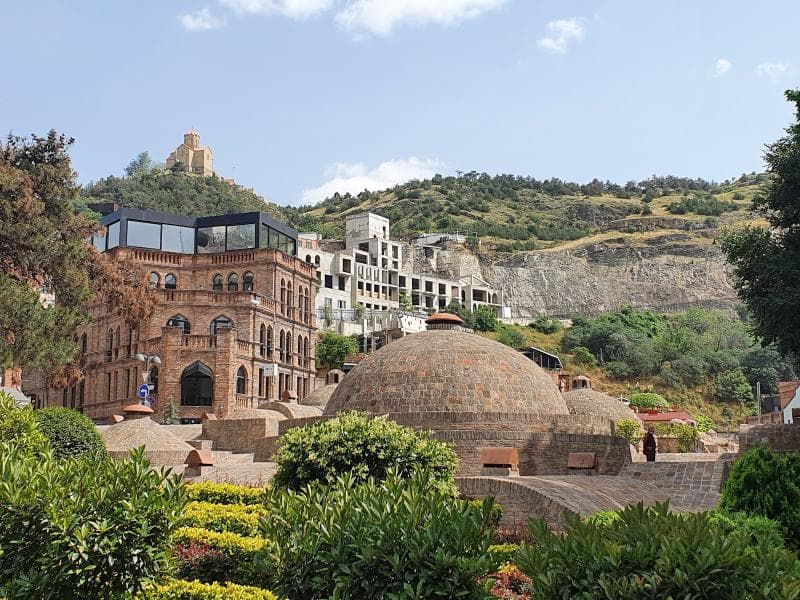
Discover Traditional Massage Rooms in Abanotubani, Tbilisi, Georgia. Experience ancient sulfur baths and rejuvenating 'kisi' scrubs in historic bathhouses.
Overview
Nestled in the heart of Tbilisi, Georgia, the ancient district of Abanotubani is renowned for its iconic sulfur baths, a cornerstone of the city's identity and a living testament to centuries of tradition. The name 'Abanotubani' itself translates to 'bath district' in Georgian, a fitting title for this unique area where domed brick bathhouses emerge from the ground, emitting a gentle steam that adds to its mystical charm. Within these historic structures lie traditional massage rooms, offering an authentic Georgian wellness experience centered around the naturally occurring thermal waters.
Visiting the Traditional Massage Rooms in Abanotubani offers more than just a spa treatment; it's an immersion into a deeply rooted cultural practice. These rooms are typically found within the various bathhouses, which range from public communal spaces to private, opulent chambers. The experience often involves a soak in the mineral-rich sulfur water, followed by a vigorous traditional massage, providing both physical rejuvenation and a glimpse into Georgian heritage.
History & Cultural Background
The story of Abanotubani, and indeed Tbilisi itself, begins with a legend. According to Georgian lore, King Vakhtang Gorgasali discovered the hot sulfur springs in the 5th century when his falcon, while hunting a pheasant, fell into a thermal spring. Impressed by the warm, healing waters, the king ordered a city to be built around this very spot. This foundational myth is so ingrained that the city's name, 'Tbilisi,' derives from the Old Georgian word 'tbili,' meaning 'warm,' a direct nod to these geothermal springs.
From the 5th century onwards, the bathhouses in Abanotubani flourished, evolving into significant social hubs. They were not merely places for cleansing but also served as venues for relaxation, social gatherings, and even business dealings. Historically, women would visit to assess potential daughters-in-law, highlighting their integral role in local community life. Over the centuries, the baths attracted numerous famous visitors, including literary giants like Alexander Pushkin and Alexandre Dumas, who penned glowing accounts of their unique experiences here.
What Makes It Special
The true essence of Abanotubani's traditional massage rooms lies in their direct connection to the natural sulfur springs. The water emerges from underground at temperatures ranging between 37°C and 45°C, rich in hydrogen sulfide and other beneficial minerals. This mineral-rich water is credited with numerous therapeutic properties, including improving skin conditions like eczema and psoriasis, alleviating joint pain, boosting blood circulation, and promoting overall relaxation and stress relief.
A distinctive feature of the traditional experience is the 'kisi' massage (kisi massaji). This vigorous exfoliation is performed by an attendant, known as a 'mekise,' using a rough 'kisi' glove. It's an intense but deeply revitalizing scrub that removes dead skin, leaving the skin feeling incredibly smooth and refreshed. Many bathhouses offer private rooms, allowing for a more personal and comfortable experience, often complemented by the architectural beauty of domed ceilings and intricate tilework.
Stories, Fun Facts & Local Details
The district's distinct appearance, with its low, brick domes, has often led to comparisons with 'molehills' or 'mushrooms' emerging from the earth. These domes serve a practical purpose, allowing heat and steam to escape, while simultaneously creating an iconic architectural landscape unique to Tbilisi. In cooler weather, the visible steam curling from these skylights adds an otherworldly ambiance to the neighborhood, making it a favorite subject for photographers.
Beyond their physical benefits, the sulfur baths represent a continuity of Georgian culture that has endured for over a millennium and a half. They are not merely tourist attractions but remain working institutions where locals engage in weekly rituals, connecting with a tradition that predates much of modern history. This enduring legacy makes a visit here a truly authentic and meaningful cultural encounter.
Visitor Perspective
For the curious traveler, visiting the Traditional Massage Rooms in Abanotubani is an accessible and enriching experience. Most bathhouses offer private rooms that can be booked by the hour, providing a dedicated space for soaking and receiving treatments. These private rooms often include a pool, changing area, and sometimes even a sauna. Booking in advance is highly recommended, especially on weekends, to secure a preferred time and room.
While the prospect of a vigorous 'kisi' scrub might sound intimidating, many visitors describe it as a highlight, leaving them feeling thoroughly cleansed and rejuvenated. Various bathhouses offer different levels of luxury and ambiance, from the ornately tiled Chreli-Abano (Orbeliani Baths) known for its Persian-influenced facade, to the historic Royal Baths, each offering a unique take on the traditional bathing ritual. Whether seeking deep relaxation or a cultural adventure, Abanotubani's traditional massage rooms offer an unforgettable journey into Georgia's ancient wellness traditions.
Coordinates: 44.811111, 41.687778
View on Google Maps💬 How Travelers Describe This Place
Based on community votes
Beautiful
539Interesting
517Photogenic
422Unique
251Must See
234
Traveler Stories
Discover memorable experiences shared by travelers who have visited this place.
No traveler stories yet.
Be the first traveler to share what made this place memorable.

Tour
By
Spot
Discover amazing places around the world. Your journey starts here.
Explore
© 2026 TourBySpot. All rights reserved.