Wat Phra Singh
Chiang Mai, Thailand
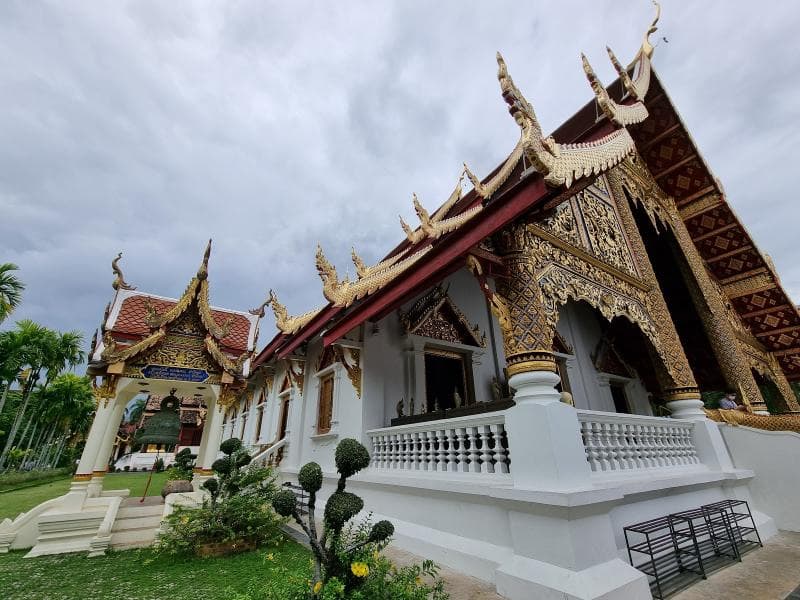
Discover Wat Phra Singh, Chiang Mai's iconic 'Temple of the Lion Buddha,' a first-grade royal temple showcasing exquisite Lanna architecture and housing the revered Phra Buddha Sihing. Explore its rich history and cultural significance in Northern Thailand.
Overview
Nestled within the ancient walled city of Chiang Mai, Thailand, Wat Phra Singh Woramahawihan stands as a beacon of Northern Thai spiritual and architectural heritage. Often simply referred to as Wat Phra Singh, or 'Temple of the Lion Buddha,' it is one of the most revered and historically significant Buddhist temples in the region, holding the esteemed status of a first-grade royal temple.
This magnificent complex, located prominently at the end of Ratchadamnoen Road, captivates visitors with its striking Lanna-style architecture, characterized by multi-tiered roofs, intricate wood carvings, and shimmering golden chedis. Beyond its visual splendor, the temple is an active monastery and an educational center, bustling with the quiet activities of monks and a sense of enduring spiritual life. It is also a key highlight in the core zone of the Chiang Mai UNESCO World Heritage project, underscoring its immense cultural value.
History & Cultural Background
The origins of Wat Phra Singh trace back to 1345, when King Phayu, the fifth ruler of the Mangrai dynasty, initiated its construction. His initial purpose was to enshrine the ashes of his father, King Khamfu, within a grand chedi. The temple was first known as Wat Li Chiang Phra or Wat Phra Chiang.
A pivotal moment in its history occurred in 1367 with the arrival of the revered Phra Buddha Sihing statue, which subsequently gave the temple its current name. For centuries, Wat Phra Singh served as a vital religious hub in the Lanna Kingdom, fostering monastic communities and reinforcing the dynasty's Buddhist legitimacy. Historical accounts even suggest it may have temporarily housed the Emerald Buddha in 1468 before its relocation to Wat Chedi Luang.
The temple endured periods of neglect, particularly during the Burmese occupation from 1558 to 1775, when Chiang Mai itself was largely abandoned. However, a significant revival began with King Kawila's restoration efforts in 1782, followed by further renovations under his successors. The famous 'monk engineer' Khruba Siwichai led extensive restoration work in the 1920s, breathing new life into the ancient structures. Its status as a first-grade royal temple was officially bestowed in 1935 by King Ananda Mahidol (Rama VIII).
What Makes It Special
At the spiritual heart of Wat Phra Singh lies the sacred Phra Buddha Sihing image, one of Thailand's most revered Buddha statues. Its precise origins are shrouded in legend, with tales suggesting it came from Sri Lanka, ultimately making its way to Chiang Mai.
The temple is a quintessential example of Lanna architecture, characterized by its elaborate features. Key structures include the beautiful Wihan Lai Kham, an assembly hall that not only houses the Phra Buddha Sihing but is also famed for its exquisite interior murals. These vibrant paintings, adorned with gold stenciling, depict stories from the Jataka tales (previous lives of the Buddha) and scenes of traditional Lanna life.
Another architectural gem is the Ho Trai, the temple's scripture library. This meticulously preserved wooden structure, raised on a stone base to protect precious palm-leaf manuscripts from insects, is celebrated for its delicate stucco figures and intricate carvings, making it one of the finest examples of Lanna art. The main chedi, the oldest part of the complex, has been enlarged over centuries and features decorative elephant figures emerging from its base.
Stories, Fun Facts & Local Details
Wat Phra Singh plays a central role in Chiang Mai's annual Songkran Festival, the traditional Thai New Year. During this vibrant celebration, the revered Phra Buddha Sihing statue is ceremoniously paraded through the city's streets on a float. Locals and visitors alike participate in a cherished tradition of sprinkling water over the sacred image, a gesture symbolizing purification and blessing for the coming year.
A fascinating legend surrounds the Phra Buddha Sihing image, telling of its journey from Sri Lanka where the ship carrying it reportedly sank, only for the statue to miraculously float on a wooden plank to Nakhon Si Thammarat. Adding to its mystique, Wat Phra Singh is recognized as the designated temple for those born in the Year of the Dragon, drawing many devotees seeking blessings. The name 'Lai Kham' itself, referring to the elegant gold tracery found within the Wihan Lai Kham, speaks to the sophisticated artistic traditions of the Lanna Kingdom. The murals in this hall, illustrating tales like Sang Thong and Suwannahongse, offer charming insights into historical Lanna customs and beliefs.
Visitor Perspective
Visiting Wat Phra Singh offers a profound cultural and spiritual experience for any traveler to Chiang Mai. Located conveniently within the Old City, it is easily accessible by foot, bicycle, songthaew, or tuk-tuk.
As a sacred place of worship, visitors are kindly asked to adhere to a modest dress code, ensuring shoulders and knees are covered, and to remove their shoes before entering any of the temple's main halls. While entry to the temple grounds is generally free, a small fee, typically 20-50 THB for foreigners, is usually requested for entry into the highly significant Wihan Lai Kham, with donations always encouraged to support the temple's upkeep. The peaceful and serene atmosphere provides an ideal setting for quiet reflection, meditation, or simply appreciating the beauty and rich history of this spiritual landmark. Many travelers find themselves spending an hour or more exploring the intricate details and serene courtyards, making it an essential and enriching stop on any Chiang Mai itinerary.
Coordinates: 98.98138, 18.78859
View on Google Maps💬 How Travelers Describe This Place
Based on community votes
Photogenic
958Unique
743Interesting
719Must See
629Beautiful
176
Traveler Stories
Discover memorable experiences shared by travelers who have visited this place.
No traveler stories yet.
Be the first traveler to share what made this place memorable.
Things to see at Wat Phra Singh



Tour
By
Spot
Discover amazing places around the world. Your journey starts here.
Explore
© 2026 TourBySpot. All rights reserved.