Murals
Chiang Mai, Thailand
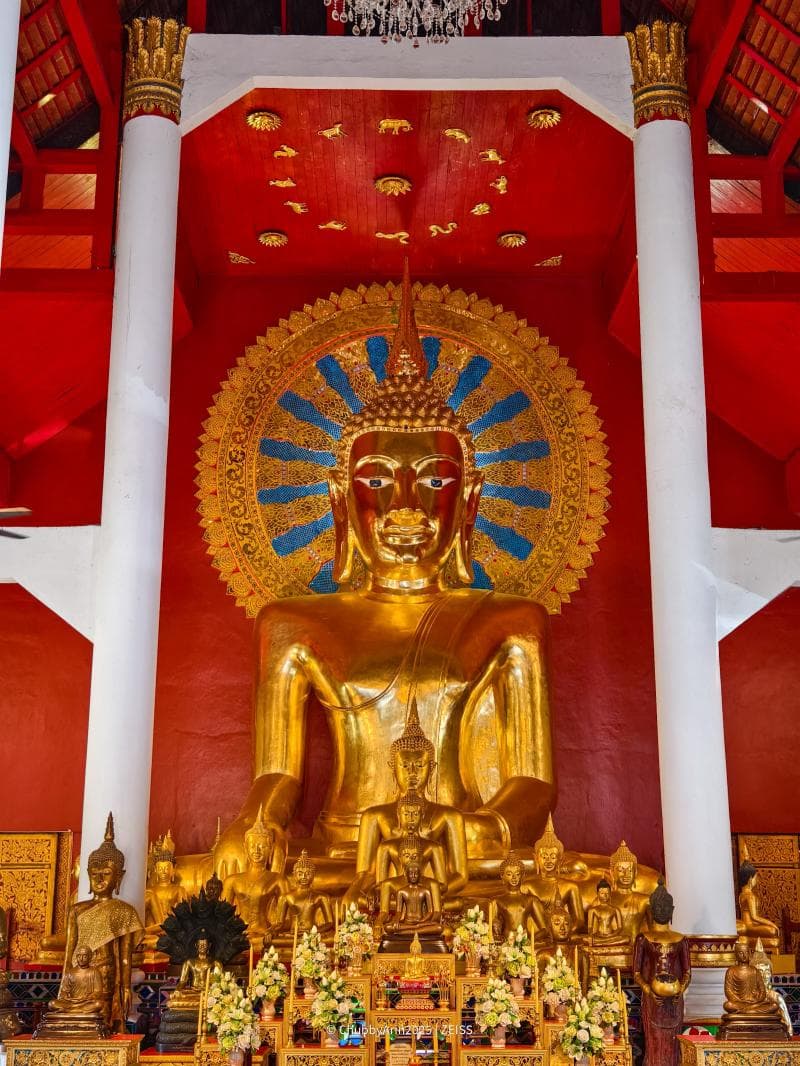
Explore the historic murals of Viharn Lai Kham at Wat Phra Singh in Chiang Mai, Thailand. Discover Lanna art, ancient tales, and local life depictions.
Overview
Deep within the venerable Wat Phra Singh in Chiang Mai, Thailand, lies a treasure trove of Lanna artistic heritage: the exquisite murals found predominantly within its Viharn Lai Kham, or assembly hall. These wall paintings are not merely decorative; they are vibrant narratives, offering a profound glimpse into the rich tapestry of Northern Thai culture, history, and spiritual beliefs. Unlike many temple murals across Thailand that focus solely on the life of the Buddha, those at Wat Phra Singh distinguish themselves by vividly illustrating classical Thai literary tales alongside depictions of daily life from centuries past.
As you step into the Viharn Lai Kham, you are transported to a bygone era. The murals, with their intricate details and captivating stories, serve as a visual encyclopedia, inviting visitors to unravel the complexities of Lanna society, its customs, and its artistic prowess. They stand as a testament to the region's unique cultural identity and its harmonious blend of religious devotion and secular storytelling.
History & Cultural Background
Wat Phra Singh itself, one of Chiang Mai's most revered temples, was established in 1345 by King Phayu to house the ashes of his father. The Viharn Lai Kham, where the most notable murals reside, dates back to this period, though the current structure and its famous paintings underwent significant restoration and creation around the late 18th to early 19th centuries, specifically around the 1820s.
These murals are considered some of the most refined examples of Lanna art, characterized by an intriguing blend of influences. While firmly rooted in Northern Thai (Lanna) traditions, the artwork also showcases characteristics of Rattanakosin art from central Thailand, noticeable in technique and realistic concepts, and even hints of Burmese artistic styles. The practice of hiring artists from neighboring regions, including Burmese, Tai Yai, Lao, and central Thais, contributed to this rich amalgamation of styles.
Traditionally, temple murals in Thailand served as visual aids for religious instruction, depicting scenes from the Buddha's life or Jataka tales. However, the murals in the Viharn Lai Kham of Wat Phra Singh are remarkable for their strong focus on literary narratives, reflecting a unique aspect of Lanna cultural expression.
What Makes It Special
What truly sets the murals of Wat Phra Singh apart is their narrative content. Rather than exclusively portraying Buddhist Jataka tales, these walls are adorned with scenes from two prominent classical Thai literary works: 'Sang Thong' (The Golden Conch) on the north wall and 'Suwannahong' (The Heavenly Phoenix) on the south wall.
'Sang Thong' tells the enchanting story of a prince born in a golden conch shell who overcomes numerous trials and disguises to ultimately reveal his true virtuous nature. The tale of 'Suwannahong', meanwhile, narrates the adventures of a prince deeply in love with a beautiful princess, whose journey involves mystical encounters and triumph over adversaries. These narratives are richly interwoven with depictions of daily life, customs, and the distinctive dress of the Lanna people during the 19th century. This inclusion of local elements provides invaluable ethnographic insights, offering a vivid window into the past society of Chiang Mai and the broader Lanna Kingdom.
The artistic technique itself is noteworthy. Employing elegant linework, soft color tones, and fine detailing, the murals were historically painted using tempera pigments on dry plastered walls. While this method, unlike European fresco techniques on wet plaster, contributed to their eventual decay, it also gives them a unique, earthy quality that recent restoration efforts strive to preserve.
Stories, Fun Facts & Local Details
The tale of 'Sang Thong' is particularly beloved in Thailand, often recounted in various forms, and embodies universal themes of good triumphing over evil and hidden beauty beneath apparent ugliness. The murals illustrate the prince's ostracization, his struggles, and his ultimate revelation, culminating in a happy ending. Similarly, 'Suwannahong' captivates with its romantic quest and magical elements, showing how the prince's beloved princess, disguised as a Brahmin, seeks mystical help to revive him after his tragic death at the hands of an ogre king.
Observing the murals closely reveals fascinating details of Lanna life: from the architecture of homes and market scenes to the traditional attire and social interactions of the people. These subtle inclusions transform the religious space into a living historical document, providing context to the grand narratives. It's said that some murals even depict the presence of Westerners, often in military uniform, reflecting the changing socio-political landscape of the 19th century. While some older parts of the murals were damaged or removed during renovations, such as the addition of new windows, the remaining works continue to inspire and educate.
Visitor Perspective
Visiting the Viharn Lai Kham to witness these murals offers a truly immersive cultural experience. While some parts may show signs of age and restoration, the stories they tell and the historical context they provide remain profoundly engaging. Allow yourself time to slowly walk around the hall, appreciating the detailed craftsmanship and the sequential storytelling depicted on the walls. It is like 'reading a visual novel' that unfolds before your eyes, offering a narrative-driven art form that feels approachable and human.
To fully appreciate the murals, it's beneficial to research the tales of 'Sang Thong' and 'Suwannahong' beforehand, as understanding the narratives will deepen your connection to the artwork. The murals at Wat Phra Singh are not just a collection of paintings; they are a vital link to the Lanna Kingdom's past, a testament to its artistic sophistication, and a beautiful reflection of its enduring cultural spirit. They demonstrate how temples were not just places of worship, but also centers for learning, storytelling, and the preservation of heritage.
Coordinates: 98.9812139, 18.78875
View on Google Maps💬 How Travelers Describe This Place
Based on community votes
Beautiful
722Must See
698Photogenic
595Interesting
358Unique
19
Traveler Stories
Discover memorable experiences shared by travelers who have visited this place.
No traveler stories yet.
Be the first traveler to share what made this place memorable.

Tour
By
Spot
Discover amazing places around the world. Your journey starts here.
Explore
© 2026 TourBySpot. All rights reserved.