Bell Tower
Chiang Mai, Thailand
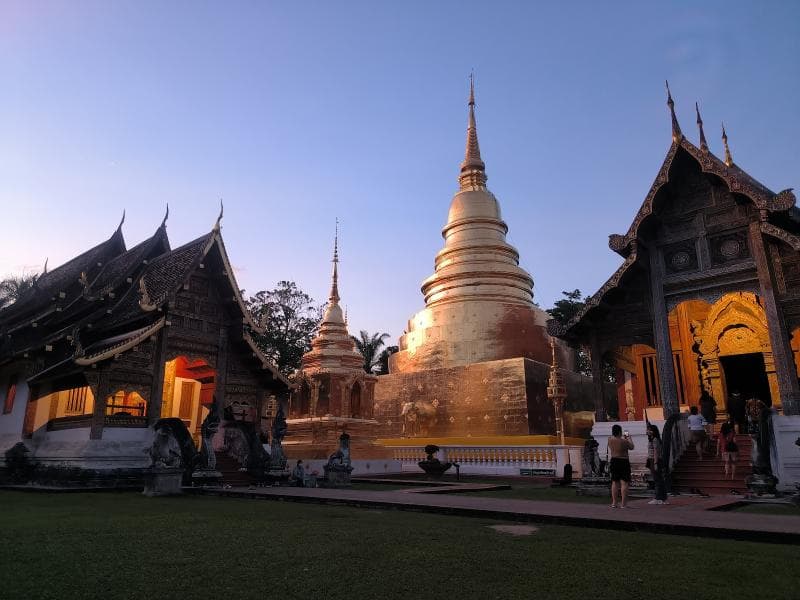
Discover the unique Bell Tower (ho rakang) at Wat Phra Singh in Chiang Mai, Thailand. Learn about its history, cultural significance, and the role of temple bells in daily monastic life and spiritual practice.
Overview
Within the serene grounds of Wat Phra Singh Woramahawihan, one of Chiang Mai's most revered temples, stands a distinctive bell structure known as a ho rakang. Unlike the tall, imposing bell towers often seen in many Thai temples, the Bell Tower at Wat Phra Singh is characterized by its more modest, open-sided design. It features a large bronze bell suspended beneath a roof with triangular sides, supported by four wooden pillars embedded in concrete blocks. This unique architectural approach makes it an intriguing sub-spot within the expansive temple complex, quietly performing its traditional duties while inviting respectful interaction from visitors.
Historically, ho rakang served as vital community hubs, not only calling monks to prayer but also acting as a public timepiece and an emergency signal for the surrounding village. At Wat Phra Singh, this function continues, albeit in a more understated way, allowing both resident monks and curious travelers to connect with a centuries-old tradition.
History & Cultural Background
The tradition of bell towers, or ho rakang, is deeply embedded in Thai Buddhist temple culture. For centuries, these structures played a crucial role in the daily life of monastic communities and the wider populace. Before the advent of modern timekeeping devices, the temple bell's resounding chimes marked the rhythm of the day: signaling monks for morning prayers, meal times, and evening devotions.
Beyond their practical utility, temple bells carry profound spiritual significance in Buddhism. The sound of a bell is often considered the voice of the Buddha, a symbol of Dharma – the cosmic law that sustains the universe. Ringing a bell can signify an act of asking for protection, aiding in meditation by fostering focus, and embodying compassion and wisdom. While the exact age of the current ho rakang at Wat Phra Singh isn't explicitly detailed, its presence reflects these enduring traditions, linking it to the temple's rich history that dates back to 1345.
What Makes It Special
What truly sets the Bell Tower at Wat Phra Singh apart is its architectural modesty. Rather than a towering structure, it is a small, sheltered pavilion. This design choice, featuring a prominent bell suspended from the ceiling within a structure supported by four wooden pillars, distinguishes it from the more conventional, enclosed bell towers found in many other Thai temples. This accessibility makes the experience of observing, and even participating in, the bell-ringing tradition more intimate and tangible for visitors. The design, with its glazed tile roof and stucco details, also subtly reflects the exquisite Lanna architectural style prevalent throughout Wat Phra Singh.
Another special aspect is the opportunity for visitors to gently ring the bell. While bells in some temples are strictly for monastic use, at Wat Phra Singh, both monks and tourists are noted to ring it for various purposes. This interactive element provides a unique connection to the temple's spiritual practices and a chance to engage directly with its cultural heritage.
Stories, Fun Facts & Local Details
The sounds emanating from Thai temple bells are often deep and resonant, a quality attributed to the specific craftsmanship involved. These bells are typically cast with unusually thick bronze walls and feature gently flared, rounded profiles, which allow vibrations to travel longer paths and reinforce lower frequencies. Unlike Western bells that swing, Thai temple bells are usually struck from the outside with a wooden mallet, a method that excites deeper vibration modes, resulting in their distinctive, calming tones. This intentional design serves to create sounds conducive to meditation and spiritual reflection.
Locally, there's a belief that ringing a temple bell can offer protection and ward off evil spirits, as well as bring good fortune. However, cultural etiquette advises visitors to ring them respectfully and not excessively loudly, as locals can be sensitive to noise. The Bell Tower at Wat Phra Singh offers a tangible way to participate in this merit-making practice, allowing a moment of personal reflection and connection to the spiritual energy of the temple.
Visitor Perspective
For the curious traveler exploring Wat Phra Singh, encountering the Bell Tower is an experience that blends history with a sense of living tradition. Situated within the temple's vibrant compound, often amidst the daily activities of monks and locals, the ho rakang provides a quiet focal point. Observing the monks use the bell to punctuate their day, or taking a moment to respectfully strike it oneself, offers a deeper understanding of the temple's integral role in the community.
It's a chance to pause, listen to the resonant sound, and feel the vibrations that have marked time and devotion for centuries. This simple, yet profound, interaction serves as a gentle reminder of the cultural significance of sound in Buddhist practice and provides a memorable, authentic detail to an exploration of this magnificent Chiang Mai landmark. The Bell Tower, though not grand in scale, is a powerful symbol of continuity and spiritual purpose.
Coordinates: 98.9812139, 18.78875
View on Google Maps💬 How Travelers Describe This Place
Based on community votes
Unique
948Interesting
913Must See
595Photogenic
337Beautiful
196
Traveler Stories
Discover memorable experiences shared by travelers who have visited this place.
No traveler stories yet.
Be the first traveler to share what made this place memorable.

Tour
By
Spot
Discover amazing places around the world. Your journey starts here.
Explore
© 2026 TourBySpot. All rights reserved.