Viharn Lai Kham
Chiang Mai, Thailand
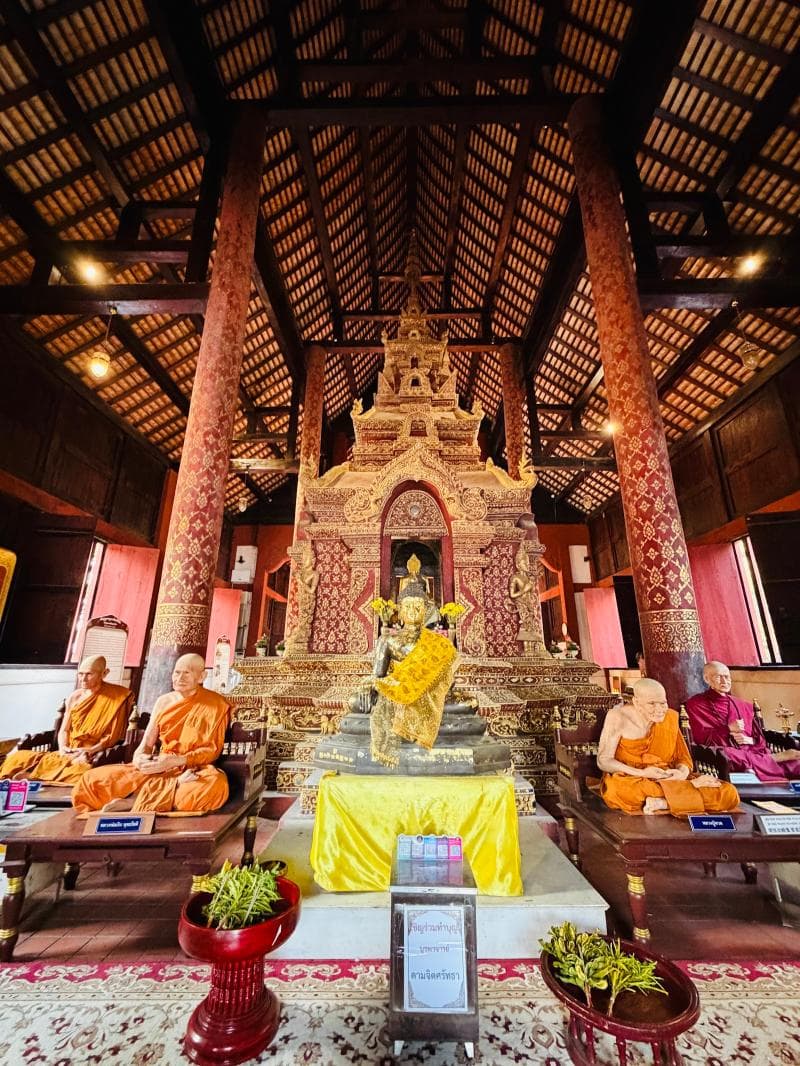
Discover Viharn Lai Kham, the sacred assembly hall within Wat Phra Singh in Chiang Mai, Thailand, home to the revered Phra Phuttha Sihing Buddha image and stunning Lanna murals.
Overview
Nestled within the revered grounds of Wat Phra Singh in Chiang Mai, Thailand, lies the exquisite Viharn Lai Kham. This smaller yet profoundly significant assembly hall is a highlight for anyone exploring the ancient Lanna Kingdom's spiritual and artistic heritage. Known for its distinct Lanna architectural style and housing one of Thailand's most sacred Buddha images, the Phra Phuttha Sihing, Viharn Lai Kham offers a captivating glimpse into the region's rich past and cultural identity. It stands as a testament to centuries of devotion and artistic craftsmanship, drawing both pilgrims and curious travelers alike.
History & Cultural Background
The history of Viharn Lai Kham is deeply intertwined with that of its larger home, Wat Phra Singh, which was founded in 1345 by King Pha Yu to enshrine the ashes of his father, King Kham Fu. The temple, initially known by other names, was renamed Wat Phra Singh in 1367 after it became the revered home of the Phra Phuttha Sihing image. While the Viharn Lai Kham itself dates back to around the same period as the temple's founding, it underwent significant restoration in the early 19th century under the patronage of King Kawila and his successor, Chao Thammalangka. These restorations were crucial in preserving the hall's beauty and its invaluable murals, which were commissioned around the 1820s. Its construction and subsequent renovations reflect the enduring importance of this sacred space in Lanna Buddhist traditions.
What Makes It Special
Viharn Lai Kham is particularly special for several compelling reasons. Foremost among them is its role as the shrine for the Phra Phuttha Sihing Buddha image, considered the second most important Buddha statue in Thailand after the Emerald Buddha. The statue, believed by legend to have originated in Sri Lanka around 157 A.D., holds immense spiritual significance and is central to the temple's identity. Architecturally, the viharn exemplifies classic Lanna style, characterized by its multi-tiered, sweeping roof and intricate gold tracery, or 'Lai Kham', from which it derives its name. Inside, the walls are adorned with famous murals from the 19th century, which are exceptional examples of Lanna art. Unlike many temple murals that focus solely on Jataka tales, those in Viharn Lai Kham also depict scenes of traditional Lanna life, offering a unique historical record.
Stories, Fun Facts & Local Details
The murals within Viharn Lai Kham are rich with storytelling, illustrating two well-known folk tales: 'Sang Thong', the story of a prince born in a conch shell, and 'Suwannahong' (or Suwanee Hongse), a tale of a prince's quest for love. These narratives, painted around the 1820s by a Chinese artist under Prince Dhammalanka's order, are not only beautiful but also offer fascinating insights into the customs, dress, and daily life of the Lanna people during that era. A significant annual event is the Songkran festival in April, during which the sacred Phra Phuttha Sihing statue is carefully removed from the viharn and carried in a grand procession through the streets of Chiang Mai. Thousands of people participate in the 'Song Nam Phra' ritual, gently splashing fragrant water on the image to receive blessings for the New Year, vividly demonstrating the deep cultural and spiritual connection the community has with this revered Buddha image. While the provenance of the Phra Phuttha Sihing image is debated, with various legends suggesting origins in Sri Lanka or Nakhon Si Thammarat, its profound reverence remains undisputed.
Visitor Perspective
For a curious traveler, stepping into Viharn Lai Kham is an immersive experience. The quiet atmosphere provides a space for reflection amidst the intricate Lanna architecture and the captivating murals. Visitors can spend time deciphering the stories on the walls, appreciating the detailed craftsmanship and the historical window they provide into 19th-century Lanna society. The golden accents and traditional design elements create a sense of awe and reverence. It's a place where history, art, and spirituality converge, making it a compelling stop on any Chiang Mai itinerary. Remember to dress respectfully, covering shoulders and knees, as it is an active place of worship. Early morning visits often offer a more serene experience, while the late afternoon light beautifully illuminates the hall's golden features, providing excellent photo opportunities.
Coordinates: 98.9812139, 18.78875
View on Google Maps💬 How Travelers Describe This Place
Based on community votes
Beautiful
958Interesting
728Must See
719Photogenic
481Unique
382
Traveler Stories
Discover memorable experiences shared by travelers who have visited this place.
No traveler stories yet.
Be the first traveler to share what made this place memorable.

Tour
By
Spot
Discover amazing places around the world. Your journey starts here.
Explore
© 2026 TourBySpot. All rights reserved.