Ubosot
Chiang Mai, Thailand
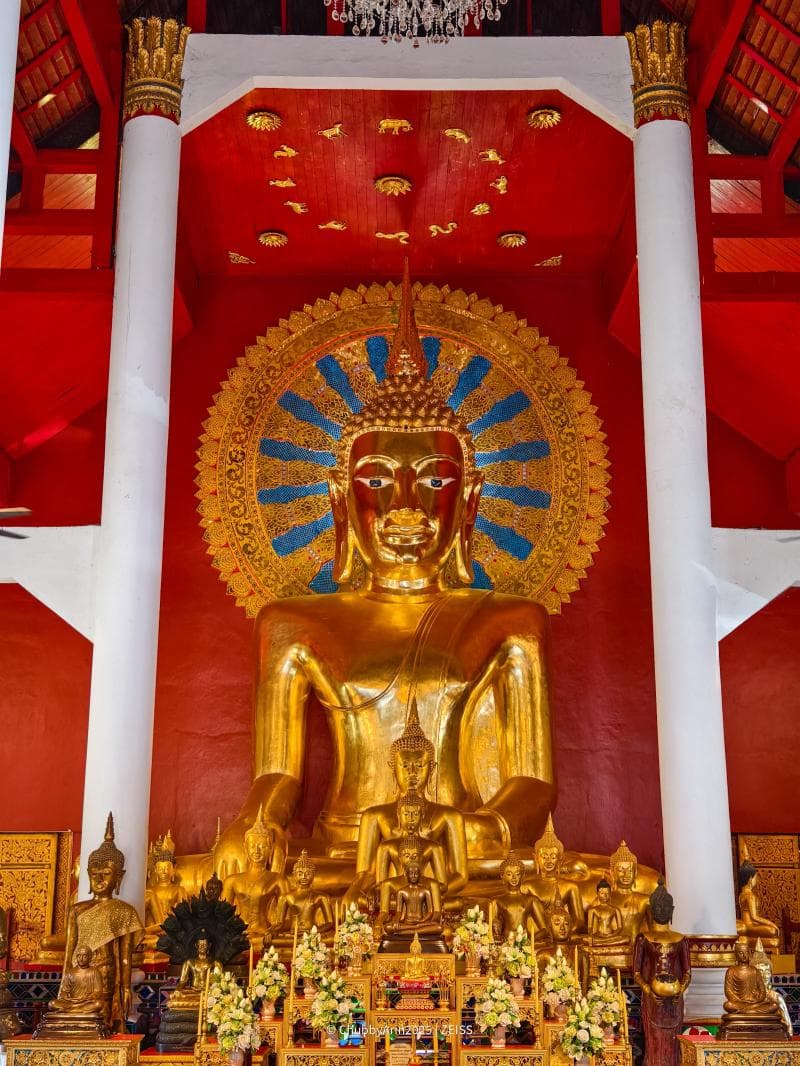
Explore the sacred Ubosot at Wat Phra Singh in Chiang Mai, Thailand. Discover its rich history, unique Lanna architecture, and cultural significance.
Overview
Nestled within the venerable grounds of Wat Phra Singh in Chiang Mai, Thailand, lies the Ubosot, or ordination hall—a profoundly sacred space integral to Buddhist monastic life. More than just an architectural marvel, the Ubosot serves as the spiritual heart where pivotal ceremonies, most notably the ordination of monks, take place. It stands as a testament to centuries of Lanna artistry and unwavering devotion, inviting a deeper understanding of Thai Buddhist traditions.
While Wat Phra Singh itself is renowned for housing the revered Phra Buddha Sihing image, the Ubosot holds its own distinct importance, both historically and culturally. Its presence within the larger temple complex offers visitors a glimpse into the structured and ceremonial aspects of Theravada Buddhism, providing a serene counterpoint to the more bustling assembly halls.
History & Cultural Background
The origins of the Ubosot at Wat Phra Singh trace back to the reign of King Saen Muang Ma, who is credited with its founding. However, the present structure, a significant undertaking, primarily dates to 1812.
Following periods of abandonment and disrepair, particularly when the Lanna kingdom was under Burmese control, the temple complex, including the Ubosot, underwent extensive restoration. King Kawila, who became the ruler of Chiang Mai in 1782, was instrumental in this revival, overseeing the construction and enlargement of various structures.
Further enhancements followed, with King Thammalangka, Kawila's brother and successor, commissioning the construction of the central pavilion, known as the mandapa, in 1817. A notable chapter in its history unfolded in 1927 when King Prajadhipok (Rama VII) visited Chiang Mai. He initiated and funded a significant restoration of the Ubosot, a project completed in 1929. More recently, between 1998 and 1999, the temple and the Fine Arts Department undertook another major restoration, coinciding with the 72nd birthday of the late King Rama IX. This continuous care underscores the Ubosot's enduring significance within the Lanna region.
What Makes It Special
The Ubosot at Wat Phra Singh distinguishes itself with several unique architectural and functional features. One of its most striking characteristics is its design with two separate entrances—one traditionally designated for monks and the other for nuns, reflecting the segregation during monastic ceremonies. This thoughtful design facilitates the solemn rituals performed within.
The interior is often centered around a mandapa, a pavilion that houses a revered Buddha image. Visitors might find a smaller replica of the famous Phra Sihing Buddha, sometimes affectionately called Phra Sihing Noi, 'noi' meaning 'small' in Thai, or even a copy of the Emerald Buddha, which, according to some accounts, was once housed in Wat Phra Singh. The architectural style is distinctly Lanna, characterized by intricate gilt carved work set in panels, often featuring subtle animal motifs. The building is predominantly constructed from teak, with ornate carvings around its doors and stucco patterns adorning the wooden pillars, contributing to its dignified aesthetic. The walls may also display old photographs of the temple and past celebrations, adding a historical dimension to the spiritual space.
Stories, Fun Facts & Local Details
The Ubosot's role as an ordination hall places it at the very core of monastic tradition. Ordination ceremonies, held within its consecrated walls, mark a profound transition for individuals entering the Buddhist Sangha. The sacred boundary of the Ubosot is typically defined by 'Sima stones,' symbolic markers that delineate the spiritual purity of the space where these important rites occur.
A fascinating local detail within the Ubosot, if accessible, includes shrine containing Buddha images representing each day of the week. Thai Buddhists often visit the specific Buddha image corresponding to their birth day to make offerings and receive blessings, a practice that highlights the deep personal connection between daily life and religious devotion. While exploring the artistry, one might even discover a small likeness of a Chinese artist embedded in the north wall, a subtle nod to the diverse influences on Lanna art. These small, meaningful details weave a richer tapestry for visitors, offering insights into the living traditions and the enduring faith that permeates Wat Phra Singh.
Visitor Perspective
Located towards the eastern side of the main chedi and behind the Wiharn Luang within the Wat Phra Singh complex, the Ubosot is an essential stop for any curious traveler or devout Buddhist. Although it is sometimes locked to the public, its exterior alone is a beautiful example of traditional Lanna architecture, with its intricate carvings and distinctive roofline inviting contemplation.
When open, stepping inside offers a moment of profound peace and a direct connection to the spiritual pulse of the temple. The central mondop tower and the various Buddha images create an atmosphere of reverence. It's a place where one can observe the quiet dignity of a working temple, reflect on the rich history of Chiang Mai, and appreciate the architectural grandeur that has been carefully preserved and restored over centuries. While the main Phra Singh Buddha is in the Viharn Lai Kham, the Ubosot provides a different, more intimate spiritual experience focused on monastic rites and personal devotion.
Coordinates: 98.9812139, 18.78875
View on Google Maps💬 How Travelers Describe This Place
Based on community votes
Photogenic
965Must See
894Beautiful
862Unique
443Interesting
184
Traveler Stories
Discover memorable experiences shared by travelers who have visited this place.
No traveler stories yet.
Be the first traveler to share what made this place memorable.

Tour
By
Spot
Discover amazing places around the world. Your journey starts here.
Explore
© 2026 TourBySpot. All rights reserved.