Vienna State Opera
Vienna, Austria
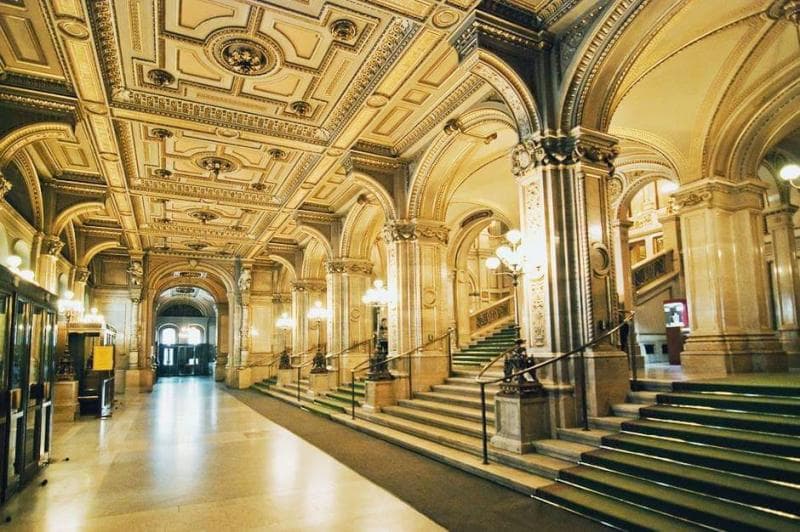
Discover the Vienna State Opera in Vienna, Austria, a world-renowned Neo-Renaissance masterpiece offering exceptional opera and ballet performances.
Overview
The Vienna State Opera, known locally as the Wiener Staatsoper, stands as a grand beacon of musical culture in the heart of Vienna, Austria. This globally acclaimed opera house is an architectural marvel, showcasing a magnificent Neo-Renaissance style that dominates the city's famous Ringstrasse boulevard. It is celebrated worldwide for its exceptional performances, diverse repertoire, and its significant role in the cultural life of Vienna.
As one of the busiest opera houses on Earth, the Vienna State Opera hosts an astonishing array of productions, often presenting a different opera or ballet each day. It is not merely a venue; it is an institution that embodies the rich artistic heritage of Austria, drawing in art and culture enthusiasts from every corner of the globe.
History & Cultural Background
The story of the Vienna State Opera is deeply interwoven with Vienna's imperial past. Its origins trace back to an earlier Vienna Court Opera established in 1636 near the Hofburg Palace, serving the Habsburg monarchs. The current iconic building, considered the 'First House on the Ring', was commissioned by Emperor Franz Joseph I. Construction began in 1861 and was completed in 1869, making it the inaugural major building on the newly developed Vienna Ringstrasse.
Designed by architects August Sicard von Sicardsburg and Eduard van der Nüll, the opera house officially opened on May 25, 1869, with a performance of Mozart's 'Don Giovanni', attended by Emperor Franz Joseph and Empress Elisabeth. Initially known as the 'Vienna Court Opera' (Wiener Hofoper), it retained this name until the fall of the monarchy in 1918. It officially became the 'Vienna State Opera' in 1921 with the establishment of the First Austrian Republic.
The opera house endured significant tragedy towards the end of World War II. On March 12, 1945, an Allied bombardment severely damaged the building; the auditorium and stage were engulfed in flames, along with countless costumes and props. However, parts of the front section, including the main stairways and the Moritz von Schwind frescoes, remained intact. A profound commitment to restore this cultural jewel led to meticulous reconstruction, and the Vienna State Opera gloriously reopened on November 5, 1955, with Beethoven's 'Fidelio', symbolizing the city's resilience and rebirth.
What Makes It Special
The Vienna State Opera is truly special due to its unparalleled artistic standards and continuous commitment to excellence. It is home to one of the world's largest repertoires, offering a staggering 50 to 60 operas and ten ballet productions annually, totaling over 350 performances. This dynamic schedule means that audiences can often experience a different production daily, a unique offering in the opera world.
Its architectural grandeur, a masterpiece of Neo-Renaissance design, is breathtaking both inside and out. The opulent interiors feature marble staircases, lavish chandeliers, and richly detailed frescoes. Furthermore, the Vienna State Opera boasts an intimate horseshoe-shaped auditorium that provides excellent acoustics and sightlines for its approximately 1,709 seated and 567 standing patrons. A cornerstone of its renown is its outstanding orchestra, from which members of the world-famous Vienna Philharmonic are recruited. The annual Vienna Opera Ball, a highlight of the carnival season, also takes place within its magnificent walls, transforming the auditorium into a grand ballroom.
Stories, Fun Facts & Local Details
Despite its current revered status, the Vienna State Opera's early reception was surprisingly critical. When it first opened, the public and even Emperor Franz Joseph I were reportedly unimpressed, with some famously dismissing the building as a 'sunken crate' because of its seemingly squat appearance compared to the surrounding new buildings. Tragically, this harsh criticism is believed to have contributed to the untimely deaths of both original architects, August Sicard von Sicardsburg and Eduard van der Nüll, who never saw their masterpiece fully embraced.
A unique and much-loved tradition is the availability of 'standing room only' tickets. These inexpensive tickets, often available for as little as the cost of a coffee, make world-class opera accessible to a broad audience and are a true Viennese cultural phenomenon. Every seat and standing place is equipped with a small screen displaying subtitles in multiple languages.
Inside, visitors can admire the exquisite frescoes by Moritz von Schwind in the foyer and grand staircases, depicting scenes from famous operas like Mozart's 'The Magic Flute'. The opera also actively engages younger audiences, producing children's operas and ballets, sometimes even performed in a tent on the Staatsoper's roof.
Visitor Perspective
For any curious traveler, experiencing the Vienna State Opera is a journey into the heart of classical music. While attending a full performance is an unforgettable experience, especially given the house's dedication to showcasing a different program each day, daily guided tours offer an insightful look behind the scenes. These approximately 40-minute tours explore the grand hallways, intermission areas, and the magnificent auditorium, providing fascinating details about the building's history, architecture, and daily operations.
Tours are offered in multiple languages, including English, and tickets can often be purchased on the day, though advance booking is recommended to secure a specific time. While there is no strict dress code for performances, business attire or smart casual is recommended, particularly for evening shows. Its central location on the Opernring makes it easily accessible, serving as a prominent landmark in Vienna's city center.
Coordinates: 16.36889, 48.20306
View on Google Maps💬 How Travelers Describe This Place
Based on community votes
Unique
540Must See
470Beautiful
410Photogenic
147Interesting
114
Traveler Stories
Discover memorable experiences shared by travelers who have visited this place.
No traveler stories yet.
Be the first traveler to share what made this place memorable.
Things to see at Vienna State Opera



Tour
By
Spot
Discover amazing places around the world. Your journey starts here.
Explore
© 2026 TourBySpot. All rights reserved.