Marble Hall
Vienna, Austria
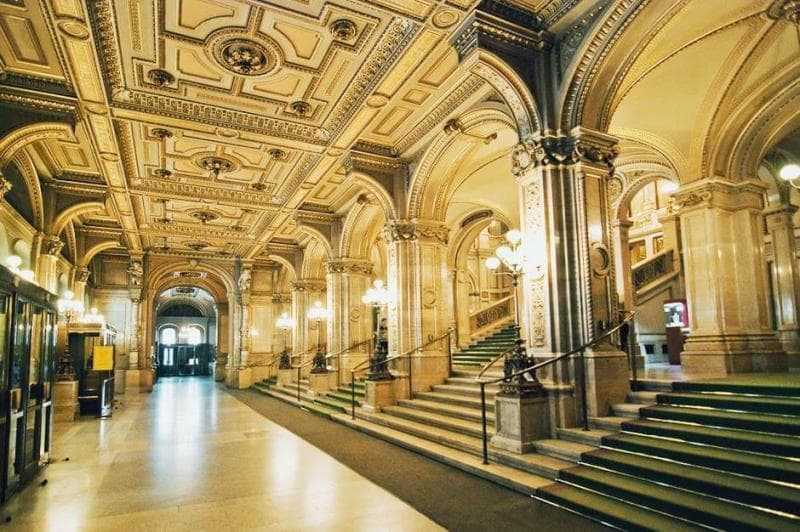
Discover Vienna State Opera's Marble Hall, a stunning Neo-Renaissance gem in Vienna, Austria, famed for its unique mosaics depicting backstage opera life.
Overview
Deep within the opulent walls of the Wiener Staatsoper, or Vienna State Opera, lies a hidden gem often discovered by curious visitors on guided tours: the Marble Hall. Nestled in the heart of Vienna, Austria, the State Opera is a world-renowned cultural institution, and the Marble Hall stands as a testament to its grandeur and enduring artistic spirit. This magnificent room is not merely a passageway but a destination in itself, offering a unique blend of historical gravitas and artistic detail, inviting visitors to pause and appreciate its intricate beauty.
As one of the distinguished 'state rooms' of the opera house, the Marble Hall serves as a captivating interlude during a tour, revealing layers of the building's storied past and architectural brilliance. It's a space where the elegance of Neo-Renaissance design meets symbolic artistry, making it a pivotal point in understanding the full scope of the opera's splendor.
History & Cultural Background
The Vienna State Opera itself is a masterpiece of Neo-Renaissance architecture, originally constructed between 1861 and 1869. Designed by architects August Sicard von Sicardsburg and Eduard van der Nüll, it was the first major building to adorn the newly established Vienna Ring Road. Initially known as the Vienna Court Opera, it was inaugurated on May 25, 1869, with a performance of Mozart's 'Don Giovanni'.
However, the building's early reception was surprisingly critical, with some likening its appearance to 'a sunken treasure chest'. Tragically, the architects did not live to see its completion or overcome the criticisms, with van der Nüll taking his own life and Sicardsburg dying shortly after. The opera house, a symbol of imperial Austria's cultural ambition, faced its greatest challenge on March 12, 1945, when it was severely damaged by an American bombardment during World War II. The auditorium and stage were almost entirely destroyed by fire. Miraculously, the front sections of the building, including the foyer, grand staircases, vestibule, and the Tea Room, remained largely intact due to precautionary measures. The Marble Hall, along with other critical areas, underwent meticulous reconstruction, contributing to the opera house's triumphant reopening in 1955, symbolizing Vienna's rebirth and resilience.
What Makes It Special
The Marble Hall stands out due to its exquisite use of materials and unique artistic storytelling. Its walls feature marble mosaics crafted from marble sourced from 13 different European countries, a truly remarkable feat that speaks to the continent's rich geological and artistic heritage. These mosaics are not abstract but depict common, lively backstage activities at the opera house. Imagine gazing upon a panel where a singer is captured in the act of trying on a costume, or scenes portraying the intricate mechanics of theatre flies, a dynamic dance rehearsal, and a harmonious choir rehearsal.
This particular design choice offers a fascinating glimpse into the world behind the curtain, a realm typically hidden from the audience. It provides a human and intimate counterpoint to the grand scale of the main performance hall. While its design might strike some as possessing a more 'modern' feel compared to other parts of the historic building, it adds an unexpected layer to the opera house's aesthetic narrative. Spanning an area of approximately 393 square meters, with impressive dimensions of 44.6 meters in length, 8.2 meters in width, and 5 meters in height, the Marble Hall is a capacious space designed to impress and accommodate.
Stories, Fun Facts & Local Details
The depictions within the Marble Hall's mosaics offer a silent narrative of the daily life and preparations that bring operatic magic to fruition. It's a 'behind-the-scenes' story etched in stone, showcasing the dedication and artistry of the entire opera company, from the soloists to the chorus and technical staff. The inclusion of marble from 13 different European countries is not just an aesthetic choice; it subtly nods to Vienna's historical position as a melting pot of cultures and the broader European influence on its artistic traditions. It's a 'fun fact' that also carries a deeper meaning, reminding us of the interconnectedness of European art and craftsmanship.
Historically, these grand reception halls, including the Marble Hall, played a significant role in the social fabric of Viennese high society during intermissions and before performances. They were spaces for mingling, discussion, and reinforcing social connections, all against a backdrop of breathtaking artistry. Even today, the hall can be rented for events, continuing its legacy as a prestigious gathering place.
Visitor Perspective
For visitors embarking on a guided tour of the Vienna State Opera, stepping into the Marble Hall is often a highlight. After marveling at the grand staircase and other ornate chambers, this room provides a moment of reflection. The sheer scale of the room, combined with the detailed marble work, creates an atmosphere of dignified splendor. Imagine the cool touch of the varied marbles and the subtle glow reflecting from the polished surfaces as you trace the stories within the mosaics. It's a sensory experience that transports you to another era.
The Marble Hall is more than just an architectural space; it's a vibrant piece of the opera's living history, allowing you to connect with the artistic process in a unique and tangible way. It makes the grand world of opera feel a little more accessible, revealing the human endeavor behind the dazzling performances. A visit here offers a deeper appreciation for the meticulous craftsmanship and the enduring spirit of one of the world's most celebrated opera houses.
Coordinates: 16.36889, 48.20306
View on Google Maps💬 How Travelers Describe This Place
Based on community votes
Must See
950Beautiful
287Photogenic
255Unique
231Interesting
86
Traveler Stories
Discover memorable experiences shared by travelers who have visited this place.
No traveler stories yet.
Be the first traveler to share what made this place memorable.

Tour
By
Spot
Discover amazing places around the world. Your journey starts here.
Explore
© 2026 TourBySpot. All rights reserved.