Main Auditorium
Vienna, Austria
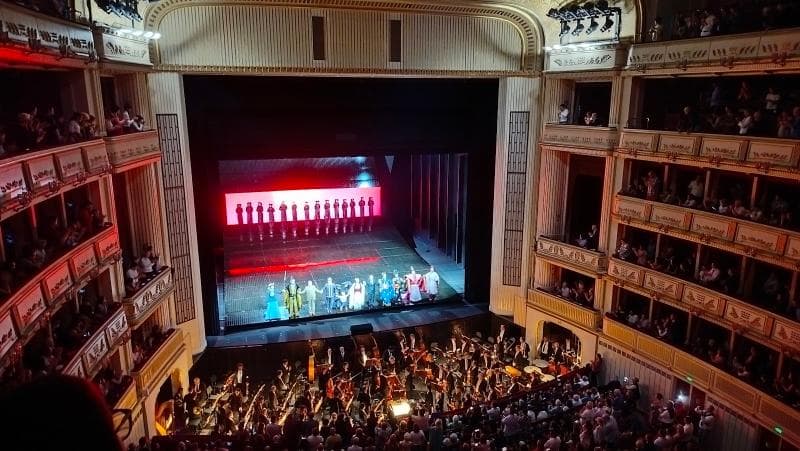
Discover the majestic Main Auditorium of Vienna State Opera in Vienna, Austria. Explore its Neo-Renaissance grandeur, rich history, and world-class performances.
Overview
The Main Auditorium, the majestic heart of the Vienna State Opera (Wiener Staatsoper), stands as a globally celebrated venue for opera and ballet in Vienna, Austria. This architectural masterpiece in Neo-Renaissance style is not merely a performance space but a symbol of Austria's enduring cultural legacy and resilience. With its rich history and acoustically refined design, the auditorium provides an unforgettable setting for world-class productions, drawing audiences from across the globe.
First opened in 1869, the auditorium, also referred to simply as the 'auditorium' of the Vienna State Opera, accommodates a substantial audience, typically around 1,709 seated guests and 567 standing places, bringing the total capacity to approximately 2,276 to 2,284. Its design ensures excellent sightlines and superb acoustics, making every performance an immersive experience.
History & Cultural Background
The Vienna State Opera, originally known as the 'Vienna Court Opera' (Wiener Hofoper), was inaugurated on May 25, 1869, with a grand performance of Mozart's 'Don Giovanni'. This significant event was attended by Emperor Franz Joseph I and Empress Elisabeth of Austria. The building itself, designed by architects August Sicard von Sicardsburg and Eduard van der Nüll, was constructed between 1861 and 1869, marking it as the first major structure on the newly developed Vienna Ring Road.
Tragically, the original auditorium met a devastating fate on March 12, 1945, when it was largely destroyed by Allied bombing during World War II. The flames consumed the main auditorium and stage, along with extensive decor and costumes. However, the front section, including the grand staircase and foyer, survived, a testament to its robust construction. A decade of meticulous restoration followed, driven by a deep sense of cultural pride. The opera house triumphantly reopened on November 5, 1955, with a performance of Beethoven's 'Fidelio', symbolizing the cultural rebirth and renewed independence of post-war Austria.
What Makes It Special
The Main Auditorium's Neo-Renaissance architecture is a testament to 19th-century grandeur, characterized by intricate stone carvings and opulent interior decorations. The horseshoe shape of the auditorium is not merely aesthetic; it is meticulously designed to optimize acoustics, providing an intimate and immersive experience for all in attendance. One of its most striking features is the magnificent crystal chandelier, weighing three tonnes and illuminated by 1,100 bulbs, casting a brilliant glow over the proceedings.
The sheer scale of the stage area is also remarkable, reportedly four times the size of the auditorium itself, allowing for elaborate productions and quick set changes facilitated by hydraulic lifts. This blend of historical opulence, acoustic excellence, and technical capability ensures that the Main Auditorium remains at the forefront of operatic performance worldwide.
Stories, Fun Facts & Local Details
The history of the Vienna State Opera is steeped in stories, some poignant. Its original architects, August Sicard von Sicardsburg and Eduard van der Nüll, faced harsh public criticism for their design, a fact that is said to have contributed to their premature deaths shortly after the building's completion or inauguration. Despite this initial reception, the opera house quickly established itself as a cultural cornerstone. Today, the Vienna State Opera is renowned for its incredibly active repertoire, often staging different operas daily without repeating a performance two nights in a row.
A unique feature for international visitors is the individual subtitle screens at every seat and standing place, offering translations in multiple languages, including English. The Main Auditorium also plays a central role in the annual Vienna Opera Ball, transforming from a performance space into one of the world's most glamorous ballrooms. The orchestra of the Vienna State Opera also forms the core of the world-famous Vienna Philharmonic.
Visitor Perspective
For visitors, stepping into the Main Auditorium of the Vienna State Opera is an experience that transcends a typical night out. The atmosphere is one of respectful anticipation, where the historical grandeur merges with the vibrancy of live performance. While elegant dress is common, the environment is welcoming and inclusive, encouraging all to partake in Vienna's rich musical tradition.
Whether seated in the stalls, a box, or utilizing the popular standing room tickets, the excellent acoustics ensure a captivating auditory journey. Observing the intricate details of the Neo-Renaissance architecture and the shimmering crystal chandelier enhances the visual spectacle. Many visitors arrive early to appreciate the grand interiors, including the main staircases and foyers, before settling into their seats for a memorable evening of opera or ballet.
Coordinates: 16.36889, 48.20306
View on Google Maps💬 How Travelers Describe This Place
Based on community votes
Unique
995Beautiful
964Photogenic
929Interesting
730Must See
482
Traveler Stories
Discover memorable experiences shared by travelers who have visited this place.
No traveler stories yet.
Be the first traveler to share what made this place memorable.

Tour
By
Spot
Discover amazing places around the world. Your journey starts here.
Explore
© 2026 TourBySpot. All rights reserved.