Backstage Tour Areas
Vienna, Austria
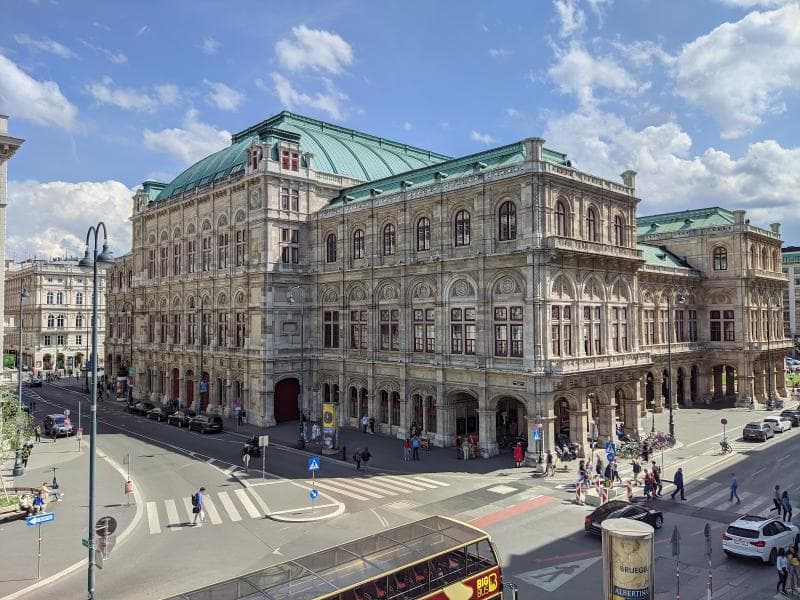
Explore the Vienna State Opera's backstage areas in Vienna, Austria. Discover hidden worlds, historical tales, and the magic behind world-class performances.
Overview
The Vienna State Opera, or Wiener Staatsoper, stands as a grand jewel of culture in the heart of Vienna, Austria. While its magnificent facade and stunning auditorium are widely celebrated, a true understanding of this artistic powerhouse often begins behind the proscenium arch. The Backstage Tour Areas offer a unique glimpse into the intricate world that breathes life into world-class opera and ballet productions daily. It's a journey from the public splendor to the hidden mechanics, revealing the dedication and expertise required to run one of the world's busiest opera houses. These guided tours allow curious travelers to traverse the labyrinthine corridors, stand upon the famed stage, and marvel at the sheer scale of the operation, providing a perspective rarely afforded to the audience.
History & Cultural Background
The Vienna State Opera, inaugurated in 1869 with a performance of Mozart's 'Don Giovanni', boasts a rich and dramatic history. Designed in the Neo-Renaissance style by architects August Sicard von Sicardsburg and Eduard van der Nüll, it was the first major building on the city's iconic Ringstrasse. Its early years were marked by public criticism, leading to tragedy for its architects, yet it quickly became a symbol of Viennese cultural excellence. A pivotal moment in its history occurred on March 12, 1945, when an American bombardment during World War II severely damaged the building. The auditorium and stage were destroyed by fire, along with vast collections of sets and costumes. However, remarkably, the front section, including the grand foyer, main staircases, vestibule, and the Emperor's private tea room, remained intact. Following extensive and meticulous reconstruction, the Opera House gloriously reopened in 1955 with Beethoven's 'Fidelio', symbolizing Austria's post-war cultural rebirth.
What Makes It Special
Stepping behind the scenes of the Vienna State Opera is to witness a living, breathing organism of artistic creation and technical marvel. The backstage areas are a world unto themselves, a 'city' within the city, employing over 1,000 individuals, including some 250 stagehands. The sheer size of the stage is astounding; it is four times larger than the auditorium, equipped with sophisticated hydraulic lifts that allow for rapid and seamless set changes. This incredible engineering requires so much power that the opera house maintains its own substations. Imagine watching as entire worlds, from ancient Egypt to 16th-century Cyprus, are meticulously assembled and disassembled for different performances, sometimes on the same day. The building also houses an immense collection of approximately 180,000 costumes, stored in an adjacent building and connected by an underground tunnel, a testament to the scale and variety of its productions.
Stories, Fun Facts & Local Details
During a backstage tour, visitors are often treated to fascinating anecdotes that bring the history and daily life of the opera to vivid life. You might learn about the famous personalities who graced its stage and halls, from Gustav Mahler, whose travelling piano can sometimes be seen, to legendary conductors and singers. A particularly intriguing detail is the Emperor's Tea Room, a sumptuously decorated private chamber that was exclusively for Emperor Franz Joseph, and which visitors can now experience on a tour. The tours also highlight the remarkable resilience of the building and its staff, particularly in the aftermath of its wartime destruction. The decision to rebuild it exactly as it was, rather than modernize, speaks volumes about Vienna's reverence for its cultural heritage. The focus on precision, craft, and creativity by the hundreds of dedicated staff members ensures that every performance is a magical experience.
Visitor Perspective
For any curious traveler, a backstage tour of the Vienna State Opera offers an unparalleled experience. It's an opportunity to truly appreciate the hidden infrastructure and immense human effort behind the glamorous performances. Standing on the grand stage, looking out into the vast, ornate auditorium, provides a thrilling sensation, offering a unique perspective usually reserved for performers. The 40-minute guided tours are conducted in several languages, including German, English, and Spanish, making them accessible to international visitors. It's an intimate journey through the historic foyers, down the magnificent staircases, and into the heart of the operational areas, revealing the interplay of art, architecture, and technology. You'll gain a deeper understanding not just of opera, but of the cultural significance this institution holds for Vienna and the world.
Coordinates: 16.36889, 48.20306
View on Google Maps💬 How Travelers Describe This Place
Based on community votes
Must See
540Photogenic
252Unique
147Beautiful
114Interesting
19
Traveler Stories
Discover memorable experiences shared by travelers who have visited this place.
No traveler stories yet.
Be the first traveler to share what made this place memorable.

Tour
By
Spot
Discover amazing places around the world. Your journey starts here.
Explore
© 2026 TourBySpot. All rights reserved.