Uspenski Cathedral
Helsinki, Finland
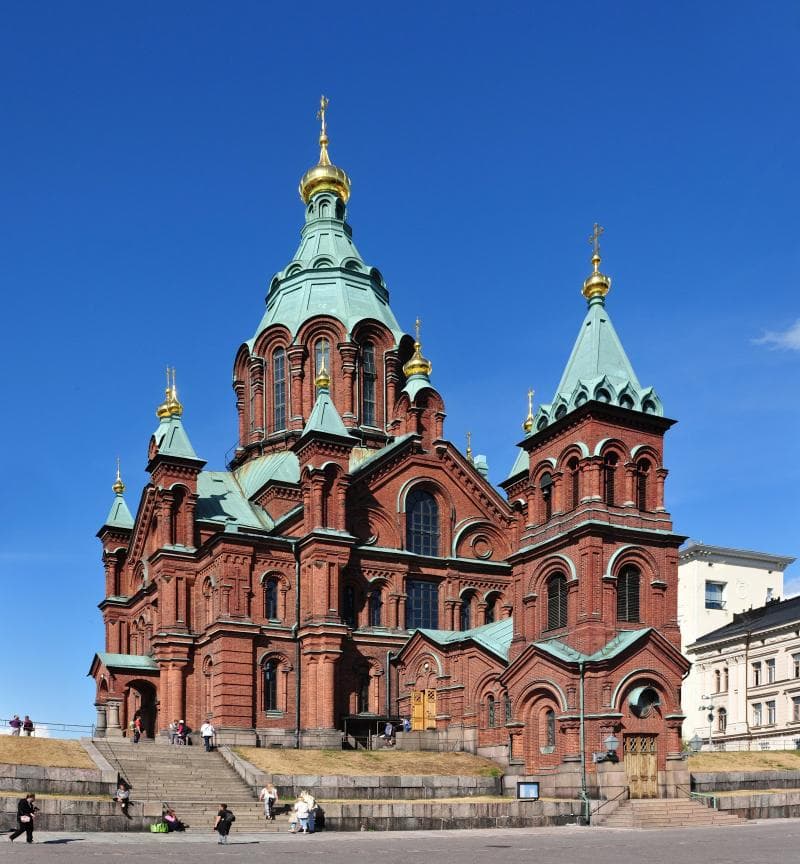
Explore Uspenski Cathedral, the largest Orthodox church in Helsinki, Finland. Discover its stunning Russian-Byzantine architecture, golden domes, and rich history.
Overview
Perched majestically on the Katajanokka peninsula, the Uspenski Cathedral stands as a striking symbol of Eastern Orthodoxy in Helsinki, Finland. This magnificent red-brick edifice, crowned with gleaming golden onion domes, is more than just a church; it is the main cathedral of the Orthodox Parish of Helsinki and the Diocese of Helsinki. Recognized as the largest Orthodox church in both Northern and Western Europe, its grandeur is unmistakable against the city skyline and the shimmering waters of the harbor. Dedicated to the Dormition of the Theotokos, meaning the 'Falling Asleep' of the Virgin Mary, the cathedral attracts approximately half a million visitors annually, drawn by its unique beauty and spiritual aura.
History & Cultural Background
The Uspenski Cathedral's history is deeply intertwined with Finland's past as an autonomous Grand Duchy under Russian rule in the 19th century. As Helsinki's Orthodox population grew, there arose a need for a larger place of worship. Construction commenced between 1862 and 1868, culminating in its consecration on October 25, 1868. The cathedral was designed by the Russian church architect Aleksei M. Gornostayev, a pioneer of Russian revivalist architecture, though the work was continued by Ivan Varek after Gornostayev's death in 1862. Funding for this ambitious project came primarily from donations by parishioners and individual benefactors. A fascinating detail of its construction involves the bricks used for its facade; many were transported by barge from the Bomarsund fortress in Åland, which had been destroyed during the Crimean War. The cathedral's dedication to the Dormition of the Mother of God was made at the wishes of Emperor Alexander II of Russia, the sovereign of Finland at the time. Today, Uspenski Cathedral operates under the Finnish Orthodox Church, an autonomous local church under the Ecumenical Patriarchate of Constantinople, signifying its Finnish identity despite its Russian origins.
What Makes It Special
The Uspenski Cathedral is a stunning example of Russian-Byzantine revival architecture, setting it apart from the predominantly Lutheran landscape of Helsinki. Its most distinctive features are its 13 golden onion domes, which symbolically represent Christ and the Twelve Apostles. The central cupola soars to a height of 33 meters, and each dome is adorned with 24-carat gold leaf, shimmering brilliantly in the Nordic light. The exterior's rich red brick, sourced from a historic fortress, tells a story of resilience and repurposing. Inside, visitors are greeted by a breathtaking array of vibrant icons, ornate chandeliers, and a richly decorated iconostasis. This icon-covered wall, painted by the Russian artist Pavel S. Šiltsov, combines classic and Russian-Byzantine decorative motifs, separating the nave from the sanctuary. Its elevated position on Katajanokka hill provides panoramic views of Helsinki, including the bustling harbor and the contrasting white neoclassical Helsinki Cathedral, creating a visual dialogue between different architectural and cultural influences.
Stories, Fun Facts & Local Details
The name 'Uspenski' itself holds cultural significance, deriving from the Old Church Slavonic word 'uspenie', which refers to the Dormition, or 'falling asleep', of the Theotokos, highlighting the cathedral's spiritual dedication. A commemorative plaque honoring Tsar Alexander II can be found at the rear of the cathedral, acknowledging his role in its dedication and his relatively supportive stance towards Finnish autonomy during his reign. The cathedral hosts an annual 'praasniekka' (church festival) on August 15th, celebrating the Feast of the Dormition of the Virgin Mary, a significant event that draws both local worshippers and pilgrims. For a touch of intrigue, a valuable 19th-century icon of St. Nicholas – The Wonder Worker, which had been moved to Helsinki from Vyborg during World War II, was stolen from the cathedral in 2007. Below the main sanctuary lies a crypt chapel named after St. Alexander Hotovitzky, a Finnish-born Orthodox priest and martyr, which occasionally hosts exhibitions and lectures on ecclesiastical art. Beyond its religious functions, the cathedral is also a notable venue for numerous concerts throughout the year.
Visitor Perspective
Visiting Uspenski Cathedral offers a journey through history, art, and spirituality. While it remains an active place of worship, it welcomes approximately 500,000 visitors each year. There is an admission fee of 5 euros for adults, introduced in May 2025, with children under 18 years old granted free entry. This fee helps support the upkeep and restoration of the cathedral. During divine services, entry is free, but visitors are asked to observe quietly and respectfully. Modest clothing is appreciated, especially when attending services. Photography is generally permitted without flash, but should be avoided during religious ceremonies. Visitors can explore the richly decorated interior, marvel at the golden altars and icons, and appreciate the serene atmosphere. The hilltop location provides an excellent vantage point for capturing stunning photographs of Helsinki's cityscape and harbor. Guided presentations are also available during the summer season, offering deeper insights into the cathedral's heritage.
Coordinates: 24.96, 60.1685
View on Google Maps💬 How Travelers Describe This Place
Based on community votes
Unique
886Interesting
564Must See
443Beautiful
233Photogenic
201
Traveler Stories
Discover memorable experiences shared by travelers who have visited this place.
No traveler stories yet.
Be the first traveler to share what made this place memorable.
Things to see at Uspenski Cathedral



Tour
By
Spot
Discover amazing places around the world. Your journey starts here.
Explore
© 2026 TourBySpot. All rights reserved.