Main Nave
Helsinki, Finland
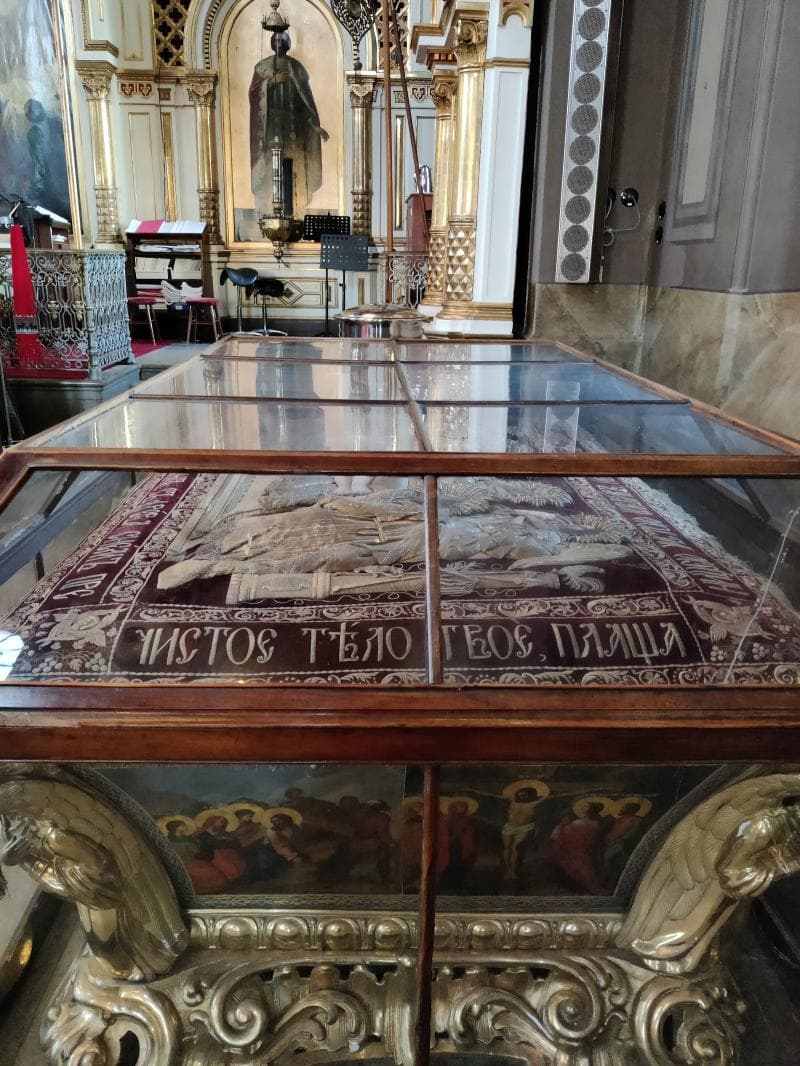
Explore the majestic Main Nave of Uspenski Cathedral in Helsinki, Finland. Discover its rich Russian-Byzantine architecture, ornate iconostasis, and deep history.
Overview
Perched majestically on the Katajanokka peninsula, the Uspenski Cathedral in Helsinki, Finland, is an unmistakable landmark. As the largest Orthodox church in Western and Northern Europe, its striking red-brick facade and thirteen golden onion domes command attention from across the city's harbor. Within this architectural marvel, the Main Nave serves as the heart of worship and visitor experience, a grand space that immediately transports one into a world of profound spiritual artistry and historical depth. It is here that the faithful gather and curious travelers marvel at the cathedral's opulent interior, a stark and beautiful contrast to the more minimalist churches often found in the Nordic region.
History & Cultural Background
The Uspenski Cathedral's story is deeply intertwined with Finland's past as an autonomous Grand Duchy under Russian rule. Consecrated on October 25, 1868, it was designed by Russian architect Aleksey Gornostayev, a pioneer of Russian revivalist architecture, in a distinctive Russian-Byzantine style. The cathedral's construction began in 1862, after Gornostayev's death, and was completed under the leadership of architect Ivan Varnek. Interestingly, some 700,000 bricks used in its construction were transported by barge from the Bomarsund Fortress in the Åland Islands, which had been destroyed during the Crimean War. Dedicated to the Dormition of the Theotokos (Virgin Mary), as wished by Emperor Alexander II, the cathedral was built to serve Helsinki's growing Orthodox community. It stands today not only as a place of active worship but also as a powerful symbol of the historical and cultural ties between Finland and Russia, reflecting a period when Orthodox believers, though a minority, required a grand place of worship.
What Makes It Special
Entering the Main Nave of Uspenski Cathedral is an experience of awe-inspiring grandeur. The nave's noticeably high ceilings create an expansive sense of space, drawing the eye upward towards the beautifully adorned domes. The interior is richly decorated, a testament to Orthodox artistry, and provides a significant contrast to the typically simpler interiors of Lutheran churches in Helsinki. The focal point of the Main Nave is undoubtedly the magnificent iconostasis, a richly decorated wall of icons that separates the nave, where the congregation stands, from the sanctuary, which houses the altar. This screen, painted by Russian artist and academic Pavel Siltsov, masterfully blends classical and Byzantine elements, creating a stunning visual display that is both a spiritual barrier and a gateway to the divine. The architectural design, with its arches, domes, and intentional play of light, ensures that the space itself becomes a central element of the worship experience.
Stories, Fun Facts & Local Details
One of the most intriguing details about the Uspenski Cathedral is the provenance of its materials: those 700,000 bricks from the demolished Bomarsund Fortress give the very structure a tangible connection to historical conflict and repurposing. The cathedral's dedication to the Dormition of the Theotokos is reflected in its Old Church Slavonic name, 'Uspenie', and its feast day on August 15th is celebrated with a traditional 'praasniekka', a church festival attracting both locals and pilgrims. The ornate iconostasis in the Main Nave, a masterpiece by Pavel Siltsov, stands as a vibrant example of Orthodox artistic tradition. Visitors often notice the distinct difference in interior decoration compared to other Helsinki churches; the Uspenski Cathedral embraces an abundance of gold accents, intricate paintings, and a visual richness that is characteristic of Orthodox Christian spaces.
Visitor Perspective
For visitors stepping into the Main Nave, the atmosphere is often described as serene and enveloping, a sacred hush permeated by the honeyed scent of beeswax candles. The cathedral remains an active place of worship, hosting regular liturgies, weddings, and baptisms, allowing travelers to witness living Orthodox traditions. While admiring the intricate details of the icons and the grandeur of the architecture, many choose to light a candle, participating in a centuries-old spiritual practice. Visitors are encouraged to dress modestly and maintain a respectful quiet, as the cathedral is a sacred space for its community. The Main Nave provides a profound sense of history and devotion, offering a unique cultural experience that is both visually stunning and spiritually resonant.
Coordinates: 24.96, 60.16833
View on Google Maps💬 How Travelers Describe This Place
Based on community votes
Photogenic
872Interesting
846Must See
201Beautiful
121Unique
87
Traveler Stories
Discover memorable experiences shared by travelers who have visited this place.
No traveler stories yet.
Be the first traveler to share what made this place memorable.

Tour
By
Spot
Discover amazing places around the world. Your journey starts here.
Explore
© 2026 TourBySpot. All rights reserved.