Chapel Areas
Helsinki, Finland
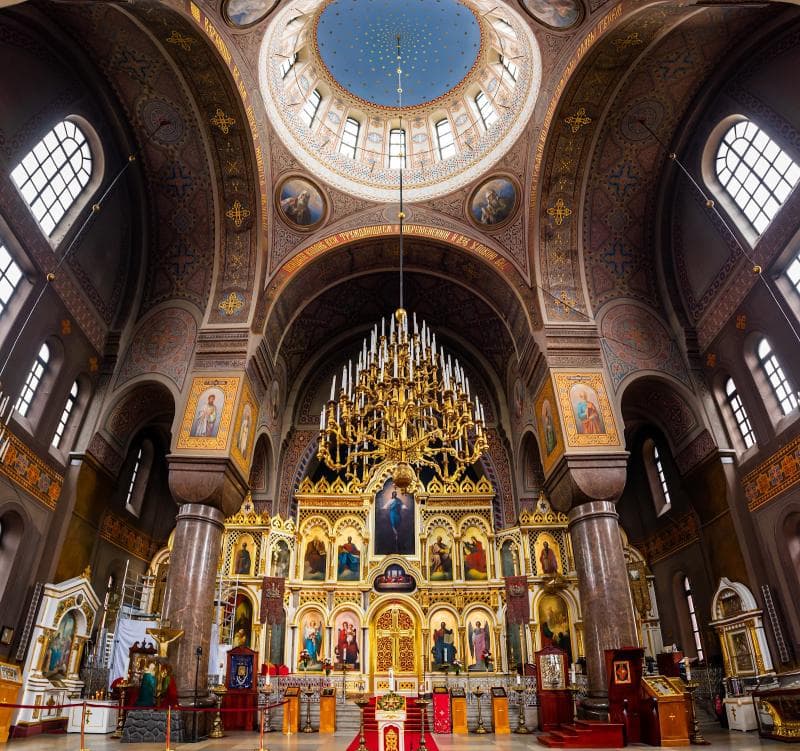
Explore Uspenski Cathedral's Chapel Areas in Helsinki, Finland, Europe's largest Orthodox church. Discover its history, icons, and crypt chapel.
Overview
Perched majestically on the Katajanokka peninsula, Uspenski Cathedral stands as an unmissable landmark in Helsinki, Finland. This striking red-brick edifice, adorned with thirteen golden onion domes, is the principal cathedral of the Orthodox Church of Finland and holds the distinction of being the largest Orthodox church in both Northern and Western Europe. Dedicated to the Dormition of the Theotokos, or the 'Falling Asleep' of the Virgin Mary, its name 'Uspenski' derives from the Old Church Slavonic word 'uspenie'. Completed in 1868, the cathedral's imposing presence and intricate design invite visitors to delve into a rich tapestry of history, faith, and architectural splendor, offering a profound glimpse into Finland's cultural past and its connection to the Orthodox tradition.
History & Cultural Background
The origins of Uspenski Cathedral are deeply intertwined with Finland's historical ties to Russia. In the early 19th century, after Helsinki became the capital of the autonomous Grand Duchy of Finland under Russian rule, there was a growing need for a prominent Orthodox church to serve the expanding Orthodox community. Tsar Alexander I decreed in 1814 that a portion of the salt import tax would fund the construction of both a Lutheran and an Orthodox church, setting the stage for Uspenski's creation.
Designed by the Russian architect Aleksey Gornostayev in a distinctive Russian Revival style, construction commenced in 1862 and concluded in 1868, with Ivan Varnek overseeing the final stages after Gornostayev's passing. A remarkable detail of its construction is that approximately 700,000 bricks used in the cathedral were transported by barge from the Bomarsund Fortress in the Åland Islands, which had been destroyed during the Crimean War. The cathedral's dedication to the Dormition of the Mother of God was made according to the wishes of Tsar Alexander II. While built during a period of Russian influence, Uspenski Cathedral today firmly belongs to the Finnish Orthodox Church, reflecting a unique national identity within the broader Orthodox world.
What Makes It Special
Uspenski Cathedral is special not only for its grand scale as the largest Orthodox church in Northern and Western Europe but also for its profound spiritual and artistic depth. The thirteen golden onion domes, which symbolically represent Christ and the twelve Apostles, gleam brilliantly against the red-brick facade, making it a distinctive feature of Helsinki's skyline.
Inside, the cathedral's main sanctuary captivates with its richly decorated interior, a stark contrast to the often more austere Nordic churches. The central highlight is the magnificent iconostasis, a screen adorned with numerous icons that separates the nave from the sanctuary, painted by the Russian artist Pavel S. Shiltsov. Beyond the main hall, visitors can find the crypt chapel, a solemn space dedicated to Saint Alexander Hotovitzky, a former vicar of Helsinki who was martyred during the Great Purge and later canonized. This particular chapel offers a quieter, more intimate atmosphere for reflection. The cathedral also houses other valuable icons, such as the Kozelshchyna wonderworking icon of the Mother of God, considered a significant spiritual treasure of the Finnish Orthodox Church. An icon depicting the birth of Christ serves as a poignant memorial to the Rauhankappeli chapel, a former separate structure that once stood before the cathedral.
Stories, Fun Facts & Local Details
One fascinating detail is the reuse of materials; the 700,000 bricks from the Bomarsund Fortress tell a story of resilience and repurposing in construction. Another intriguing anecdote involves the cathedral's architect, Aleksey Gornostayev, who, despite his vision, tragically passed away before his masterpiece was completed, leaving his team to realize his design.
The cathedral has also been the site of dramatic events, including the theft of a rare 19th-century icon of St. Nicholas the Wonderworker in 2007, an incident that occurred in broad daylight and remains unsolved. On a more uplifting note, the presence of the crypt chapel dedicated to St. Alexander Hotovitzky honors a significant figure in Orthodox history, recognizing his service in Helsinki before his martyrdom. The Uspenski Cathedral is not just a building; it's a living narrative where every icon, every dome, and every brick holds a piece of Finnish and Orthodox heritage.
Visitor Perspective
Visiting Uspenski Cathedral offers a journey into spiritual tranquility and architectural grandeur. As an active place of worship, it attracts approximately half a million visitors annually, making it one of Helsinki's most popular cultural landmarks. While the cathedral is generally open to the public, it's advisable to check the official website for current opening hours, as they can vary, especially due to services and events. A recent change includes an entrance fee for visitors over 18 years old outside of worship services, which helps support the cathedral's upkeep. For those with mobility needs, wheelchair access to the church hall is available via a lift located on the western side of the building, and there's also an accessible restroom in the crypt. Inside, visitors are encouraged to observe services respectfully and may generally take photos without flash, provided no events are taking place.
Coordinates: 24.96, 60.1685
View on Google Maps💬 How Travelers Describe This Place
Based on community votes
Unique
886Interesting
564Must See
443Beautiful
233Photogenic
201
Traveler Stories
Discover memorable experiences shared by travelers who have visited this place.
No traveler stories yet.
Be the first traveler to share what made this place memorable.

Tour
By
Spot
Discover amazing places around the world. Your journey starts here.
Explore
© 2026 TourBySpot. All rights reserved.