Bell Tower
Helsinki, Finland
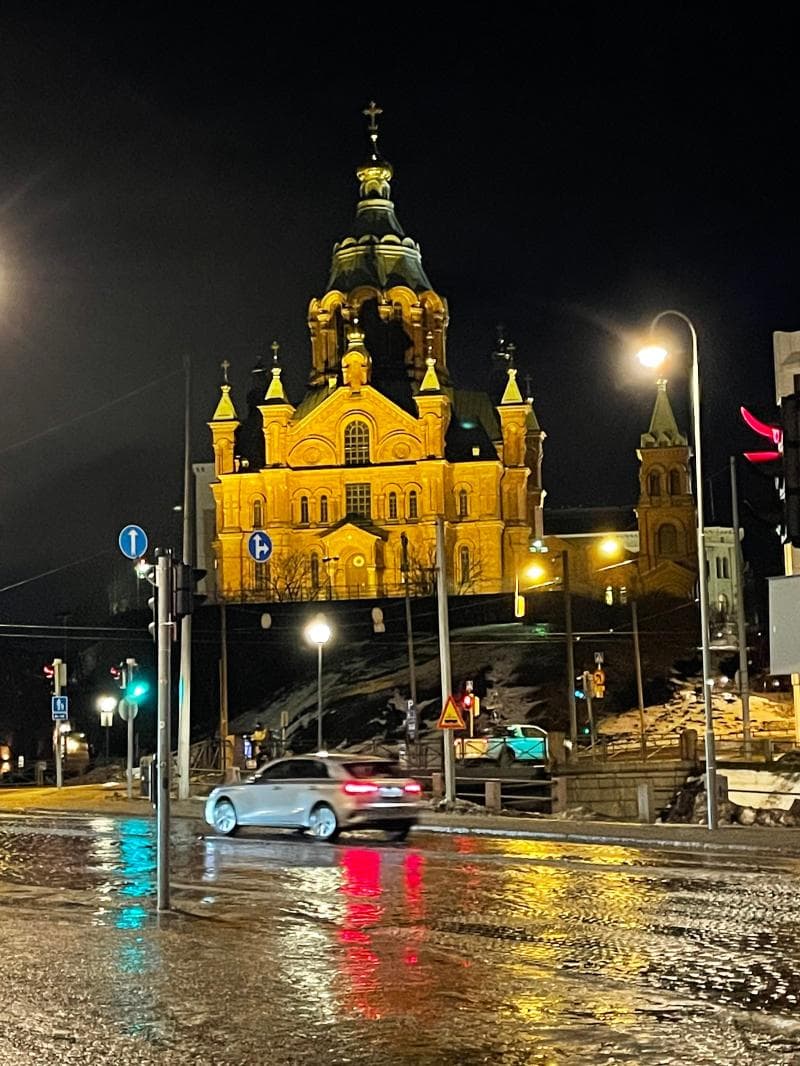
Discover the historic Bell Tower of Uspenski Cathedral in Helsinki, Finland. Learn about its Russian-made bells, unique Zvon playing style, and its significance to the city's Orthodox heritage.
Overview
Perched majestically on the Katajanokka peninsula in Helsinki, Finland, the Bell Tower of Uspenski Cathedral stands as an imposing and melodious sentinel. As an integral part of the largest Orthodox church in Western Europe, this bell tower is far more than just a structural element; it is a vital contributor to the cathedral's Russian-Byzantine grandeur and Helsinki's soundscape. Its striking presence, with bells cast in Moscow, offers a unique blend of architectural beauty and rich auditory tradition, echoing centuries of history and spiritual devotion across the city. The tower's architectural journey reflects the evolving design of the Uspenski Cathedral itself, transitioning from initial plans to its current stone-built form that houses an impressive collection of eight bells.
While visitors cannot physically ascend the Bell Tower, its visual impact and the resonant sound of its chimes remain a profound experience for anyone exploring this iconic Helsinki landmark. It serves as a constant reminder of the deep cultural and historical ties between Finland and Russia, particularly during the Grand Duchy era when the cathedral was conceived and constructed.
History & Cultural Background
The history of Uspenski Cathedral's Bell Tower is intertwined with the cathedral's broader narrative, which began with its design by Russian architect Aleksey Gornostayev in the late 1850s. Gornostayev, a pioneer of Russian revivalist architecture, envisioned a grand Orthodox edifice for Helsinki's growing Orthodox community. Interestingly, his initial plans for the tower evolved; while the first design might have featured a belfry, it was eventually replaced with the concept of a prominent bell tower.
Construction of the cathedral, and by extension its bell tower, commenced in 1862 after Gornostayev's death, with architect Ivan Varnek continuing the work. The entire bell instrument, comprising eight magnificent bells, was installed in 1869, shortly after the cathedral's consecration in 1868. Early accounts suggest that the upper part of the bell tower was initially constructed from wood. However, approximately two decades after its completion, this wooden section was rebuilt in stone to accommodate new, heavier bells, signifying a significant upgrade and solidification of its structure.
The casting of these bells in Moscow underscores the strong Russian influence on Finland during the 19th century, a period when Finland was an autonomous Grand Duchy under Russian rule. This historical context imbues the Bell Tower with a cultural significance that extends beyond its religious function, serving as a tangible link to a pivotal era in Finnish history.
What Makes It Special
The Bell Tower of Uspenski Cathedral holds several distinctions that make it particularly special. Foremost among these is its principal bass bell, which measures over two meters in diameter and is renowned as the largest bell in all of Finland. This colossal bell, along with seven others, forms a complete set of eight bells, all masterfully cast in Moscow.
The tower's architecture itself is noteworthy, reflecting the robust Russian-Byzantine revival style that characterizes the entire cathedral. The transition from an initial wooden structure to its present stone form for its upper sections highlights a commitment to durability and grandeur as the cathedral matured. The bells are played in a traditional method known as 'Zvon', which involves a specific sequence and rhythm, creating a powerful and evocative soundscape distinct to Orthodox liturgical practices.
The harmonious blend of these eight bells produces a rich and complex melody that can be heard across the Katajanokka district, adding a timeless quality to the Helsinki environment. The intricate notes produced by the bells—E, F#, G#, D#, B, C#, F#—demonstrate a carefully tuned musicality, designed to uplift and inspire. This sonic heritage, combined with the tower's prominent visual role in the city's skyline, solidifies its status as a unique cultural and architectural gem.
Stories, Fun Facts & Local Details
One of the most compelling fun facts about the Uspenski Cathedral's Bell Tower is the sheer size of its largest bell—at over two meters in diameter, it holds the title of the biggest bell in Finland. Imagine the deep, resonant tones that emanate from such a magnificent instrument, a sound that has marked moments of joy and solemnity for over a century. The fact that these bells were cast in Moscow adds an authentic layer to their story, connecting Helsinki directly to the traditional centers of Orthodox bell-making.
The method of playing these bells, known as 'Zvon', is a specific and ancient technique in Orthodox bell ringing. It's not merely a random chiming but a skilled art form, where bell ringers use a 'primitive chimestand' to create complex patterns of sound. The individual notes of the bells—E, F#, G#, D#, B, C#, F#—reveal a carefully chosen scale, designed to produce a specific spiritual atmosphere.
For those with a keen eye, it's possible to spot some of the smaller bells externally mounted on the third stage of the bell tower, a detail that provides a glimpse into the intricate mechanics housed within. The tower's evolution from a wooden top to a stone one reflects a fascinating tale of architectural refinement and the pursuit of both structural integrity and aesthetic perfection, ensuring its enduring presence on the Helsinki skyline.
Visitor Perspective
For the curious traveler, encountering the Bell Tower of Uspenski Cathedral is primarily a visual and auditory experience. Standing on the rocky Katajanokka peninsula, the tower is an unmissable part of the cathedral's iconic red-brick façade and golden onion domes. Its sturdy stone structure contributes significantly to the cathedral's dramatic silhouette against the Helsinki sky. While many historic bell towers around the world offer interior access, it is important for visitors to know that there is no public access to the inside of Uspenski Cathedral's Bell Tower.
Despite this, the tower's imposing exterior and the powerful resonance of its bells are an attraction in themselves. If you are fortunate enough to visit during a service or a special occasion, you may hear the deep, rich tones of Finland's largest bell, accompanied by its seven companions. The sound is a deeply atmospheric element, transporting listeners to a spiritual realm and offering a profound sense of the cathedral's ongoing religious life. Observing the tower from the outside, perhaps from the nearby Market Square or the harbor, allows for appreciation of its architectural details and its harmonious integration into the broader Russian-Byzantine design of the Uspenski Cathedral. It is a striking landmark that completes the grandeur of this significant Orthodox monument.
Coordinates: 24.959885625561192, 60.16851689663621
View on Google Maps💬 How Travelers Describe This Place
Based on community votes
Photogenic
872Interesting
846Must See
201Beautiful
121Unique
87
Traveler Stories
Discover memorable experiences shared by travelers who have visited this place.
No traveler stories yet.
Be the first traveler to share what made this place memorable.

Tour
By
Spot
Discover amazing places around the world. Your journey starts here.
Explore
© 2026 TourBySpot. All rights reserved.