Golden Domes
Helsinki, Finland
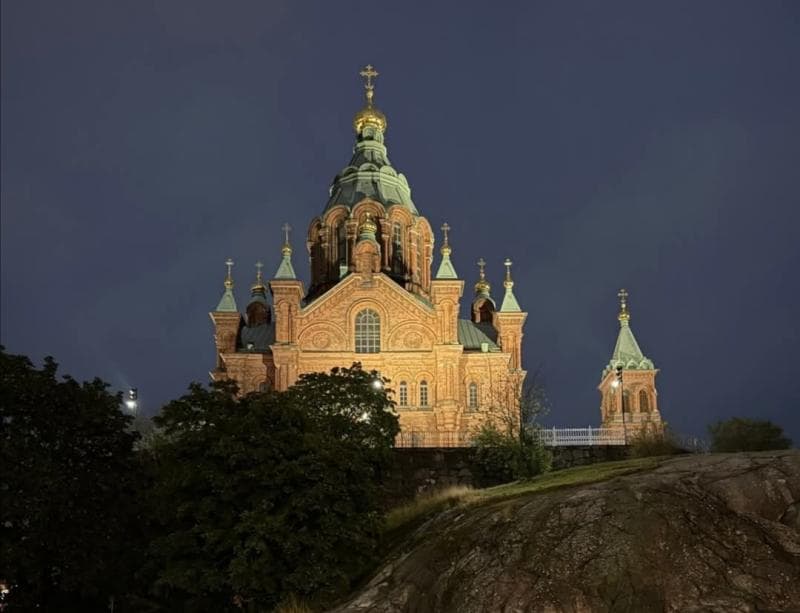
Discover the radiant Golden Domes of Uspenski Cathedral in Helsinki, Finland. Explore the largest Orthodox church in Western Europe, its rich history, and stunning Byzantine architecture.
Overview
Perched majestically on the Katajanokka peninsula, the Uspenski Cathedral with its prominent Golden Domes stands as an undeniable landmark in Helsinki, Finland. This striking red-brick edifice is not only an architectural marvel but also a profound symbol of Finland's historical ties and the enduring presence of Eastern Orthodoxy in the Nordic region. Its thirteen gilded domes, gleaming against the northern sky, immediately capture the eye and invite a closer look at the largest Orthodox church in Western Europe.
The cathedral's impressive silhouette, featuring its signature onion domes, offers a dramatic contrast to Helsinki's often more austere Lutheran architecture. Its elevated position provides picturesque views of the city and its harbor, making it a beloved subject for photographers and a serene spot for contemplation.
History & Cultural Background
The Uspenski Cathedral was constructed between 1862 and 1868, a period when Finland was an autonomous Grand Duchy within the Russian Empire. Its design, conceived by the Russian architect Aleksei M. Gornostajev, reflects the opulent Russian-Byzantine revival style, a deliberate architectural choice that underscored Finland's connection to the Russian state at the time.
The very fabric of the cathedral tells a historical tale: many of the bricks used in its construction were salvaged from the Bomarsund Fortress in the Åland Islands, which had been destroyed during the Crimean War. This reuse of materials adds a layer of unexpected history to the cathedral's foundation. Dedicated to the Dormition of the Theotokos, the Virgin Mary, the cathedral's name 'Uspenski' itself derives from the Old Church Slavonic word for 'dormition' or 'falling asleep'.
What Makes It Special
The true standout feature of the Uspenski Cathedral, and indeed its namesake for many, are its thirteen magnificent Golden Domes. These domes are not merely decorative; they hold profound symbolic meaning within Orthodox tradition, representing Christ and his twelve Apostles. The central dome, towering to a height of 33 meters, is particularly striking, topped with a gilded Orthodox cross that reaches towards the heavens.
Each of these iconic onion domes is meticulously adorned with 24-carat gold leaf, a detail that ensures they shimmer brilliantly, especially when bathed in sunlight, making them visible from various points across Helsinki. This lavish gilding, which has been restored and re-gilded over the years, most notably in the early 2000s, is a testament to the cathedral's spiritual significance and its role as a beacon of Orthodox faith. Their unique form and radiant finish distinguish the Uspenski Cathedral as an instantly recognizable and deeply cherished architectural gem.
Stories, Fun Facts & Local Details
The Uspenski Cathedral is more than just an architectural wonder; it is a vibrant center for the Finnish Orthodox Church. It serves as the main cathedral for the Orthodox Parish of Helsinki and hosts regular liturgies, weddings, and baptisms. The feast day of the Dormition of the Virgin Mary, celebrated annually on August 15th, is a significant event that draws both locals and pilgrims.
Inside, visitors are greeted by an ornate iconostasis, a screen separating the nave from the sanctuary, which features detailed paintings by Russian artist Pavel Siltsov. The interior is rich with icons, frescoes, and chandeliers, creating an atmosphere of reverence and spiritual depth that often contrasts with the more minimalist interiors of local Lutheran churches. The cathedral's location on a rocky hill also provides a natural viewing platform, offering stunning panoramic vistas of Helsinki, particularly beautiful during sunrise or sunset when the golden domes catch the light.
Visitor Perspective
For any curious traveler, a visit to the Uspenski Cathedral offers a rich cultural experience. While it remains an active place of worship, welcoming approximately 500,000 visitors each year, it also stands as one of Helsinki's most important cultural landmarks. Entry to the cathedral is generally free, though donations are always appreciated to help maintain this historic site.
When visiting, travelers are encouraged to dress modestly and maintain a respectful quiet, particularly during services. While photography is often permitted without flash, it's advisable to check for any restrictions, especially during religious events. Stepping inside, one can often experience the soft glow of candlelight, the subtle scent of incense, and the quiet reverence of worshipers, providing a peaceful retreat from the city's bustle. Taking a moment to appreciate the intricate details of the icons and the overall grandeur of the interior is a rewarding part of the experience, offering a glimpse into a profound spiritual tradition.
Coordinates: 24.9599, 60.1685
View on Google Maps💬 How Travelers Describe This Place
Based on community votes
Interesting
443Must See
414Unique
310Beautiful
277Photogenic
233
Traveler Stories
Discover memorable experiences shared by travelers who have visited this place.
No traveler stories yet.
Be the first traveler to share what made this place memorable.

Tour
By
Spot
Discover amazing places around the world. Your journey starts here.
Explore
© 2026 TourBySpot. All rights reserved.