Uffizi Gallery
Florence, Italy
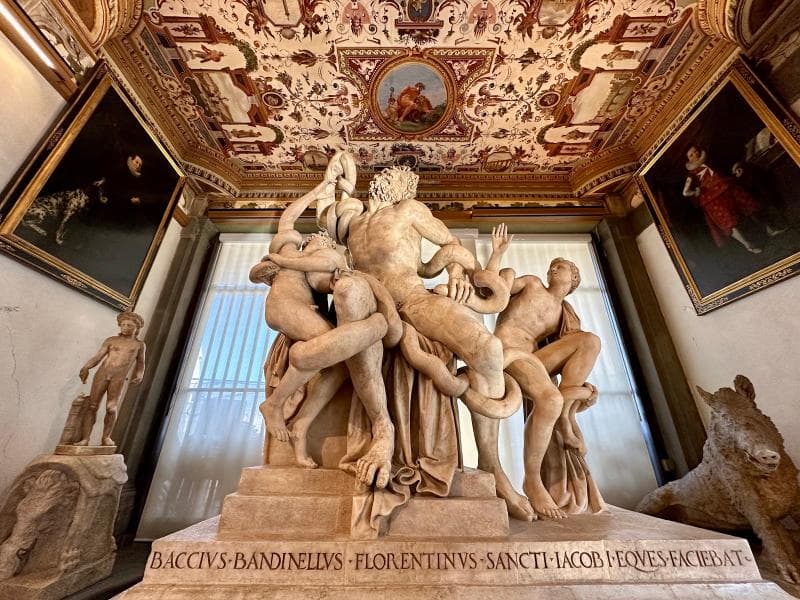
Discover the Uffizi Gallery in Florence, Italy, home to iconic Renaissance art by Botticelli, Leonardo, and Michelangelo. Explore its rich history and cultural treasures.
Overview
The Uffizi Gallery, nestled in the heart of Florence, Italy, stands as a beacon of artistic and historical significance. It is not merely a museum but a sprawling testament to the Italian Renaissance, housing an unparalleled collection of masterpieces that draw millions of visitors each year. Adjacent to the Piazza della Signoria, this prominent art museum is celebrated worldwide for its breathtaking array of paintings and ancient sculptures, offering a deep dive into the creative genius of an era that redefined Western art.
History & Cultural Background
The story of the Uffizi begins not as a museum, but as a grand administrative complex. Construction commenced in 1560 under the ambitious Cosimo I de' Medici, the first Grand Duke of Tuscany, who commissioned his trusted artist and architect, Giorgio Vasari, for the design. The goal was to consolidate the various administrative and judiciary offices of Florence into one majestic structure, hence its name, 'Uffizi,' which literally translates to 'offices' in Italian.
Following Vasari's death, the work was continued and completed by Alfonso Parigi and Bernardo Buontalenti by 1581. The Medici family, renowned patrons of the arts, amassed an extraordinary collection of artworks over centuries, which eventually filled the building. Cosimo's son, Francesco I de' Medici, played a pivotal role in transforming the top floor into a private gallery for the family's treasures, featuring the famed octagonal Tribuna.
A significant turning point came with Anna Maria Luisa de' Medici, the last Medici heiress. Through her 'Family Pact,' she bequeathed the immense Medici art collections to the city of Florence, ensuring they would forever remain within its borders and be accessible to all. This act laid the foundation for the Uffizi to become one of the first modern museums in the world, officially opening its doors to the public in 1769 under Grand Duke Peter Leopold.
What Makes It Special
The Uffizi Gallery is a treasure trove of priceless works, particularly from the Italian Renaissance, making it an indispensable destination for art lovers. Its corridors and rooms are adorned with masterpieces by the most celebrated artists in history. Among its most iconic holdings are Sandro Botticelli's ethereal 'Birth of Venus' and the allegorical 'Primavera,' which captivate with their beauty and symbolic depth.
Visitors can marvel at Leonardo da Vinci's masterful 'Annunciation' and his unique 'Doni Tondo,' Michelangelo's only known freestanding painting. Raphael's delicate 'Madonna of the Goldfinch,' Titian's alluring 'Venus of Urbino,' Caravaggio's striking 'Medusa,' and Piero della Francesca's distinctive double portrait of 'Federico da Montefeltro and Battista Sforza' are also highlights of the collection. The gallery's extensive collection spans from the Middle Ages through the Renaissance to the Modern period, boasting not only paintings but also invaluable ancient sculptures and busts from the Medici family's collection.
Stories, Fun Facts & Local Details
Beyond its formal history, the Uffizi holds numerous fascinating tales. The very name 'Uffizi,' meaning 'offices,' is a curious reminder of its original, more bureaucratic purpose. The area where it was built was once known as Baldracca, a notorious district with a less-than-reputable past, which Cosimo I de' Medici aimed to transform.
A standout feature is the Tribuna, an octagonal room designed by Buontalenti, which served as the nucleus of the original private museum. Richly decorated, it symbolically represents the four elements, making it a masterpiece in itself. Another intriguing detail is that Michelangelo's 'Doni Tondo' is his sole movable painting, a rare insight into the work of an artist primarily known for his sculptures and frescoes.
Along the Uffizi's loggia, visitors can observe marble statues commemorating illustrious Tuscans. This includes a statue of Galileo Galilei, depicted holding his telescope, symbolizing his groundbreaking astronomical discoveries, and another of Leonardo da Vinci.
Visitor Perspective
As one of the world's most visited art museums, the Uffizi Gallery can be incredibly popular. To ensure a smoother experience, it is highly recommended to book tickets in advance, particularly during peak seasons, to avoid potentially long waiting times. The best times to visit are generally early in the morning, right after opening at 8:15 a.m., or later in the afternoon after 4:00 p.m., when crowds tend to be lighter.
The Uffizi is closed on Mondays, as well as on New Year's Day, May 1st, and Christmas Day. A typical visit requires at least two to three hours to appreciate the main attractions, though art enthusiasts could easily spend four hours or more exploring its vast collections. Practical advice includes bringing only small bags, as large backpacks and professional photography equipment are not permitted inside, though small water bottles are usually fine. While the first Sunday of each month offers free admission, be prepared for extremely large crowds and potentially significant queues.
Coordinates: 11.2553, 43.7683
View on Google Maps💬 How Travelers Describe This Place
Based on community votes
Must See
836Beautiful
797Photogenic
695Interesting
396Unique
286
Traveler Stories
Discover memorable experiences shared by travelers who have visited this place.
No traveler stories yet.
Be the first traveler to share what made this place memorable.
Things to see at Uffizi Gallery



Tour
By
Spot
Discover amazing places around the world. Your journey starts here.
Explore
© 2026 TourBySpot. All rights reserved.