Corridor Views Of Arno
Florence, Italy
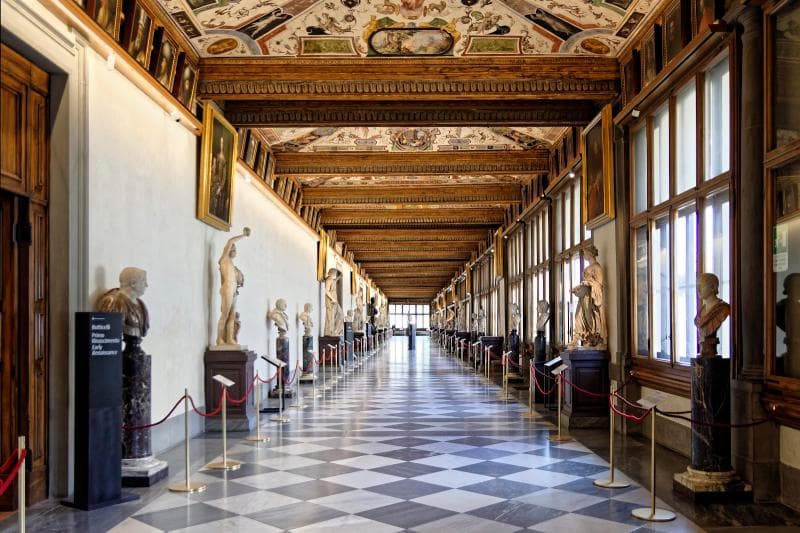
Discover the 'Corridor Views Of Arno' in Florence, Italy – a historic, elevated passageway within the Uffizi Gallery offering unique river and city panoramas.
Overview
Perched high above the bustling streets of Florence, the 'Corridor Views Of Arno' refers to the captivating panoramas offered from within the historic Vasari Corridor. This elevated, enclosed passageway, a marvel of 16th-century engineering, connects Florence's most significant landmarks: the Palazzo Vecchio, the Uffizi Gallery, and the Pitti Palace. It provides an intimate, 'bird's-eye' perspective of the city, most notably as it gracefully crosses the Arno River over the iconic Ponte Vecchio. While integrated with the Uffizi Gallery, serving as its starting point, the Corridor is an experience unto itself, a journey through history offering unique glimpses of Florence's urban landscape and its lifeblood, the Arno.
History & Cultural Background
The Vasari Corridor, named after its brilliant architect Giorgio Vasari, was commissioned by Grand Duke Cosimo I de' Medici in 1565. The urgency for its construction was driven by the impending marriage of Cosimo's son, Francesco, to Joanna of Austria in 1565. Completed in an astonishing five months, its primary purpose was to provide the powerful Medici family with a secure and private route between their residence at the Pitti Palace and the seat of government in the Palazzo Vecchio, without needing to traverse the public streets where their safety could be compromised. This private aerial pathway underscored the Medici's immense power and influence, literally placing them above the populace. Before the Corridor's construction, the shops on the Ponte Vecchio were primarily butchers; however, Cosimo I, disliking the odors, had them replaced with the goldsmiths and jewelers that occupy the bridge to this day, ensuring a more pleasant passage for his family.
What Makes It Special
The 'Corridor Views Of Arno' offers an unparalleled vantage point, allowing visitors to 'spy' on Florence from an exclusive perspective once reserved for royalty. What makes it truly special is the journey itself: walking a kilometer-long path that weaves through historical buildings, literally over the heads of pedestrians. As you traverse the section crossing the Ponte Vecchio, enlarged windows, a modification ordered by Benito Mussolini for Adolf Hitler's visit in 1939, provide breathtaking, unobstructed views of the Arno River, the Ponte Santa Trinita, and the bustling activity below. Beyond the Arno, the Corridor offers unique perspectives of the Church of Santa Felicita, where the Medici could attend mass unseen from their private balcony. It's a sensory experience that combines architectural genius with a profound sense of history, allowing you to trace the footsteps of the Medici and witness Florence's beauty from an extraordinary angle. While it previously housed an extensive collection of self-portraits, the renovated corridor emphasizes the architectural experience and the views themselves.
Stories, Fun Facts & Local Details
- A Secret Passage: The Vasari Corridor was, for centuries, Florence's ultimate secret passage, allowing the Medici to navigate the city unseen and untouched by political unrest or the general public. This sense of exclusivity and mystery still lingers, making a walk through it feel like stepping into a bygone era.
- World War II Survival: During World War II, when German forces retreated from Florence, all the bridges over the Arno were destroyed except for the Ponte Vecchio. It's widely believed that Hitler's admiration for the panoramic views from the Vasari Corridor, particularly the ones he experienced from the enlarged windows, influenced his order to spare the bridge.
- Resilience Through Time: The Corridor has endured significant challenges, including damage from the 1943 bombing of Florence, the devastating 1966 Arno flood, and a 1993 terrorist attack. Each time, it has been painstakingly restored, a testament to its enduring historical and cultural value.
Visitor Perspective
Visiting the 'Corridor Views Of Arno' within the Uffizi Gallery complex is an immersive journey into Florence's past. The Corridor, having undergone extensive restoration, officially reopened in December 2024, now fully accessible to the public. Access typically requires a special ticket and reservation, often linked with an Uffizi Gallery visit, starting from a designated point within the gallery on the first floor. The path winds through approximately 750 meters to 1 kilometer, concluding in the Boboli Gardens near the Pitti Palace. While the famous self-portrait collection is no longer on display, the focus has shifted to the architectural splendor and, of course, the magnificent 'Corridor Views Of Arno' and the city itself. Expect a unique, curated experience that offers breathtaking photo opportunities and an unforgettable perspective on the cradle of the Renaissance.
Coordinates: 11.2553, 43.7683
View on Google Maps💬 How Travelers Describe This Place
Based on community votes
Photogenic
886Unique
443Beautiful
310Must See
277Interesting
233
Traveler Stories
Discover memorable experiences shared by travelers who have visited this place.
No traveler stories yet.
Be the first traveler to share what made this place memorable.

Tour
By
Spot
Discover amazing places around the world. Your journey starts here.
Explore
© 2026 TourBySpot. All rights reserved.