Birth Of Venus
Florence, Italy
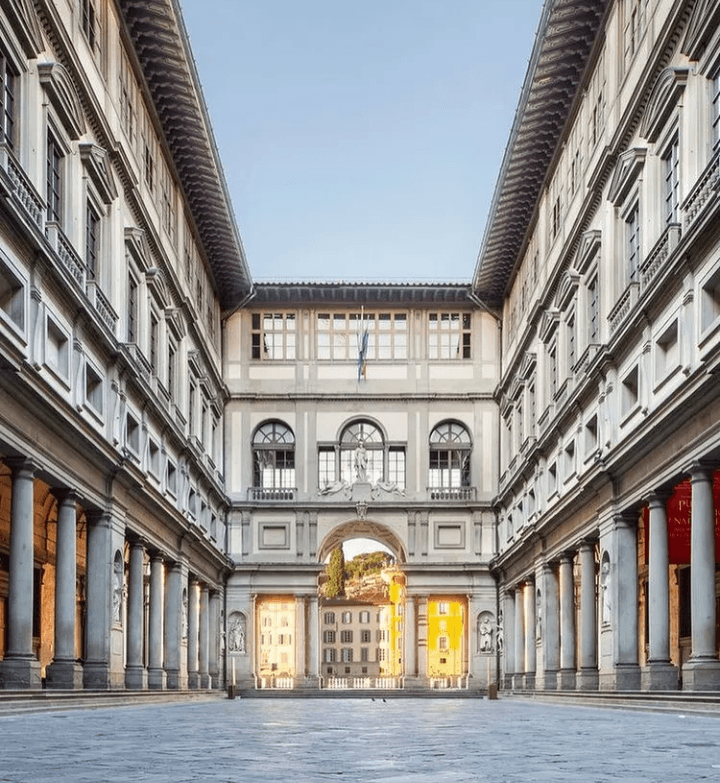
Discover Botticelli's 'Birth of Venus' at the Uffizi Gallery in Florence, Italy. Explore this iconic Renaissance masterpiece, its mythology, and historical context.
Overview
Stepping into the Uffizi Gallery in Florence, Italy, one is immediately enveloped in the grandeur of Renaissance art. Among its many treasures, Sandro Botticelli's iconic 'Birth of Venus' stands as a breathtaking masterpiece, captivating visitors with its ethereal beauty and profound symbolism. Painted in the mid-1480s, this large-scale work, executed in tempera on canvas, depicts the goddess Venus arriving on the shore after her birth, embodying an ideal of beauty that continues to inspire.
Housed in the Uffizi's dedicated Botticelli Room (Rooms 10-14), 'The Birth of Venus' is more than just a painting; it's a cultural landmark representing a pivotal moment in art history. Its delicate colors, flowing lines, and mythological narrative make it a must-see for anyone exploring the artistic heritage of Florence.
History & Cultural Background
Sandro Botticelli created 'The Birth of Venus' between approximately 1482 and 1485. This groundbreaking work was likely commissioned by a member of the powerful Medici family, possibly Lorenzo di Pierfrancesco de' Medici, a cousin of Lorenzo the Magnificent. Unlike many religious works of its era, it was intended for a private residence, specifically the Medici villa at Castello, rather than a church or public space.
The painting's medium, tempera on canvas, was unusual for the 15th century in Tuscany, where fresco and panel painting were more common. This choice contributed to its distinctive luminous and ethereal quality. The narrative draws from classical mythology, depicting Venus emerging from the sea, fully grown, on a scallop shell, propelled by the wind gods Zephyr and Aura, and greeted by a nymph, possibly one of the Horae (goddesses of the seasons).
Central to its understanding is the influence of Renaissance Neoplatonism, a philosophical movement in Florence that sought to reconcile classical Greek and Roman ideas with Christian thought. 'The Birth of Venus' is interpreted as an allegory of divine love and spiritual beauty, signifying the birth of beauty into the world and the driving force of life.
What Makes It Special
'The Birth of Venus' is renowned for several pioneering aspects. It was one of the first large-scale mythological paintings from classical antiquity themes since the fall of the Roman Empire, and notably, one of the earliest depictions of a near-life-sized female nude in post-classical Western art. Botticelli's mastery of line, his delicate rendering of the human form, and his use of a soft, pastel palette give the painting an almost dreamlike stillness.
The goddess's pose, reminiscent of the 'Venus Pudica' (modest Venus) archetype, where she shyly covers herself, draws attention to her form while simultaneously conveying purity. Art historians note the intentional anatomical improbabilities, such as Venus's elongated neck and arm, which contribute to her otherworldly, idealized beauty rather than striving for strict realism. This deliberate stylization enhances the painting's unique aesthetic and emotional impact. Often discussed alongside Botticelli's other mythological masterpiece, 'Primavera', also in the Uffizi, 'The Birth of Venus' presents a distinct stage in the goddess's narrative.
Stories, Fun Facts & Local Details
Despite its title, the painting doesn't actually depict Venus's birth, but rather her arrival on the island of Cyprus. The popular title was only added in the 19th century. A persistent legend suggests that the model for Venus was Simonetta Cattaneo Vespucci, a Genoese noblewoman and celebrated beauty of the era, though this remains debated among scholars.
Botticelli's innovative use of canvas for such a significant work marked him as the first artist in Tuscany to do so, a departure from the more common wood panels and frescoes. After its completion, Botticelli enhanced the painting with golden touches, highlighting details like the wind deities' wings, the figures' hair, and parts of the landscape, adding to its luminous quality. The presence of orange trees in the background is often seen as a subtle nod to the Medici family, as 'Medici' is phonetically similar to 'citrus' in Italian. This could suggest the painting's underlying political message: the Medici ushering in a new era for Florence.
Visitor Perspective
To experience the profound beauty of 'The Birth of Venus', head to the Uffizi Gallery in Florence. The painting is proudly displayed in the Botticelli Room (Rooms 10-14), located on the museum's second floor. It's advisable to visit early in the morning right after opening or in the late afternoon, about an hour before closing, to avoid the largest crowds. Weekdays, particularly Tuesdays and Thursdays, tend to be less busy than weekends.
The Uffizi Gallery is open from Tuesday to Sunday, 8:15 AM to 6:30 PM, and is closed on Mondays, January 1, and December 25. Photography is permitted, but flash photography is strictly prohibited to protect the artwork. Given the museum's immense popularity, booking your admission tickets in advance online is highly recommended to secure your entry and minimize waiting times. Allow ample time for your visit, as the Uffizi houses a vast collection of masterpieces.
Coordinates: 11.2553, 43.7683
View on Google Maps💬 How Travelers Describe This Place
Based on community votes
Interesting
953Beautiful
695Photogenic
658Must See
396Unique
22
Traveler Stories
Discover memorable experiences shared by travelers who have visited this place.
No traveler stories yet.
Be the first traveler to share what made this place memorable.

Tour
By
Spot
Discover amazing places around the world. Your journey starts here.
Explore
© 2026 TourBySpot. All rights reserved.