Medici Collection
Florence, Italy
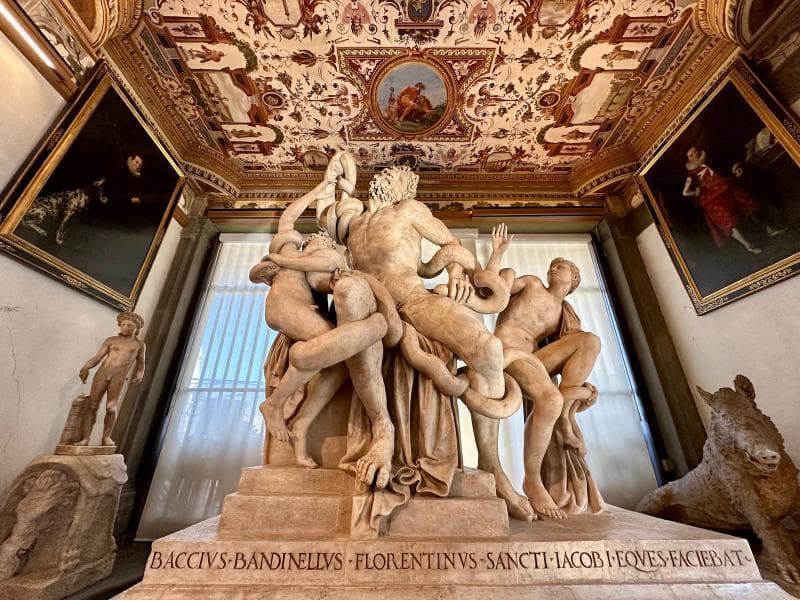
Discover the priceless Medici Collection within Florence's Uffizi Gallery, a treasure trove of Italian Renaissance art and history. Explore masterpieces by Botticelli, Leonardo, and Michelangelo in Italy.
Overview
Stepping into the Uffizi Gallery in Florence, Italy, means entering a realm where art and history intertwine, largely thanks to the indelible legacy of the Medici family. The ‘Medici Collection’ within this renowned institution isn't a separate room or wing, but rather the very foundation upon which the Uffizi was built and continues to thrive. It represents the colossal accumulation of artworks, sculptures, and precious artifacts gathered by this powerful Florentine dynasty over centuries. What began as administrative offices, known as ‘uffizi’ in Italian, commissioned by Cosimo I de' Medici in 1560, was gradually transformed by his son, Francesco I, into a private gallery and later opened to the public in 1581 to showcase their vast artistic treasures.
Today, this collection forms the core of one of the world's most significant museums, celebrated particularly for its unparalleled holdings of Italian Renaissance masterpieces. Every corridor and hall echoes with the taste, ambition, and cultural patronage of the Medici, offering visitors an immersive journey into the artistic heart of Florence.
History & Cultural Background
The Medici family, though initially bankers, rose to become the de facto rulers of Florence, wielding immense political and economic power throughout the Renaissance. More significantly, they were fervent patrons of the arts, funding and fostering the careers of countless artists, architects, and scholars. Their deep investment in culture was not merely for personal enjoyment but also a strategic display of their wealth, influence, and vision for Florence as a cultural beacon.
The Uffizi building itself, designed by the brilliant Giorgio Vasari, was initially conceived to house Florence's administrative offices and state archives. However, the Medici's burgeoning art collection soon found its way into these grand spaces. The ultimate preservation of this collection for the public good is credited to Anna Maria Luisa de' Medici, the last of the Medici line. Through the 'Family Pact' signed in 1737 (or 1743), she bequeathed the entire family collection to the Tuscan State, with the explicit condition that it must forever remain in Florence, 'for the utility of the Public and to attract the curiosity of Foreigners.' This visionary act ensured that the treasures amassed by her ancestors would continue to enrich the city. The Uffizi officially opened its doors to public viewing in 1769, marking its transformation into one of the world's first modern museums.
What Makes It Special
The Medici Collection's enduring appeal lies in its extraordinary quality and breadth, presenting an almost encyclopedic view of the Italian Renaissance. It is home to iconic masterpieces by legendary artists such as Sandro Botticelli, including his ethereal 'Birth of Venus' and 'Primavera', Leonardo da Vinci's enigmatic 'Annunciation', and Michelangelo's powerful 'Doni Tondo'. Beyond these celebrated paintings, the collection encompasses an invaluable array of ancient sculptures and busts, many of which are Roman copies of lost Greek originals, lining the museum's historic corridors.
Furthermore, works by Raphael, Titian, and Caravaggio demonstrate the Medici's far-reaching appreciation for various artistic styles and periods. The collection also boasts an extensive repository of drawings, prints, and intricate cameos, revealing the family's diverse interests. This profound legacy makes the Uffizi not just a museum, but a testament to the transformative power of art patronage and the birth of the public museum concept.
Stories, Fun Facts & Local Details
- The very name 'Uffizi' derives from the Italian word for 'offices', a direct nod to the building's original purpose before it became a cultural sanctuary.
- One of the collection's architectural jewels is the Tribuna, an octagonal room completed in 1584 by Bernardo Buontalenti. Designed to house the most precious objects, it is lavishly decorated with marble, precious stones, and shells, symbolizing the four elements. It was a highlight of Francesco I's private museum and a must-see for Grand Tour travelers.
- The legendary Vasari Corridor, an elevated passageway built by Giorgio Vasari, allowed the Medici family to travel safely and privately between their residence, the Pitti Palace, and the Uffizi, without having to navigate the bustling Florentine streets.
- The Medici family's influence extended beyond commissioning finished works; they were instrumental in discovering and nurturing young talent. For instance, Lorenzo the Magnificent famously took a young Michelangelo into his home, providing an environment that fostered his genius.
Visitor Perspective
For any curious traveler, the Medici Collection within the Uffizi Gallery offers an unparalleled opportunity to connect directly with the heart of the Italian Renaissance. As you wander through its halls, you are tracing the steps of history, experiencing art that once adorned the private residences and offices of one of Europe's most influential families. The sheer volume and importance of the works can be overwhelming, yet each piece tells a story, offering insights into the period's religious fervor, classical ideals, and burgeoning humanism.
The Uffizi remains one of the world's most visited museums, drawing millions annually. To truly appreciate the experience without feeling rushed, it's advisable to plan your visit well in advance and consider booking tickets ahead of time, especially during peak seasons. Engaging with the Medici Collection is more than just viewing art; it's an exploration of a family's enduring legacy that shaped an entire era and left an immovable mark on the global cultural landscape.
Coordinates: 11.2553, 43.7683
View on Google Maps💬 How Travelers Describe This Place
Based on community votes
Must See
951Beautiful
491Unique
414Photogenic
310Interesting
277
Traveler Stories
Discover memorable experiences shared by travelers who have visited this place.
No traveler stories yet.
Be the first traveler to share what made this place memorable.

Tour
By
Spot
Discover amazing places around the world. Your journey starts here.
Explore
© 2026 TourBySpot. All rights reserved.