Primavera
Florence, Italy
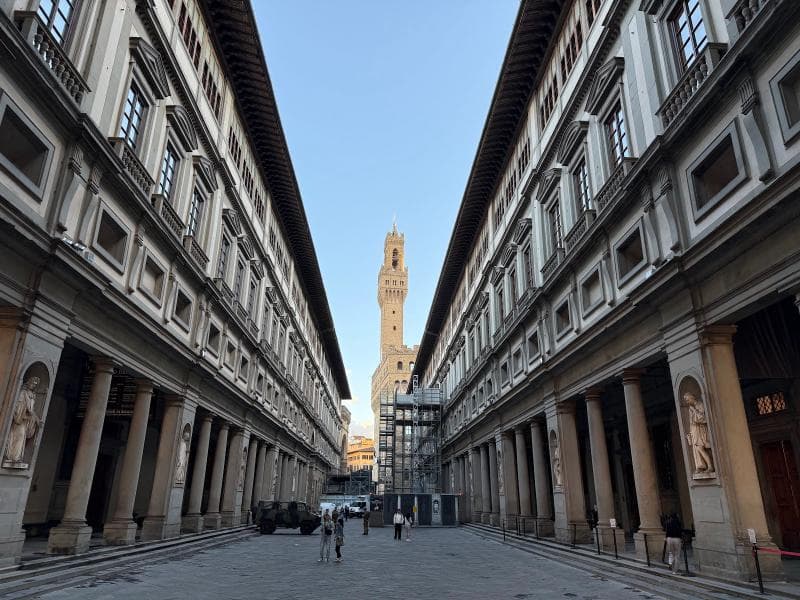
Discover Botticelli's 'Primavera' in Florence's Uffizi Gallery. Explore the history, symbolism, and figures of this iconic Italian Renaissance masterpiece.
Overview
Deep within the revered Uffizi Gallery in Florence, Italy, lies a masterpiece that has captivated art lovers for centuries: Sandro Botticelli's 'Primavera'. Often translated as 'Spring', this monumental tempera painting on panel is not just a visual spectacle but a complex tapestry of mythology, philosophy, and Renaissance humanism. It stands as one of the most famous works in the Uffizi, sharing its room with Botticelli's equally iconic 'Birth of Venus', and drawing millions of visitors each year to witness its ethereal beauty.
Measuring an impressive 202 cm × 314 cm (approximately 80 in × 124 in), 'Primavera' depicts a gathering of nine figures from classical mythology, set within a lush, blossoming garden. The painting is an allegory of spring's burgeoning fertility and the intricate dance of love. It has been described as 'one of the most popular paintings in Western art' and remains a subject of ongoing scholarly debate regarding its precise meaning and commissioning details.
History & Cultural Background
Botticelli painted 'Primavera' in the late 1470s or early 1480s, a period when Florence was a vibrant center of artistic and intellectual innovation. While the exact circumstances of its creation are debated, it is widely believed to have been commissioned by a member of the powerful Medici family, likely Lorenzo di Pierfrancesco de' Medici, a cousin of Lorenzo 'the Magnificent'. The painting was intended for his private villa, the Villa di Castello, outside Florence, possibly as a wedding gift.
This secular commission was revolutionary for its time. Art commissions typically focused on religious themes or portraits, but the Medici's profound interest in classical literature and philosophy encouraged a revival of mythological subjects. 'Primavera' is a prime example of this Renaissance Neoplatonism, an intellectual movement that sought to reconcile classical thought with Christian beliefs, viewing classical deities and stories as allegories for spiritual truths. The painting draws from ancient Roman poets like Ovid and potentially alludes to a poem by Poliziano, a Medici court poet, suggesting a collaborative effort in its conceptualization.
The painting found its permanent home in the Uffizi Gallery in 1919, after being housed in the Villa di Castello and later briefly in the Galleria dell'Accademia.
What Makes It Special
'Primavera' is exceptional for its sheer scale, intricate detail, and rich allegorical content. Botticelli's mastery of line work and delicate shading creates figures that are both elegant and graceful, almost suspended in the foreground without deep linear perspective, a characteristic of his style.
The painting's most striking feature is its symbolic narrative. At its center stands Venus, the goddess of love, chastely dressed and presiding over the scene. Above her, a blindfolded Cupid aims his arrow. To Venus's left, the Three Graces — representing Chastity, Beauty, and Love — dance harmoniously. To the far left, Mercury, identifiable by his winged sandals, dispels winter clouds with his caduceus.
The right side of the painting portrays a darker, yet transformative, narrative. Zephyrus, the west wind, pursues the nymph Chloris. As he embraces her, flowers spill from her mouth, and she transforms into Flora, the goddess of spring, beautifully adorned with blossoms and scattering petals. This sequence symbolizes the raw, untamed forces of nature giving way to the beauty and fertility of spring.
Botanically, 'Primavera' is a marvel. Botticelli meticulously depicted over 500 individual plant species and about 190 different flowers, many of which can be specifically identified and bloom in the Florentine countryside between March and May. This botanical precision roots the mythical setting in a tangible reality, adding another layer to its appeal. The setting in an orange grove is also symbolic, as the orange tree was a symbol adopted by the Medici family.
Stories, Fun Facts & Local Details
One fascinating aspect of 'Primavera' is that it didn't receive its current title until the 16th century, when art historian Giorgio Vasari described it as 'Primavera'. Its original name, and indeed its exact meaning, remain a poetic puzzle that scholars continue to unravel.
There's speculation that some of the figures might be portraits of prominent Florentines or members of the Medici family. For instance, the central Venus or one of the Graces might have been modeled by Simonetta Vespucci, considered one of the most beautiful women in Florence at the time, and possibly Giuliano de' Medici (brother of Lorenzo the Magnificent) as Mercury.
The detailed depiction of flora suggests Botticelli had a deep appreciation for nature, almost like a botanist. The sheer number of identifiable flowers and plants makes the painting an observational study as much as an allegorical one, showing his meticulous research.
The painting's enduring mystery and its lack of a single, definitive interpretation contribute significantly to its allure. It invites viewers to engage with its complex symbolism and to ponder the humanist ideals it embodies, making it a timeless piece of art.
Visitor Perspective
Located in the famous Botticelli Room (Rooms 10-14) on the first floor of the Uffizi Gallery, 'Primavera' is a must-see for any visitor. The room can get crowded, especially during peak hours, so visiting early in the morning or late in the afternoon is recommended for a more tranquil experience.
To truly appreciate the painting's intricate details, take your time. Step back to absorb the overall composition and the sweeping movement of the figures, then move closer to observe the delicate transparency of the drapery, the embroidered flowers on Flora's gown, and the nuanced expressions of each character. Consider an audio guide or a guided tour to unlock the layers of symbolism and historical context that Botticelli wove into this masterpiece. Photography without flash is generally allowed, offering a chance to capture details or the entire scene.
The sheer size and vibrant colors of 'Primavera' create an immersive experience, transporting you to a mythical garden where spring eternally blossoms. It's a moment to connect with the artistic genius of the Renaissance and ponder the enduring themes of love, fertility, and renewal.
Coordinates: 11.255128, 43.767731
View on Google Maps💬 How Travelers Describe This Place
Based on community votes
Interesting
950Must See
929Unique
858Photogenic
287Beautiful
275
Traveler Stories
Discover memorable experiences shared by travelers who have visited this place.
No traveler stories yet.
Be the first traveler to share what made this place memorable.

Tour
By
Spot
Discover amazing places around the world. Your journey starts here.
Explore
© 2026 TourBySpot. All rights reserved.