Triumphal Arch Innsbruck
Innsbruck, Austria
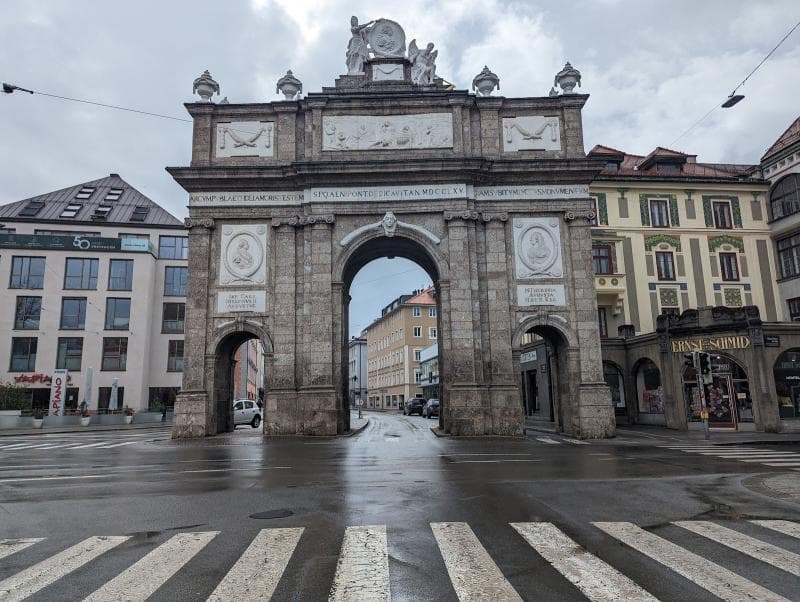
Discover Innsbruck's Triumphal Arch, a unique 18th-century monument in Austria symbolizing both imperial wedding joy and profound family grief. Explore its history and distinctive architecture.
Overview
Standing majestically at the southern end of Innsbruck's bustling Maria-Theresien-Straße, the Triumphal Arch, known locally as Triumphpforte, is one of Austria's most distinctive historical monuments. Unlike many other triumphal arches worldwide that typically commemorate military victories, Innsbruck's arch holds a deeply personal and dual significance: it celebrates both a joyous imperial wedding and commemorates a profound family tragedy. Built in 1765, this Roman-style arch serves as a symbolic gateway, marking the transition from the modern city into the charming Altstadt, or Old Town. Its unique architectural narrative, etched in stone, tells a powerful story of human emotion—a permanent diary of celebration and sorrow.
The arch is freely accessible to the public, allowing visitors to approach and admire its intricate details at any time, day or night. Its central location makes it an ideal starting point for exploring the rich cultural heritage and vibrant atmosphere of Innsbruck.
History & Cultural Background
The Triumphal Arch was commissioned by Empress Maria Theresa of Austria in 1765. The initial purpose was to celebrate the wedding of her third son, Archduke Leopold (who would later become Emperor Leopold II), to the Spanish Princess Maria Luisa. The imperial wedding, held in Innsbruck on August 5, 1765, was a grand affair, and the arch was initially constructed as a temporary wooden structure to serve as a festive city entrance.
However, what began as a jubilant occasion quickly turned sorrowful. Just days after the wedding, on August 18, 1765, Maria Theresa's beloved husband, Emperor Francis I Stephen of Lorraine, unexpectedly passed away in Innsbruck due to a stroke. This tragic event transformed the arch's symbolism profoundly.
Maria Theresa subsequently decreed that the temporary wooden structure be rebuilt permanently in stone, serving as a lasting memorial to both the joyous wedding and her husband's death. The construction utilized stone blocks (Höttinger Breccia) salvaged from the demolition of the old city gates, located at the southern entrance to Maria-Theresien-Straße. Constantin Walter was responsible for the design, drawing inspiration from ancient Roman triumphal arches, such as the Arch of Constantine. The original stucco reliefs by Johann Baptist Hagenauer were later replaced with more durable and artistic marble sculptures by Balthasar Moll in 1774, lending the arch its enduring artistic value.
What Makes It Special
What truly sets the Triumphal Arch in Innsbruck apart is its profound dual symbolism. Unlike typical triumphal arches dedicated solely to military triumphs or single celebratory events, this monument uniquely encapsulates contrasting emotions on its two main facades. The southern face, which originally faced away from the city towards Leopoldstraße, is adorned with bas-reliefs celebrating the wedding of Archduke Leopold and Maria Luisa, depicting symbols of joy, garlands, and the happy couple.
In stark contrast, the northern face, facing Maria-Theresien-Straße and the city center, serves as a poignant memorial to Emperor Francis I Stephen. This side features solemn imagery, including funeral urns, draped figures, and darkened emblems, reflecting the deep mourning for the emperor's sudden passing. This architectural duality—a blend of Baroque celebration and somber classical remembrance—makes the arch a rare and compelling example of historical storytelling in stone.
The use of local Höttinger Breccia stone, a distinctive local material, further grounds the arch in its Tyrolean setting, while its Roman-inspired design speaks to the grandeur of the Habsburg Empire.
Stories, Fun Facts & Local Details
The story of the Triumphal Arch is steeped in personal drama. The sudden death of Emperor Francis I Stephen during his son's wedding celebrations was a significant blow to the imperial family and the empire. Maria Theresa, known for her deep affection for her husband, ensured his memory was intertwined with the wedding celebration on this monumental structure. The transformation of a temporary wedding decoration into a permanent monument of dual purpose is a testament to her grief and her desire for a lasting tribute.
A fascinating detail in its construction is the recycling of stone from the old city gate. This practical approach not only provided material but also symbolically linked the new imperial gateway to Innsbruck's medieval past. The intricate marble sculptures added by Balthasar Moll replaced the earlier, less durable stucco work, demonstrating a commitment to artistic quality and permanence.
Locally, the arch is often viewed not just as a historical relic but as a vibrant part of the city's fabric, offering picturesque views and serving as a natural meeting point. The way it marks the historical entrance to the old town, framed by the majestic Alps, offers a captivating visual experience, especially when illuminated at night.
Visitor Perspective
Visiting the Triumphal Arch in Innsbruck offers a unique opportunity to connect with a pivotal moment in Austrian history. As a free-standing public monument, it is accessible 24 hours a day, year-round, allowing for flexible exploration. Located at the heart of Innsbruck at the southern end of Maria-Theresien-Straße, it is effortlessly reachable on foot from most city center accommodations and other popular attractions.
Travelers can spend time examining the detailed reliefs on both sides, comparing the joyful wedding scenes with the solemn mourning imagery. This visual narrative invites reflection on the intertwined themes of life and loss, celebration and remembrance. The arch also serves as a gateway to further exploration; a walk through Maria-Theresien-Straße leads to charming cafes, shops, and other historical sites, making it an ideal starting point for a day of sightseeing. It's a popular spot for photography, capturing the monument against the backdrop of the city and the surrounding Alps.
Coordinates: 11.39454, 47.26266
View on Google Maps💬 How Travelers Describe This Place
Based on community votes
Beautiful
680Photogenic
653Unique
588Interesting
566Must See
432
Traveler Stories
Discover memorable experiences shared by travelers who have visited this place.
No traveler stories yet.
Be the first traveler to share what made this place memorable.
Things to see at Triumphal Arch Innsbruck



Tour
By
Spot
Discover amazing places around the world. Your journey starts here.
Explore
© 2026 TourBySpot. All rights reserved.