Maria-Theresien-Strasse Axis
Innsbruck, Austria
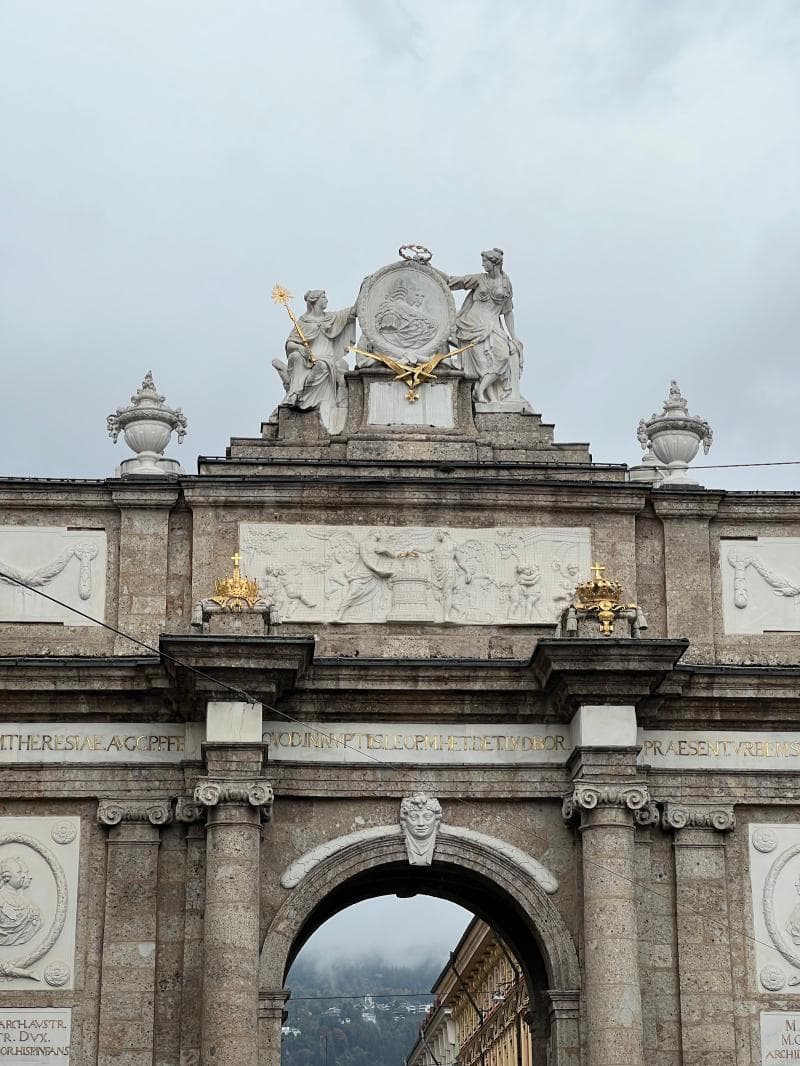
Explore Innsbruck's Maria-Theresien-Strasse Axis, a historic boulevard connecting the vibrant city center to the iconic Triumphal Arch in Austria.
Overview
The Maria-Theresien-Strasse Axis, nestled within the charming city of Innsbruck, Austria, represents the vibrant heart of Tyrol's capital. This magnificent boulevard stretches approximately 500 meters, connecting the city's historic core with the grandeur of the Triumphal Arch at its southern end. More than just a street, it is a bustling pedestrian zone, celebrated for its distinctive architecture, historic buildings, and splendid facades. It serves as both a cultural and commercial hub, inviting travelers to stroll, shop, and soak in the city's unique alpine-urban atmosphere.
As Innsbruck's main artery, Maria-Theresien-Strasse is a natural focal point for exploration, offering breathtaking views of the surrounding mountains, including the majestic Nordkette range to the north and the striking Serles mountain to the south. It seamlessly blends centuries of history with contemporary life, making it an essential stop for anyone wishing to experience the essence of Innsbruck.
History & Cultural Background
The history of Maria-Theresien-Strasse dates back hundreds of years, tracing its origins to the 1300s when it was known as 'Neue Strasse' (New Street) and lay outside the medieval city walls. It quickly evolved into a crucial trade route, connecting north-south trading paths through the Alps. The street was later renamed in 1809 in honor of Empress Maria Theresa, a powerful and influential monarch of the Habsburg Monarchy, recognizing her significant contributions to urban development during her reign.
The Triumphal Arch, standing proudly at the southern extremity of Maria-Theresien-Strasse, was commissioned by Empress Maria Theresa in 1765. It was originally intended to commemorate the joyous wedding of her son, Archduke Leopold (the future Emperor Leopold II), to the Spanish Princess Maria Luisa. However, the festive occasion was tragically overshadowed by the unexpected death of Empress Maria Theresa's beloved husband, Emperor Francis Stephen, just days after the wedding celebrations. Consequently, the Arch became a unique monument, embodying both the joy of the royal wedding and the profound grief of the Empress.
The street itself boasts an impressive array of architectural styles, primarily Baroque and Rococo, with many buildings showcasing ornate facades, decorative elements, and grand oriel windows. Since 2006, the entire street has been designated a protected historical monument, ensuring its beauty and heritage are preserved for future generations.
What Makes It Special
Maria-Theresien-Strasse's unique charm lies in its harmonious blend of historical grandeur and vibrant contemporary life. What truly sets it apart is the dramatic alpine backdrop it provides; from almost any point on the street, visitors are treated to stunning views of the Nordkette mountains, creating a picturesque 'street canyon' effect. The colorful facades of the historic buildings, adorned with magnificent oriel windows, add to its visual appeal, making it one of Innsbruck's most photographed landmarks.
Another defining feature is the Triumphal Arch's dual symbolism. Unlike typical triumphal arches dedicated solely to victories, this monument uniquely captures a spectrum of human emotion, celebrating a wedding on its south side while simultaneously mourning a death on its north side. Further along the axis, the Annasäule (St. Anne's Column) stands as a testament to Tyrolean history, commemorating the expulsion of Bavarian troops in 1703.
Beyond its historical monuments, the Maria-Theresien-Strasse axis transforms throughout the year, hosting popular events such as the enchanting Christmas markets, which bathe the street in festive lights and cheer. Its pedestrian-friendly design, a result of a redesign completed between 2009 and 2011, encourages leisurely strolls and offers numerous opportunities for shopping, dining, and people-watching at its many outdoor cafes.
Stories, Fun Facts & Local Details
Imagine strolling where once nobility built their lavish townhouses outside the medieval city walls. Palaces like Palais Trapp and Palais Lodron still stand, hinting at the street's aristocratic past. The Triumphal Arch, initially constructed from wooden blocks of a demolished city gate, was later meticulously rebuilt in stone, demonstrating a commitment to lasting tribute. Its distinct north and south facades, depicting sorrow and joy respectively, offer a compelling narrative in stone.
The Marian Column, commonly known as Annasäule or St. Anne's Column, is another fascinating landmark. It was erected on Saint Anne's Day in 1706, marking the withdrawal of Bavarian troops from Tyrol, a significant moment in local history. Interestingly, while named after St. Anne, the Virgin Mary stands atop the column.
Maria-Theresien-Strasse has consistently been a lively promenade, even being recognized as one of Austria's most attractive shopping streets, attracting thousands of visitors daily. The street also offers a direct visual line to the iconic Golden Roof, another of Innsbruck's treasured landmarks, visible as you walk north towards the old town.
Visitor Perspective
For the curious traveler, the Maria-Theresien-Strasse Axis provides an immersive journey through Innsbruck's past and present. It is designed for discovery on foot, allowing for a leisurely pace to appreciate the architectural details and the panoramic mountain vistas. Looking north, the street narrows towards the charming Old Town with the Nordkette mountain range forming a dramatic backdrop. Looking south, the space opens up to the Triumphal Arch, acting as a ceremonial gateway to the city center.
Whether you're a history enthusiast keen to uncover the stories behind every ornate facade and monument, or a casual visitor seeking a vibrant atmosphere for shopping and dining, this axis offers a rich and fulfilling experience. The opportunity to sit at an outdoor café, enjoying a beverage while gazing at the distant Alps, truly captures the unique charm of Innsbruck. It's a place where every step reveals another layer of history, culture, and natural beauty, making it an unforgettable part of any visit to this Alpine city.
Coordinates: 11.3965, 47.2618
View on Google Maps💬 How Travelers Describe This Place
Based on community votes
Photogenic
836Interesting
620Beautiful
594Must See
166Unique
83
Traveler Stories
Discover memorable experiences shared by travelers who have visited this place.
No traveler stories yet.
Be the first traveler to share what made this place memorable.

Tour
By
Spot
Discover amazing places around the world. Your journey starts here.
Explore
© 2026 TourBySpot. All rights reserved.