North Reliefs
Innsbruck, Austria
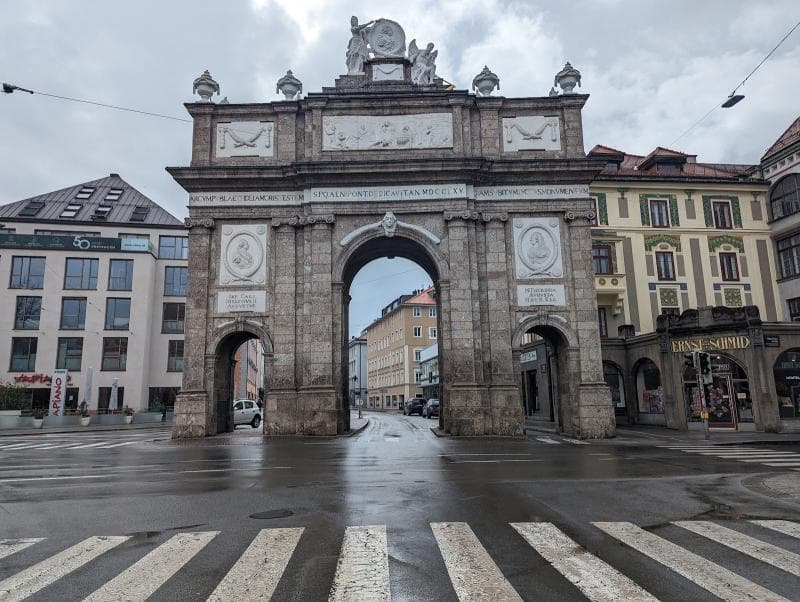
Explore the North Reliefs of Innsbruck's Triumphal Arch, a solemn tribute to Emperor Francis I's unexpected death in Austria. Discover its unique history.
Overview
At the heart of Innsbruck, Austria, stands the majestic Triumphal Arch, a monumental structure that tells a dual tale of joy and profound sorrow. While its southern facade bursts with celebratory imagery, the North Reliefs present a striking contrast, dedicated to a moment of unexpected tragedy that unfolded during what should have been a jubilant imperial occasion. These solemn carvings serve as a poignant historical record, capturing the grief of Empress Maria Theresa and the Habsburg family following the sudden death of her beloved husband, Emperor Francis I Stephen. They invite visitors to pause and reflect on the complex tapestry of human emotion, permanently etched in stone for over two centuries.
The Triumphal Arch itself, erected in 1765, is unique among its kind, as it commemorates not a military victory, but deeply personal family events. Situated at the southern end of the bustling Maria-Theresien-Straße, the North Reliefs specifically face the city, serving as a constant reminder of the intertwined public and private lives of the Habsburg monarchs.
History & Cultural Background
The story of the Triumphal Arch, and particularly its North Reliefs, is rooted in 1765. Empress Maria Theresa commissioned the arch to celebrate the wedding of her son, Archduke Leopold (the future Emperor Leopold II), to the Spanish Infanta Maria Luisa. The celebrations in Innsbruck were grand, transforming the city with necessary preparations and improvements. However, a mere few days after the wedding, tragedy struck: Emperor Francis I Stephen, Maria Theresa's husband, died suddenly in Innsbruck on August 18, 1765.
This unforeseen event profoundly altered the arch's purpose and design. What began as a monument solely to jubilation quickly evolved into a poignant memorial. The northern facade was consequently dedicated to mourning the Emperor's passing, creating an architectural duality that is rarely seen. The initial sculptural decorations were made in stucco by Johann Baptist Hagenauer, but due to the Emperor's death, plans were quickly made for a more permanent marble version. These marble reliefs, which we see today, were later carved by Balthasar Moll in 1774, replacing Hagenauer's temporary work.
What Makes It Special
The North Reliefs are extraordinary because they embody a profound historical paradox: a monument celebrating a wedding also memorializing a death. This dual symbolism is the Triumphal Arch's most distinguishing feature and is particularly evident when comparing the contrasting narratives on its northern and southern sides. While the southern facade showcases scenes of the joyful imperial wedding, the northern side, where the North Reliefs are found, is adorned with somber and commemorative imagery.
These reliefs are not merely decorative; they are a stone diary, capturing a pivotal moment in the Habsburg dynasty's history. They depict symbols of grief, such as funeral urns and draped figures, evoking the deep sorrow that overshadowed the imperial family's celebrations. This deliberate contrast, a testament to the Empress's grief and her desire to honor her late husband, makes the North Reliefs a unique example of architectural storytelling, blending personal tragedy with public commemoration.
Stories, Fun Facts & Local Details
The Triumphal Arch was built using ashlars of Höttinger Breccia, a local stone, much of which was repurposed from the demolished outer city gate of the old town. The decision to build it from stone, rather than the more common practice of temporary wooden structures for such events, further solidified its permanence and symbolic weight.
The sudden death of Emperor Francis I Stephen was a deeply personal blow to Maria Theresa, who, despite her powerful reign, was known for her profound love for her husband. The inclusion of the mourning reliefs on the arch was a direct expression of her grief, making the monument a deeply personal statement from one of Europe's most influential empresses. It’s a powerful reminder that even the most powerful figures experienced immense personal loss. This blending of personal and public history, grief and grandeur, makes the North Reliefs particularly compelling. They offer a unique glimpse into the emotional landscape of 18th-century European royalty, contrasting the lavishness of imperial celebrations with the inescapable reality of human mortality.
Visitor Perspective
As you approach the Triumphal Arch from Maria-Theresien-Straße, the North Reliefs are directly before you, inviting close examination. The craftsmanship of Balthasar Moll's marble carvings, completed in 1774, is exceptional, transforming the original stucco designs into enduring works of art. Take your time to study the intricate details—the expressions, the draped fabrics, and the symbolic elements—which all contribute to the somber narrative.
Walking around the arch allows you to experience the striking duality firsthand: the joyful scenes on the southern side contrasting sharply with the mournful atmosphere of the North Reliefs. This immediate visual comparison offers a powerful and tangible understanding of the historical events. The arch is a free-standing monument, accessible at any time, allowing for a quiet moment of reflection, especially during less crowded hours. It serves as a beautiful, albeit melancholic, gateway to the city, perfectly encapsulating the complex history of Innsbruck and the Habsburg legacy.
Coordinates: 11.3945, 47.2627
View on Google Maps💬 How Travelers Describe This Place
Based on community votes
Interesting
963Unique
663Must See
653Beautiful
503Photogenic
201
Traveler Stories
Discover memorable experiences shared by travelers who have visited this place.
No traveler stories yet.
Be the first traveler to share what made this place memorable.

Tour
By
Spot
Discover amazing places around the world. Your journey starts here.
Explore
© 2026 TourBySpot. All rights reserved.