Historic Inscriptions
Innsbruck, Austria
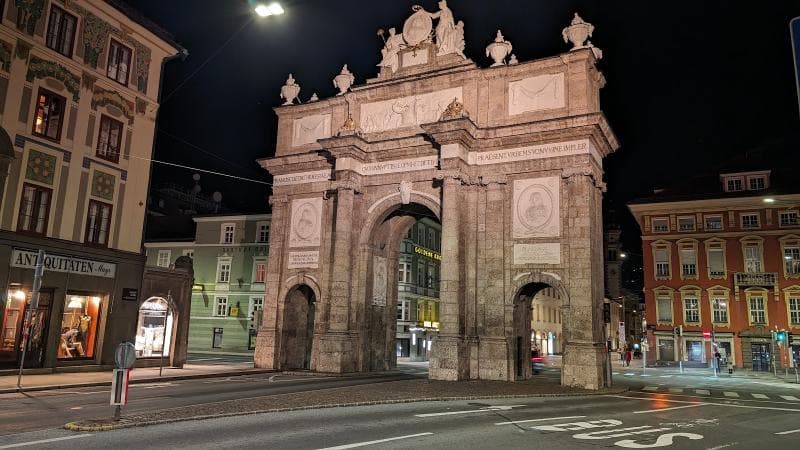
Explore the Historic Inscriptions of the Triumphal Arch in Innsbruck, Austria, a unique monument reflecting both imperial wedding joy and profound mourning.
Overview
At the bustling southern end of Maria-Theresien-Straße in Innsbruck, Austria, stands the Triumphal Arch, an imposing stone monument that tells a profound story of both joy and sorrow. More than just a grand gateway, it is a canvas of 'Historic Inscriptions' and elaborate reliefs, offering a tangible link to the Habsburg dynasty's complex history. Built in 1765, this arch is uniquely double-sided, celebrating a royal wedding on one face while simultaneously mourning a tragic imperial death on the other.
Its strategic location marked the former southern boundary of the city, transitioning from the historic old town to the newer districts. Today, it serves as a prominent landmark and a silent narrator of an extraordinary chapter in Austrian history, inviting visitors to ponder the intertwining of life's most profound moments etched in stone.
History & Cultural Background
The Triumphal Arch was originally conceived as a temporary wooden structure for a joyous occasion: the wedding of Archduke Leopold, son of Empress Maria Theresa, to the Spanish Princess Maria Ludovica in August 1765. However, the celebrations were tragically cut short. Just days after the wedding, Emperor Francis Stephen of Lorraine, Maria Theresa's beloved husband and Leopold's father, unexpectedly passed away in Innsbruck.
Devastated by this personal loss, Empress Maria Theresa ordered that the temporary arch be transformed into a permanent stone monument, reflecting both the happiness of the imperial wedding and the profound grief over her husband's death. This decision led to the arch's distinctive dual symbolism. The construction utilized ashlars from the demolished outer city gate, with Constantin Walter overseeing the design and Johann Baptist Hagenauer creating the initial sculptural decorations. Later, in 1774, Balthasar Moll refined Hagenauer's stucco reliefs into the Sterzing marble we see today.
What Makes It Special
The 'Historic Inscriptions' and detailed reliefs are truly what set the Triumphal Arch Innsbruck apart. Unlike most triumphal arches that typically commemorate military victories, this monument is a rare architectural expression of conflicting emotions. The southern face of the arch, looking towards the mountains, is dedicated to the wedding festivities. Here, you'll discover celebratory motifs such as garlands, crowns, and depictions of the newlyweds, Archduke Leopold and Maria Ludovica, embodying the joy and hope of their union.
In striking contrast, the northern face, facing the city center, is a poignant memorial to Emperor Francis Stephen. This side is adorned with somber symbols of mourning, including funeral urns, draped figures, and darkened emblems, vividly portraying the empress's sorrow. This architectural duality, combining themes of life and death, celebration and grief, makes the Triumphal Arch a uniquely human and deeply moving historical artifact.
Stories, Fun Facts & Local Details
The story behind the Triumphal Arch is steeped in imperial drama. The Habsburg court converged on Innsbruck for what was meant to be a grand and joyful celebration. Empress Maria Theresa, eager to cement her son's marriage, had overseen extensive preparations for the event. However, the sudden demise of Emperor Francis Stephen I cast a long shadow over the proceedings, turning a moment of triumph into one of profound personal tragedy for the empress.
The transformation of the arch from a planned temporary structure into a permanent stone edifice underscores Maria Theresa's deep love for her husband and her desire to forever intertwine his memory with this significant family event. The use of local Höttinger Breccia stone, a distinctive material, also adds to its local character, ensuring that this Roman-inspired structure is firmly rooted in Tyrolean soil. It's a powerful reminder that even in the highest echelons of power, personal joys and sorrows are inextricably linked.
Visitor Perspective
Visiting the Triumphal Arch in Innsbruck offers a unique opportunity to step back in time and witness a monument that eloquently expresses the human condition. Situated at a prominent crossroads, it is easily accessible and forms a natural focal point for exploring the city. As a public, open-air monument, you can approach and admire its intricate details at any time, day or night, without admission fees.
Walking around the arch allows you to experience its contrasting narratives firsthand. Observe the festive depictions on one side and the mournful imagery on the other, gaining a deeper understanding of the historical context and the emotions etched into its marble. It serves as a beautiful backdrop for photographs and a contemplative spot to reflect on the intertwining of personal and public histories. The Triumphal Arch is not just a structure; it's an enduring testament to love, loss, and the passage of time, making it an essential stop for any curious traveler in Innsbruck.
Coordinates: 11.3969, 47.2625
View on Google Maps💬 How Travelers Describe This Place
Based on community votes
Beautiful
680Photogenic
653Unique
588Interesting
566Must See
432
Traveler Stories
Discover memorable experiences shared by travelers who have visited this place.
No traveler stories yet.
Be the first traveler to share what made this place memorable.

Tour
By
Spot
Discover amazing places around the world. Your journey starts here.
Explore
© 2026 TourBySpot. All rights reserved.