Viewing Angles
Innsbruck, Austria
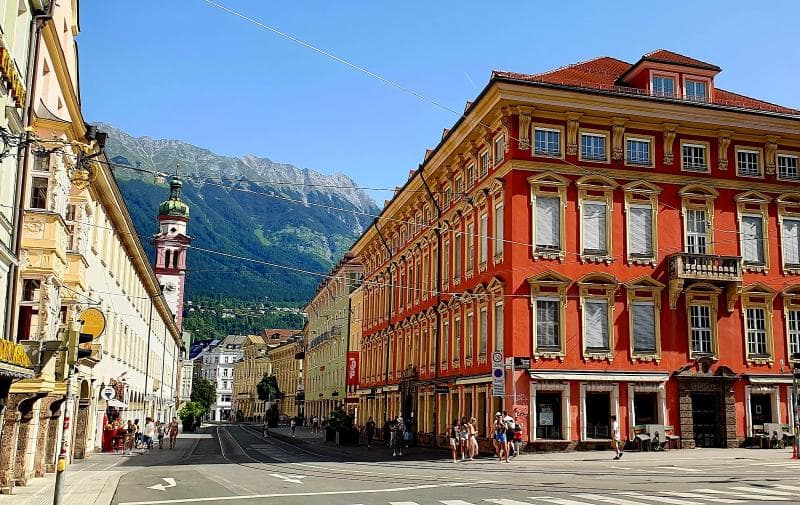
Explore Innsbruck's Triumphal Arch, a unique 18th-century monument in Austria commemorating a royal wedding and an emperor's death. Discover its dual facades.
Overview
The Triumphal Arch, or 'Triumphpforte' in German, stands majestically at the southern end of Maria-Theresien-Straße in Innsbruck, Austria. It is far more than just an ornate gateway; it is a profound historical monument that captures a moment of both immense joy and deep sorrow from the Habsburg dynasty. Unlike many triumphal arches that celebrate military victories, Innsbruck's arch uniquely commemorates a significant imperial wedding alongside a sudden, tragic death, making it a rare architectural narrative in stone. This prominent landmark serves as a symbolic transition point from the bustling modern city into the charm of Innsbruck's historic Old Town.
Visitors approach this Baroque masterpiece, discovering its intricate details and absorbing the rich history it embodies. As a freely accessible public monument, the Triumphal Arch welcomes exploration at any time, year-round, offering an open-air historical experience.
History & Cultural Background
The Triumphal Arch was commissioned in 1765 by Empress Maria Theresa, one of Europe's most influential rulers, during a pivotal time for the city of Innsbruck. The original purpose was to celebrate the wedding of her son, Archduke Leopold (later Emperor Leopold II), to the Spanish Princess Maria Luisa. The city underwent significant preparations for this grand event, including road improvements and the removal of the old city gates.
However, during the lavish wedding festivities, a profound tragedy struck: Empress Maria Theresa's beloved husband, Emperor Francis I Stephen, died unexpectedly in Innsbruck on August 18, 1765. This devastating event transformed the arch's initial celebratory design. Maria Theresa, in her grief, ordered that the arch be adapted to commemorate both the joyous union and the Emperor's untimely passing.
Originally intended as a temporary wooden structure, the arch was made permanent in stone, utilizing ashlars from the recently demolished city gate. Constantin Walter was responsible for the design, drawing inspiration from ancient Roman triumphal arches, while Johann Baptist Hagenauer created initial stucco reliefs. These were later replaced with more durable marble sculptures by Balthasar Moll in 1774, further enhancing its artistic and historical value.
What Makes It Special
The Triumphal Arch in Innsbruck is distinguished by its poignant dual symbolism, a rarity among such monuments. Each side tells a different story: the northern façade, facing the city, is adorned with bas-reliefs and imagery celebrating the imperial wedding, depicting symbols of joy and fertility. In stark contrast, the southern façade is dedicated to mourning, featuring somber motifs such as funeral urns and draped figures that commemorate Emperor Francis I Stephen's death.
This architectural duality provides a unique emotional depth, allowing visitors to contemplate both life's celebrations and its sorrows within a single structure. The arch's Baroque architectural style, combined with its Roman influences and rich sculptural details, showcases the artistic prowess of the 18th century. The intricate carvings depict state symbols of the Habsburg monarchy, including the Austrian archducal hat and various orders, providing a visual chronicle of imperial history.
Stories, Fun Facts & Local Details
A fascinating detail about the Triumphal Arch is that its construction material came from the very city gate it replaced. The cuboidal blocks from the demolished southern gate were repurposed for its permanent stone structure, showcasing an early form of resourcefulness.
The sudden change in the arch's dedication, from solely celebratory to encompassing grief, means that it literally captures a turning point in imperial history in stone. It is a powerful reminder of how personal tragedy can intertwine with grand public events.
For locals, the Triumphal Arch is more than just a historical landmark; it marks the symbolic entrance to the city's charming Old Town. It serves as an excellent starting point for a leisurely stroll down Maria-Theresien-Straße, a vibrant street lined with historic buildings, shops, and cafes.
Visitor Perspective
Visiting the Triumphal Arch offers an enriching experience for any traveler to Innsbruck. Since it is an open, public monument, there are no admission fees, and it can be admired 24 hours a day. The most rewarding way to experience the arch is to walk around it, taking time to observe both its northern and southern facades. This allows for a full appreciation of its unique dual narrative – the jubilant wedding scenes on one side and the poignant symbols of mourning on the other.
For photographers, the arch presents spectacular opportunities, especially during sunrise or sunset when the Höttinger Breccia stone glows beautifully in the warm light. Visiting early in the morning can also provide a more peaceful experience with fewer crowds, perfect for capturing detailed shots of the reliefs and appreciating the monument's grandeur against the backdrop of the Nordkette mountains. While there is no interior space to enter, the exterior architecture and its sculptural storytelling provide ample intrigue for a thoughtful visit.
Coordinates: 11.3965, 47.2618
View on Google Maps💬 How Travelers Describe This Place
Based on community votes
Photogenic
963Interesting
663Beautiful
653Must See
566Unique
503
Traveler Stories
Discover memorable experiences shared by travelers who have visited this place.
No traveler stories yet.
Be the first traveler to share what made this place memorable.

Tour
By
Spot
Discover amazing places around the world. Your journey starts here.
Explore
© 2026 TourBySpot. All rights reserved.