Tower Bridge
London, United Kingdom
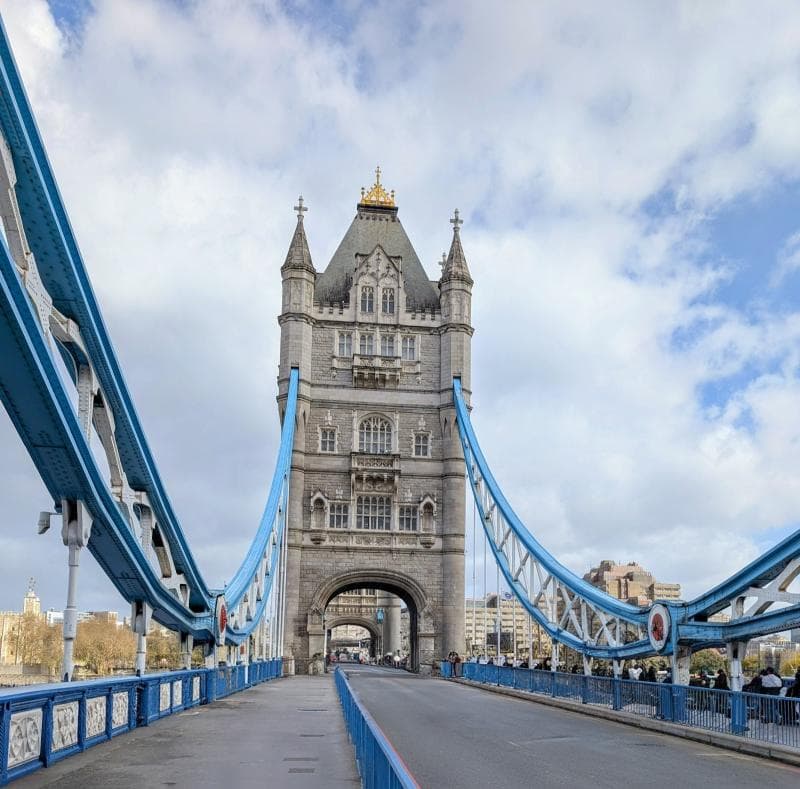
Discover London's iconic Tower Bridge, a Victorian engineering marvel. Explore its history, unique bascule design, and glass walkways for stunning views of the Thames in the United Kingdom.
Overview
Standing majestically over the River Thames, Tower Bridge is an undisputed symbol of London, United Kingdom. More than just a crossing, it is a magnificent example of Victorian engineering and architectural grandeur. This iconic landmark, often mistakenly called London Bridge, serves as both a busy thoroughfare and a breathtaking gateway to the heart of the city. With its distinctive Gothic towers and dynamic bascules, it captivates millions of visitors annually, offering a unique blend of historical significance and modern-day functionality.
History & Cultural Background
The story of Tower Bridge begins in the late 19th century when London's East End experienced rapid population growth and increasing traffic congestion. The City of London sought a new river crossing east of London Bridge that would not disrupt river traffic to the Pool of London, a vital commercial hub. After numerous designs were submitted and debated, a Special Bridge or Subway Committee in 1876 finally led to the accepted design by City Architect Horace Jones and engineer John Wolfe Barry.
Construction commenced in 1886 and spanned eight years, employing 432 construction workers daily and costing over £1 million at the time, which would be equivalent to £100-200 million today. The Prince of Wales, representing Queen Victoria, officially opened the bridge on June 30, 1894. Its mock-medieval, Gothic architectural style was a deliberate choice to harmonise with the nearby 11th-century Tower of London, lending it an air of ancient majesty despite its comparatively recent construction.
What Makes It Special
Tower Bridge is a sophisticated combined bascule and suspension bridge, a true marvel of Victorian innovation. The central section features two enormous bascules, which are essentially large movable roadways that can be raised to allow tall ships to pass through. The two side spans are suspension bridges, anchored by the main towers. The bridge stands 213 feet (65 meters) high and stretches 940 feet (290 meters) in length.
Originally, the bascules were operated by a powerful hydraulic system, driven by steam engines that pumped water into accumulators. Though the original steam engines are now a museum exhibit, the bridge's lifting mechanism was converted to an electro-hydraulic system in 1976. The upper walkways, originally designed for pedestrians to cross when the bascules were raised, were closed in 1910 due to underuse. Today, these high-level walkways have been reopened and feature thrilling glass floors, offering unparalleled views of the Thames and the city below.
Stories, Fun Facts & Local Details
Tower Bridge is raised approximately 850 times a year, or about 2-3 times a day, still prioritising river traffic over road traffic. A famous incident occurred in 1997 when then-US President Bill Clinton's motorcade was delayed for 20 minutes as the bridge opened for a passing ship. Over 11,000 tons of steel formed the framework, clad in Cornish granite and Portland stone to give it its distinctive aesthetic and protect the steelwork. Interestingly, it's known as London's 'defining landmark', recognized globally as a symbol of the city.
It took immense effort to build, with skilled divers digging dangerous foundations in the riverbed and riveting teams installing millions of rivets. Despite its Gothic appearance, which was designed to complement the ancient Tower of London, it is a product of the late 19th century, a testament to Victorian ingenuity rather than medieval construction.
Visitor Perspective
A visit to Tower Bridge offers an immersive journey into its history and engineering. Visitors can explore the iconic Towers, walk along the High-Level Walkways, and experience the famous Glass Floors, which provide a unique, exhilarating view 42 metres (138 feet) above the River Thames. The historic Victorian Engine Rooms house the original steam engines and provide fascinating insights into the mechanism that once powered the bridge's lifts.
Tower Bridge is highly accessible, with lifts available to the walkways and engine rooms, and it welcomes visitors with various accessibility needs. Located near other major London attractions like the Tower of London, The Shard, and Borough Market, it's an ideal focal point for a day of sightseeing. Pre-booking tickets is advisable, and visitors are encouraged to wear comfortable shoes to fully enjoy exploring this architectural masterpiece.
Coordinates: -0.07528, 51.50556
View on Google Maps💬 How Travelers Describe This Place
Based on community votes
Beautiful
910Must See
755Interesting
658Photogenic
589Unique
374
Traveler Stories
Discover memorable experiences shared by travelers who have visited this place.
No traveler stories yet.
Be the first traveler to share what made this place memorable.
Things to see at Tower Bridge



Tour
By
Spot
Discover amazing places around the world. Your journey starts here.
Explore
© 2026 TourBySpot. All rights reserved.