Victorian Engine Rooms
London, United Kingdom
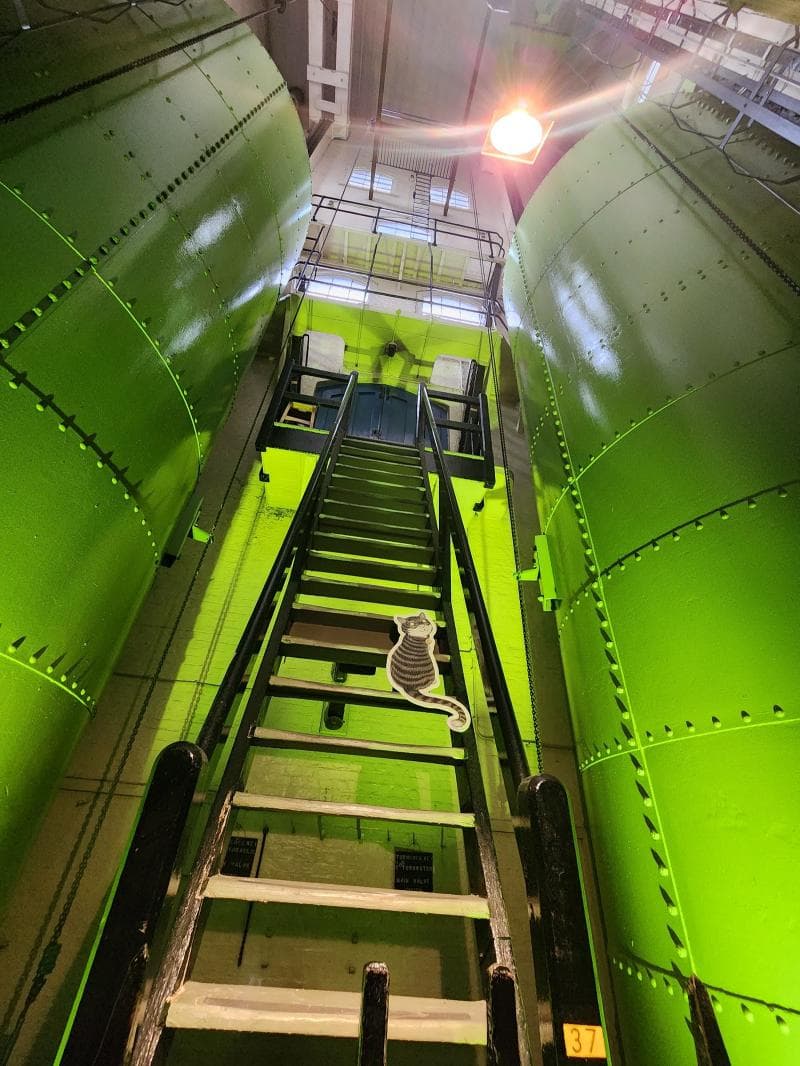
Explore London's Victorian Engine Rooms at Tower Bridge, uncovering the ingenious steam-powered machinery that once lifted this iconic landmark. Discover its industrial heritage in the UK.
Overview
Deep within the iconic Tower Bridge in London, United Kingdom, lies a hidden marvel: the Victorian Engine Rooms. These historic chambers are not just an exhibition; they are the authentic heart of the bridge, once responsible for its magnificent operation. Located beneath the South Tower, these Engine Rooms offer a captivating journey back to the late 19th century, showcasing the ingenious engineering that allowed one's of the world's most famous bridges to lift its massive bascules. Visitors can explore a meticulously preserved mechanical world, still arranged exactly as it was during its working life, providing a unique insight into the industrial prowess of the Victorian era.
History & Cultural Background
The story of Tower Bridge begins in the bustling, rapidly expanding London of the late 19th century. As the city grew eastward, a new river crossing was desperately needed to connect the thriving East End. However, any new bridge had to accommodate the tall-masted ships navigating the River Thames to and from the Pool of London, a critical shipping hub. This challenge led to a public design competition, with over 50 submissions considered. The winning design, a bascule and suspension bridge, was an architectural and engineering marvel for its time.
Construction began in 1886 and spanned eight years, employing 432 workers and requiring an astonishing 11,000 tons of steel, clad in decorative Cornish granite and Portland stone to give it the distinctive Gothic Revival appearance it holds today. The bridge officially opened on June 30, 1894.
The power behind the bridge's legendary lifts came from an intricate hydraulic system, originally driven by coal-fired steam engines located in these very rooms. These powerful engines generated the pressure needed to operate the hydraulic machinery, which in turn lifted the bridge's 1,000-tonne bascules. For over 80 years, this system kept London's vital waterway accessible, allowing countless ships to pass. In 1974, the original steam-powered system was replaced by a more modern electro-hydraulic drive, a transition completed by 1976. This change was driven by a desire for improved efficiency and reduced emissions, yet the original engines were wisely preserved, becoming the museum we visit today.
What Makes It Special
The Victorian Engine Rooms are truly special because they offer an authentic, tangible connection to the bridge's past. Unlike many historical sites where machinery is merely depicted, here you can stand amidst the enormous original steam engines, boilers, and accumulators that once thrummed with power. The exhibition functions as a preserved industrial museum, celebrating Victorian engineering and the evolution of bridge technology. It showcases one of the world's most complete Victorian hydraulic systems still in its original setting.
The sheer scale of the machinery is awe-inspiring, with massive iron frameworks and exposed mechanical systems reflecting the confidence and ambition of Victorian design. Visitors can see how steam was generated in the boilers, how it powered the pumping engines with their distinctive flywheels, and how this force was converted into hydraulic pressure to lift the bridge. It's a rare survival of industrial history, allowing a detailed exploration of the mechanisms that kept London's river traffic moving for decades.
Stories, Fun Facts & Local Details
Visiting the Engine Rooms reveals fascinating human stories behind the colossal machinery. During the bridge's active life, a dedicated team of workers, sometimes up to 80 men, toiled in these very rooms, maintaining the complex system. The boiler room, for instance, was notoriously hot, requiring constant feeding of coal and careful monitoring of gauges to prevent explosions.
A curious detail lies within the steam pumping engines: the beautiful green flywheels were reportedly personalized by the engineer William Armstrong, reflecting his family crest. This small artistic touch on such powerful industrial equipment speaks volumes about the pride and craftsmanship of the era. Another fun fact is that the bridge originally lifted far more frequently than it does today. In its debut year, 1894, it lifted an astounding 6,194 times! Today, it lifts around 800 times a year, or roughly twice a day.
As you approach the Engine Rooms from the main exhibition, you'll follow a distinctive 'Blue Line' marked on the floor. This line is a tribute to the 'unsung heroes'—the workers who maintained and operated the bridge—guiding visitors on their final leg of the journey through the bridge's story.
Visitor Perspective
The experience of entering the Victorian Engine Rooms is truly immersive. Located beneath the southern approach of the bridge, these chambers evoke a sense of stepping back in time, with atmospheric lighting enhancing the historical ambiance. It's a striking contrast to the panoramic views from the high-level walkways, offering a grounded, visceral understanding of the bridge's inner workings.
As the final section of the Tower Bridge Exhibition, the Engine Rooms provide a satisfying culmination to your visit. Interactive displays, films, and oral histories bring the stories of the bridge's construction and operation, and the lives of its workers, vividly to life. The entire area is step-free and fully accessible via lifts and level flooring, ensuring that visitors with mobility needs can comfortably explore this piece of London's industrial heritage. It's a journey into the powerful past of a global icon, leaving visitors with a deeper appreciation for the ingenuity and human effort behind Tower Bridge.
Coordinates: -0.0753, 51.5056
View on Google Maps💬 How Travelers Describe This Place
Based on community votes
Must See
910Unique
658Interesting
589Beautiful
374Photogenic
90
Traveler Stories
Discover memorable experiences shared by travelers who have visited this place.
No traveler stories yet.
Be the first traveler to share what made this place memorable.

Tour
By
Spot
Discover amazing places around the world. Your journey starts here.
Explore
© 2026 TourBySpot. All rights reserved.