Tiananmen Square
Beijing, China
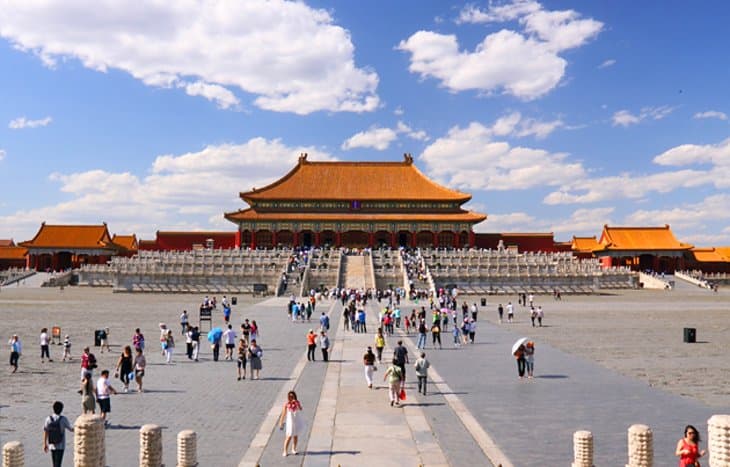
Explore Tiananmen Square in Beijing, China, one of the world's largest public squares, steeped in history and surrounded by iconic landmarks and museums.
Overview
Tiananmen Square, situated at the geographical heart of Beijing, China, stands as one of the largest public squares in the world. Its immense scale, approximately 440,000 square meters or 100 acres, allows it to accommodate over one million people for grand gatherings. The square derives its name from the magnificent Tiananmen, or 'Gate of Heavenly Peace', which graces its northern end and acts as a majestic entrance to the Forbidden City complex. This iconic landmark is surrounded by several other significant structures that underscore its national importance, including the Monument to the People's Heroes, the Great Hall of the People, the National Museum of China, and the solemn Chairman Mao Memorial Hall.
History & Cultural Background
The history of Tiananmen Square is deeply interwoven with the fabric of modern China. While the Tiananmen Gate itself was first constructed in 1417 during the Ming Dynasty, the square as it's known today was originally built in 1651 and later significantly enlarged and cemented over in 1958. Over centuries, it has served as a focal point for pivotal moments in the nation's narrative. One of the earliest significant events was the May Fourth Movement in 1919, where student protests ignited a wave of nationalism and calls for reform. Perhaps its most celebrated historical moment occurred on October 1, 1949, when Chairman Mao Zedong officially proclaimed the founding of the People's Republic of China from atop the Tiananmen Gate. The square also became the site of student-led demonstrations in 1989, which culminated in a government crackdown. These events highlight the square's enduring role as a stage for both celebration and dissent in China's complex political landscape.
What Makes It Special
Tiananmen Square's special allure lies in its profound symbolic weight and the architectural grandeur of its surroundings. It serves as a powerful symbol of China's nationhood and its many historical milestones. At its heart stands the Monument to the People's Heroes, a towering obelisk completed in 1958, dedicated to those who died for the revolutionary cause. To the south, the Chairman Mao Memorial Hall houses the preserved body of Mao Zedong, drawing countless visitors. The western side is dominated by the imposing Great Hall of the People, a massive government building used for state functions and the annual meetings of the National People's Congress. On the east, the National Museum of China, formed by the merger of two earlier museums, showcases China's extensive history and culture. Daily flag-raising and lowering ceremonies at sunrise and sunset, performed by a military honor guard, are a deeply patriotic display that captivates many visitors.
Stories, Fun Facts & Local Details
Beyond its monumental significance, Tiananmen Square holds several fascinating details. Its expansive surface, famously paved with large flagstones, was reportedly numbered for the precise assembly of massive parades. Globally, the square gained an iconic image with the 'Tank Man' photograph, captured the day after the 1989 events, depicting an unidentified individual confronting a line of tanks. During national holidays, the square transforms with vibrant flower beds, creating striking photo opportunities for visitors. It's not uncommon for local Chinese tourists, particularly those from more rural areas, to be fascinated by international visitors and sometimes ask for souvenir photographs. When planning a summer visit, be aware that the square lacks natural shade, making hats, sunscreen, and plenty of water essential for comfort. Interestingly, the Tiananmen Gate itself, while often associated with the Forbidden City, technically served as the main entrance to the Imperial City, within which the Forbidden City was located. Flanking the Tiananmen Gate, you can observe ancient ornamental columns known as 'Hua Biao', adorned with intricate dragon carvings.
Visitor Perspective
Visiting Tiananmen Square today requires some planning. To manage visitor flow and ensure public safety, entry is typically by reservation only. These reservations are generally free of charge and can often be made through official WeChat mini-programs or specific government websites. All visitors must undergo airport-level security checks, and it's advisable to carry your passport as identification may be required. The square can become exceptionally crowded, especially during the popular flag ceremonies at sunrise and sunset, or during national holidays. Many travelers choose to combine their visit to Tiananmen Square with an exploration of the adjacent Forbidden City, creating a comprehensive historical experience. While generally open, it's important to note that the square is a politically significant location and can occasionally be subject to temporary closures without prior notice. Dressing comfortably and being prepared for crowds will enhance your experience at this historic landmark.
Coordinates: 116.3883, 39.902
View on Google Maps💬 How Travelers Describe This Place
Based on community votes
Interesting
886Photogenic
564Beautiful
443Must See
310Unique
233
Traveler Stories
Discover memorable experiences shared by travelers who have visited this place.
No traveler stories yet.
Be the first traveler to share what made this place memorable.
Things to see at Tiananmen Square



Tour
By
Spot
Discover amazing places around the world. Your journey starts here.
Explore
© 2026 TourBySpot. All rights reserved.