National Museum Of China
Beijing, China
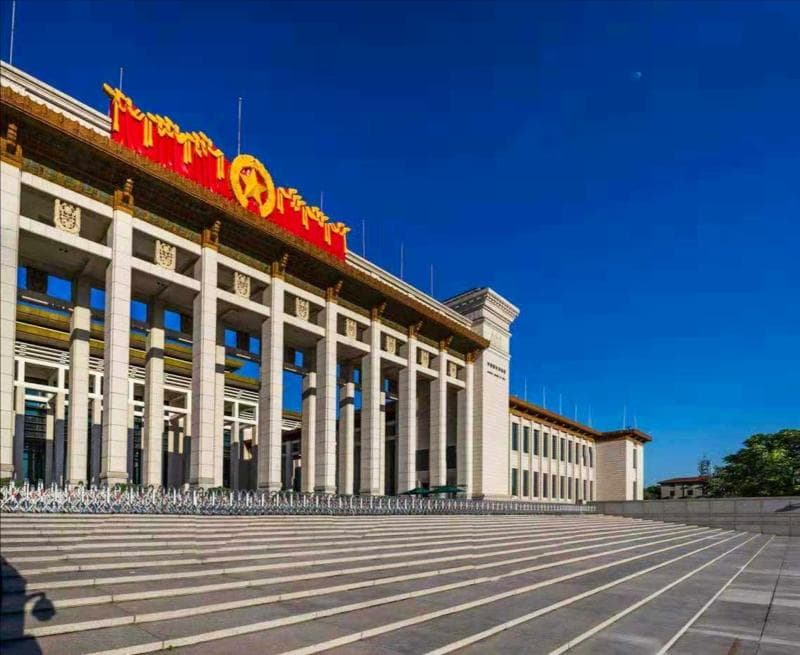
Explore the National Museum of China in Beijing, a monumental institution on Tiananmen Square housing over 1.4 million artifacts spanning millennia.
Overview
Nestled on the eastern side of Tiananmen Square in Beijing, the National Museum of China stands as a magnificent testament to the nation's rich history and vibrant culture. This architectural marvel is not only one of the largest museums in the world by building area, spanning approximately 200,000 square meters, but also houses an extraordinary collection that chronicles China's civilization from prehistoric times to the modern era. With 48 exhibition halls, it offers an immersive journey through millennia of development, showcasing over 1.4 million items that range from ancient artifacts to modern artworks. Its strategic location makes it an integral part of any visit to Beijing's historic heart, offering a profound cultural experience right at the symbolic center of the capital.
History & Cultural Background
The National Museum of China, in its current form, was officially established in February 2003 through the significant merger of two distinct institutions: the Museum of the Chinese Revolution and the National Museum of Chinese History. This consolidation brought together two comprehensive narratives under one roof, creating a unified presentation of China's past. The lineage of these predecessor museums stretches back even further, with the Preparatory Office of the National Museum of History being founded as early as 1912. The building itself, a grand structure on the east side of Tiananmen Square, was completed in 1959, earning its place among the 'Ten Great Buildings' erected to celebrate the tenth anniversary of the People's Republic of China. After extensive renovations and expansion projects that began in 2007, the museum reopened in March 2011, significantly increasing its exhibition space and enhancing its facilities.
What Makes It Special
What truly sets the National Museum of China apart is its sheer scale and the unparalleled depth of its collections. It holds the distinction of being the museum with the largest single building area globally and boasts the richest collection of Chinese cultural relics, encompassing a vast spectrum of artifacts not found elsewhere. The museum comprehensively covers Chinese history from the Yuanmou Man, dating back 1.7 million years, through various dynasties, right up to the end of the Qing dynasty and extending into the contemporary period. This vast timeline allows visitors to trace the continuous thread of Chinese civilization through its material culture. Beyond ancient treasures, the museum also dedicates significant space to China's revolutionary history, making it a unique institution that balances historical continuity with modern national narratives. It serves as the nation's 'cultural living room,' reflecting China's important status in the world and displaying its time-honored history and brilliant civilization.
Stories, Fun Facts & Local Details
Among its more than 1.4 million items, the National Museum of China safeguards numerous national treasures that tell compelling stories. One such treasure is the 'Houmuwu Ding' from the Shang dynasty, the heaviest piece of ancient bronzeware in the world, weighing an astonishing 832.84 kg. Another captivating artifact is the square-shaped Shang dynasty bronze zun, elaborately decorated with four sheep heads, showcasing ancient craftsmanship. Visitors can also marvel at Han dynasty jade burial suits, meticulously sewn with gold thread, offering a glimpse into ancient burial practices and royal extravagance. The museum's permanent exhibition, 'The Road to Rejuvenation,' narrates China's modern history from the First Opium War, highlighting key national developments. Interestingly, the museum actively engages younger generations, with over 60 percent of its visitors in a recent year being under the age of 35, demonstrating a growing interest in their heritage. The museum even produced a musical inspired by one of its pottery storyteller figurines, blending ancient art with contemporary performance.
Visitor Perspective
For those planning a visit to the National Museum of China, practicalities are key. Admission is free, but advance reservation is mandatory and requires a valid ID or passport for real-name authentication. Reservations can typically be made up to seven days in advance through the official website, with specific time slots available (e.g., 9:00-11:00, 11:00-13:30, 13:30-16:00). It is highly recommended to book well in advance, especially for popular slots, as tickets can be quickly taken. The museum is open daily from 9:00 AM to 5:00 PM, with the last admission at 4:00 PM, and is typically closed on Mondays, except during national public holidays. During peak seasons, like June 1 to October 31, hours may be extended. Upon arrival, expect airport-style security checks, and ensure you bring the original ID document used for your reservation. The museum is easily accessible via Beijing Metro Line 1, with Tian'anmen East Station (Exit C or D) being the closest stop.
Coordinates: 116.3883, 39.902
View on Google Maps💬 How Travelers Describe This Place
Based on community votes
Photogenic
953Unique
695Beautiful
396Must See
286Interesting
22
Traveler Stories
Discover memorable experiences shared by travelers who have visited this place.
No traveler stories yet.
Be the first traveler to share what made this place memorable.

Tour
By
Spot
Discover amazing places around the world. Your journey starts here.
Explore
© 2026 TourBySpot. All rights reserved.