Tiananmen Gate
Beijing, China
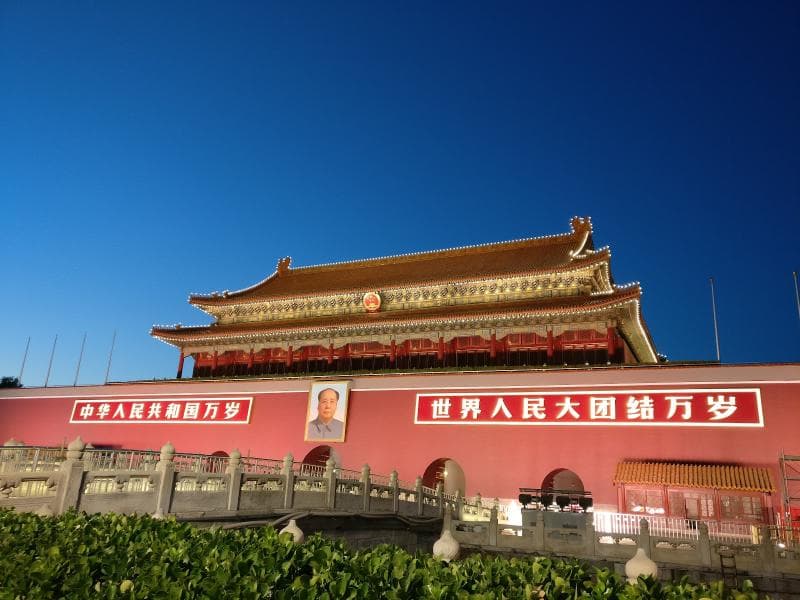
Explore Tiananmen Gate, Beijing, China – a symbol of national identity, rich in imperial history and cultural significance, located at Tiananmen Square.
Overview
Tiananmen Gate, known in Chinese as Tiananmen (天安门), or the 'Gate of Heavenly Peace', is a monumental structure situated at the northern edge of Tiananmen Square in Beijing, China. This iconic gate serves as the principal entrance to the Imperial City, which once housed the Forbidden City, the former imperial palace. Widely recognized as a national symbol, Tiananmen Gate stands at the heart of Beijing's historic central axis and is a potent emblem of China's rich past and its modern identity.
History & Cultural Background
The history of Tiananmen Gate dates back to 1420, during the Ming Dynasty, when it was originally constructed under Emperor Yongle. At that time, it was known as Chengtianmen (承天门), meaning 'Gate of Receiving Heaven's Mandate', reflecting the imperial belief in the divine origin of the emperor's authority.
Crafted primarily from wood, the original gate was twice destroyed by fire—first by lightning in 1457 and later during peasant rebellions in 1644. Each time, it was meticulously rebuilt, with the current design largely stemming from its reconstruction in 1651 during the Qing Dynasty. It was then that it received its present name, Tiananmen, embodying a political philosophy of 'receiving mandate from Heaven to govern and bring peace to the nation'.
For centuries, the gate played a crucial role in imperial rituals. Edicts issued by the emperor within the Forbidden City were ceremoniously brought to the platform above Tiananmen Gate, where a court official would declaim them aloud before they were distributed across the country.
Its transformation from an imperial gateway to a national symbol was solidified on October 1, 1949, when Chairman Mao Zedong famously proclaimed the founding of the People's Republic of China from its balcony.
What Makes It Special
Tiananmen Gate's distinctive architecture makes it instantly recognizable. It features a grand four-story red stone structure with a double-eaved, yellow glaze-tiled roof and five arched gateways. The central archway and the bridge leading to it were historically reserved exclusively for the emperor.
The gate is adorned with mythical animals on its roof, believed to protect the inner palaces from fire, and is flanked by ornamental stone pillars known as Hua Biao. These pillars, topped with mythical 'hou' animals, traditionally observed the conduct of rulers. Today, a gigantic portrait of Chairman Mao Zedong hangs above the central archway, flanked by placards proclaiming 'Long Live the People's Republic of China' and 'Long Live the Great Unity of the World's Peoples'. Its image is also prominently featured in the National Emblem of the People's Republic of China, cementing its status as a core national icon.
Stories, Fun Facts & Local Details
The name 'Tiananmen' translates to 'Gate of Heavenly Peace', a meaning derived from ancient Chinese political philosophy. 'Tian' (Heaven) signifies the Mandate of Heaven, 'An' (Peace) represents national stability, and 'Men' (Gate) marks it as a ceremonial entrance. Interestingly, the original wooden Hua Biao pillars were once places where ordinary Chinese could carve criticisms of their rulers, and the emperor was duty-bound to read them.
Before the vast Tiananmen Square we see today, the area in front of the gate was a walled courtyard with government offices, only becoming a public space during moments of national crisis. The gate measures approximately 66 meters long, 37 meters wide, and 32 meters high, and has undergone several restorations, including a significant one between 1969 and 1970 due to deterioration.
Visitor Perspective
Visiting Tiananmen Gate offers a profound encounter with Chinese history and culture. Standing at its base, one can feel the weight of centuries of imperial power and revolutionary change. Climbing the gate tower provides panoramic views of the expansive Tiananmen Square and Chang'an Avenue, offering a unique perspective of Beijing's central axis.
For many, witnessing the daily flag-raising and flag-lowering ceremonies at dawn and dusk in Tiananmen Square, viewed from or near the gate, is a deeply moving experience. Be prepared for strict security checks upon entry to the square, and note that reservations are typically required to visit the square and the gate tower itself. It is advisable to book these in advance, especially during peak seasons, to ensure a smooth visit to this historically significant landmark.
Coordinates: 116.388, 39.9044
View on Google Maps💬 How Travelers Describe This Place
Based on community votes
Beautiful
886Unique
564Must See
233Interesting
201Photogenic
121
Traveler Stories
Discover memorable experiences shared by travelers who have visited this place.
No traveler stories yet.
Be the first traveler to share what made this place memorable.

Tour
By
Spot
Discover amazing places around the world. Your journey starts here.
Explore
© 2026 TourBySpot. All rights reserved.