Great Hall Of The People
Beijing, China
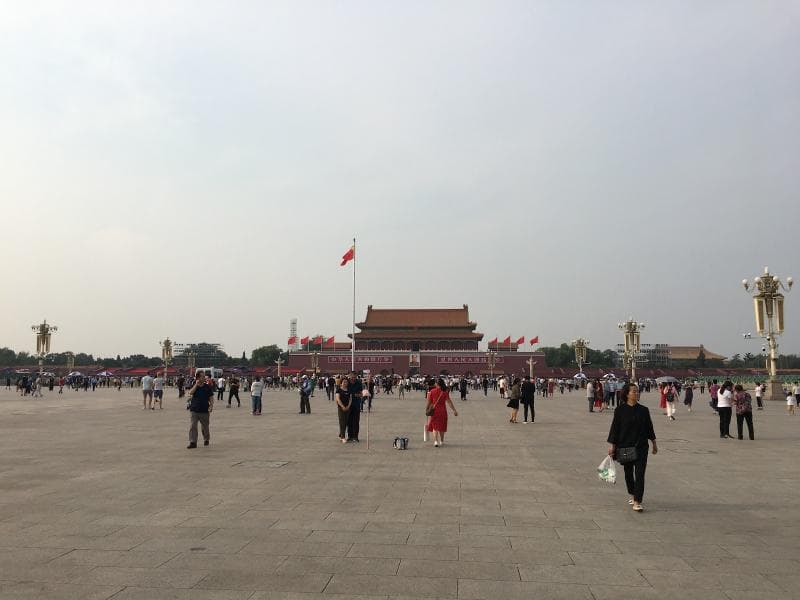
Discover the Great Hall of the People in Beijing, China. Explore its rich history, grand architecture, and political significance within Tiananmen Square.
Overview
Standing majestically on the western flank of Beijing's iconic Tiananmen Square, the Great Hall of the People is far more than just an architectural marvel; it is the beating heart of China's political landscape. This colossal state building serves as the primary venue for legislative and ceremonial activities of the Chinese government and the Communist Party of China. It famously hosts the annual sessions of the National People's Congress, the nation's highest legislative body, and the Chinese People's Political Consultative Conference. Completed in a remarkable feat of engineering and national dedication in 1959, the Great Hall was one of the 'Ten Great Constructions' erected to commemorate the 10th anniversary of the People's Republic of China. Its immense scale is immediately apparent, sprawling across an impressive area of approximately 170,000 to 171,800 square meters. Within its grand facade, the structure is thoughtfully divided into three primary sections: the Central Hall, the awe-inspiring Great Auditorium, and the expansive Banquet Hall. While its primary function remains governmental, the Great Hall of the People opens its doors to the public, offering a rare glimpse into this pivotal institution when official events are not in session.
History & Cultural Background
The genesis of the Great Hall of the People traces back to August 1958, when the Political Bureau of the Communist Party of China Central Committee made the decisive call for its construction. This ambitious project was envisioned not merely as a building, but as a potent symbol of a new era. Premier Zhou Enlai articulated a guiding principle for its design, emphasizing that 'the people are the masters of the country.' A collective of prominent Chinese architects, including the renowned Zhang Bo, spearheaded its design, blending traditional Chinese aesthetic principles with modern classicism and socialist realism. What truly sets its history apart is the extraordinary pace of its construction; over 30,000 workers, including 7,000 skilled technicians, labored relentlessly, completing the entire edifice in an astonishing ten months, from November 1958 to September 1959. This rapid build time, akin to a nationwide collective effort, became a testament to national unity and determination. Chairman Mao Zedong himself visited the construction site and ultimately bestowed upon it the resonant name, 'The Great Hall of the People.' Since its inauguration, this monumental hall has borne witness to countless critical political events and pivotal historical moments, shaping the course of China's modern history.
What Makes It Special
The Great Hall of the People is distinguished by its sheer magnitude and the profound symbolism embedded within its design. Covering an area exceeding 170,000 square meters, it commands attention with its majestic presence. At its heart lies the colossal Great Auditorium, an architectural marvel boasting a seating capacity for over 10,000 individuals. A truly iconic feature of this auditorium is its ceiling, adorned with a large red star encircled by a galaxy of lights, creating a spectacular and symbolic canopy. Equally impressive is the State Banquet Hall, an opulent space capable of hosting 7,000 guests or serving a lavish banquet for up to 5,000 diners simultaneously. This grand hall gained international fame when it hosted President Richard Nixon during his historic visit to China in 1972. The Central Hall, serving as the main entrance lobby, welcomes visitors with its vast open space, magnificent chandeliers, and remarkable artwork, covering an an area of 3,600 square meters. Beyond these main halls, the building contains numerous smaller meeting rooms, each uniquely designed and decorated to represent one of China's provinces or autonomous regions, showcasing the nation's diverse cultural tapestry. The exterior of the Great Hall, with its striking white marble facade, stately columns, intricate carvings, and a distinctive green and yellow glazed-tile roof, embodies a harmonious blend of traditional Chinese aesthetics and grand classical architecture.
Stories, Fun Facts & Local Details
The story of the Great Hall of the People is intertwined with the narratives of modern China. It stands as a proud testament to the nation's aspirations, completed as part of the 'Ten Great Constructions' project that rapidly transformed Beijing's urban landscape in 1959. The sheer dedication of the workforce is a remarkable tale; some 30,000 individuals, including expert technicians, worked tirelessly, often round-the-clock, to bring this monumental vision to life in just ten months. It is said that Chairman Mao Zedong, recognizing the fervor of the builders, personally approved and finalized the building's evocative name. Later, Deng Xiaoping added his mark to its legacy by inscribing the building's name. This iconic structure is so deeply embedded in the national consciousness that its image proudly graces the back of the 100 Yuan banknote, symbolizing its central role in China's identity. Beyond its political functions, the Great Hall has been the solemn backdrop for state funerals and memorial services for several of China's top leaders, including Liu Shaoqi, Hu Yaobang, Deng Xiaoping, and Jiang Zemin, underscoring its profound historical weight. While primarily a political hub, it occasionally opens its grand auditoriums for significant cultural events, including concerts. Mao Zedong also famously referred to it as 'the luxurious parlor of the people,' a phrase that captures both its grandeur and its intended purpose as a gathering place for the nation.
Visitor Perspective
For the curious traveler, a visit to the Great Hall of the People offers a unique window into China's political and architectural heritage. It welcomes visitors whenever official proceedings are not underway, though planning ahead is essential. Entry typically requires advance booking, often facilitated through specific WeChat mini-programs. It's a useful detail that securing a reservation for the Great Hall might also grant access to Tiananmen Square without needing a separate booking. The admission fee is usually 30 RMB for adults, with a reduced rate of 15 RMB for students. Visiting hours can fluctuate seasonally and are subject to official events, but generally, the hall is open from around 9:00 AM to 3:00 PM, with the last entry half an hour before closing. Visitors generally enter through the southeast gate. Inside, a recommended tour route guides you through key areas like the Central Hall, the vast Great Auditorium, the Reception Hall, and the splendid Banquet Hall, often offering glimpses into the provincial halls along the way. Remember to carry your passport, as it's required for entry, and be prepared for thorough security checks. A practical tip for visitors: large bags are usually not permitted inside the building, but a designated depository is available near the East Gate. While guides are sometimes available, they may primarily offer tours in Chinese. Its strategic location on the western side of Tiananmen Square makes it highly accessible, with the Qianmen Subway Station (Exit C) being a convenient entry point. Many visitors choose to combine their exploration of the Great Hall with a stroll through the expansive Tiananmen Square and a visit to the nearby Forbidden City, immersing themselves in Beijing's rich historical core.
Coordinates: 116.3875, 39.9033
View on Google Maps💬 How Travelers Describe This Place
Based on community votes
Unique
872Beautiful
846Interesting
684Photogenic
363Must See
87
Traveler Stories
Discover memorable experiences shared by travelers who have visited this place.
No traveler stories yet.
Be the first traveler to share what made this place memorable.

Tour
By
Spot
Discover amazing places around the world. Your journey starts here.
Explore
© 2026 TourBySpot. All rights reserved.