Temple Of Olympian Zeus
Athens, Greece
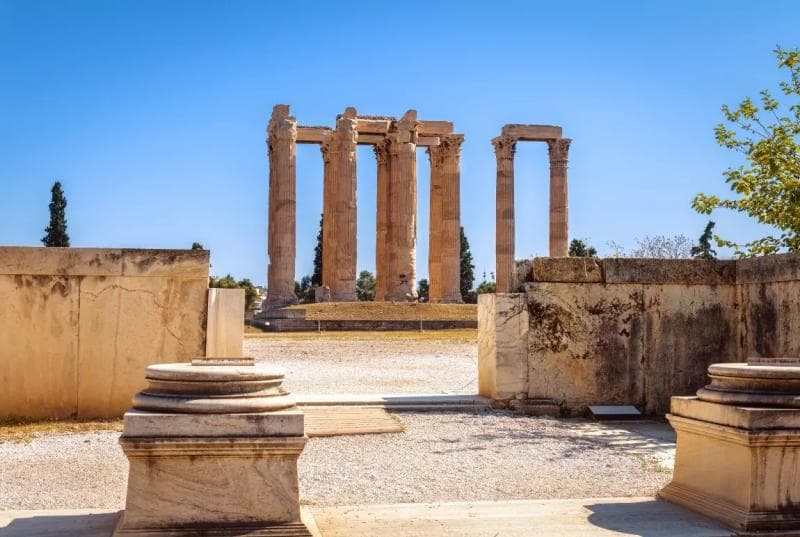
Explore the majestic ruins of the Temple of Olympian Zeus in Athens, Greece, a colossal ancient temple dedicated to the king of the gods.
Overview
Standing as a monumental tribute to the king of the Olympian gods, the Temple of Olympian Zeus in Athens, Greece, is one of the most awe-inspiring ancient ruins in the city. Also known as the Olympieion, this colossal temple was dedicated to Olympian Zeus, the head of the Greek pantheon. Though largely in ruins today, its remaining towering Corinthian columns offer a powerful glimpse into the ambition and scale of ancient Greek and Roman architecture. Located southeast of the Acropolis, the site invites visitors to contemplate centuries of history and the enduring legacy of a deity once worshipped with unparalleled grandeur.
History & Cultural Background
The story of the Temple of Olympian Zeus is one of extraordinary ambition and prolonged construction, spanning over 600 years. Its foundations were first laid in the 6th century BCE by the Athenian tyrant Peisistratus, who envisioned a temple grander than any other in the ancient world. However, work was abandoned around 510 BCE following the expulsion of his sons, Hippias and Hipparchus, and the establishment of Athenian democracy. Classical Athenians deliberately left the project unfinished, viewing such large-scale constructions as symbols of tyranny and hubris. Aristotle even cited the temple as an example of how tyrannies kept populations occupied to prevent rebellion.
The project was revived centuries later in 174 BCE by Antiochus IV Epiphanes, the Seleucid king of Syria, who sought to emulate Hellenistic royal traditions. He commissioned the Roman architect Cossutius, transforming the design from Doric to the more ornate Corinthian style and using Pentelic marble. Unfortunately, Antiochus's death in 164 BCE again halted construction, leaving the temple incomplete.
It wasn't until the reign of the Roman Emperor Hadrian in the 2nd century CE that the temple finally reached completion. A great admirer of Greek culture, Hadrian dedicated the temple in 132 CE, some 638 years after its inception. During the Roman period, the temple housed colossal chryselephantine (gold and ivory) statues of Zeus and, notably, one of Hadrian himself, placed to signify his generosity and almost divine status.
What Makes It Special
The Temple of Olympian Zeus was renowned for its immense scale and distinctive architectural style. It measured approximately 96 meters in length and 40 meters in width, making it one of the largest temples ever built in ancient Greece. Originally, it boasted 104 colossal Corinthian columns, each standing over 17 meters (56 feet) tall and measuring 1.7 meters in diameter. The use of the Corinthian order, with its elaborate acanthus leaf capitals, was a less common and more decorative choice for Greek temples, making the Olympieion particularly unique.
Constructed primarily from radiant Pentelic marble, the temple's white surface was said to sparkle with a subtle golden sheen in its prime. The sheer number and height of its columns created an architectural marvel that underscored the might of Zeus and the wealth of its patrons. Even in its ruined state, the remaining columns powerfully convey the monumental ambition and engineering prowess of its builders, a testament to both Greek ingenuity and Roman completion.
Stories, Fun Facts & Local Details
The Temple of Olympian Zeus carries several fascinating anecdotes. One notable detail is its incredibly protracted construction period of 638 years, making it a symbol of enduring human ambition, constantly interrupted by political upheaval and changes in power. The Greek philosopher Aristotle reportedly used the temple as an example of how tyrants kept their citizens busy with grand public works, diverting their attention from political unrest.
Upon its completion, Emperor Hadrian placed not only a massive statue of Zeus but also an equally grand statue of himself within the temple's cella, sharing the same sacred space. This bold act underscored his reverence for Greek culture while also subtly asserting his own imperial power and connection to the divine. Sadly, the temple's glory was short-lived, as it fell into disuse and was likely pillaged for building materials after a Germanic invasion in 267 CE, only about a century after its dedication. Many of its original 104 columns were eventually repurposed for other structures, a common practice in medieval times.
Visitor Perspective
Today, visitors to the Temple of Olympian Zeus encounter a poignant archaeological site dominated by the majestic remnants of its former glory. Of the original 104 columns, 15 still stand tall, with one fallen column lying on the ground, a striking reminder of the passage of time and past earthquakes. The site offers a more open and serene experience compared to the bustling Acropolis, allowing for quiet contemplation of the ancient world.
As you wander among the massive marble fragments and towering columns, it's easy to imagine the temple's immense scale and significance. The site is situated near Hadrian's Arch, which once marked the boundary between the ancient city and Hadrian's new city, and offers stunning views of the Acropolis in the distance. A visit typically takes about 30-45 minutes, providing ample time to appreciate the grandeur of this historically rich landmark and its dramatic setting in central Athens.
Coordinates: 23.7265, 37.9683
View on Google Maps💬 How Travelers Describe This Place
Based on community votes
Must See
673Photogenic
336Interesting
219Unique
186Beautiful
80
Traveler Stories
Discover memorable experiences shared by travelers who have visited this place.
No traveler stories yet.
Be the first traveler to share what made this place memorable.
Things to see at Temple Of Olympian Zeus



Tour
By
Spot
Discover amazing places around the world. Your journey starts here.
Explore
© 2026 TourBySpot. All rights reserved.