Temple Of Heaven
Beijing, China
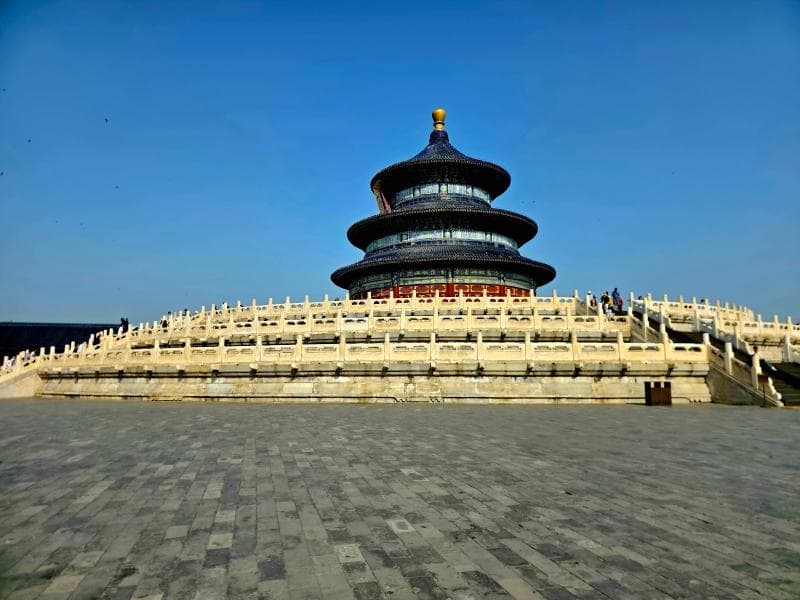
Explore Beijing, China's historic Temple of Heaven, a UNESCO World Heritage site where emperors prayed for harvests. Discover its stunning architecture and cultural significance.
Overview
The Temple of Heaven, known in Chinese as Tiantan, is a magnificent imperial complex situated in the southeastern part of central Beijing, China. This sprawling site, which covers an area of about 273 hectares, served as a sacred space for emperors of the Ming and Qing dynasties to perform annual ceremonies. It was here they prayed to Heaven for good harvests and sought divine blessings for the nation. Recognized as a UNESCO World Heritage Site in 1998, the Temple of Heaven is celebrated as a masterpiece of architecture and landscape design, showcasing the profound cosmological beliefs of ancient China.
Far from being just a single temple, the complex is a vast park encompassing several crucial structures, including the iconic Hall of Prayer for Good Harvests, the Imperial Vault of Heaven, and the Circular Mound Altar. These buildings are meticulously arranged along a north-south axis, reflecting a deep spiritual connection between Earth and Heaven. Today, it stands as the largest and most well-preserved ancient sacrificial complex in China, offering visitors a unique glimpse into imperial rituals and traditional Chinese cosmology.
History & Cultural Background
Construction of the Temple of Heaven began in 1420 during the reign of the Yongle Emperor of the Ming Dynasty, who was also responsible for building the Forbidden City. Initially known as the Temple of Heaven and Earth, it was later expanded and renamed the Temple of Heaven in 1534 during the Jiajing Emperor's reign, when separate altars for Earth worship were established. Subsequent renovations in the 18th century by Emperor Qianlong further shaped the complex to its present grandeur.
For over 500 years, emperors, considered the 'Son of Heaven,' would journey to this site, particularly during the winter solstice, to conduct elaborate rituals. These ceremonies were crucial, as the emperor was believed to be the intermediary between the human world and the divine. Their prayers for abundant harvests and national prosperity were thought to ensure cosmic harmony and political legitimacy, underscoring the deep spiritual and political significance of the site.
What Makes It Special
The Temple of Heaven is a remarkable illustration of ancient Chinese philosophical thought, particularly the belief that 'Heaven is round and Earth is square.' This concept is visually represented throughout the complex: the northern section is semicircular, symbolizing Heaven, while the southern part is square, representing Earth.
The three main structures each possess unique architectural and symbolic significance. The most recognizable is the Hall of Prayer for Good Harvests, a magnificent circular wooden building with a triple-gabled, deep blue-tiled roof, resting on a three-tiered marble base. Remarkably, it was built without a single nail. Inside, its 28 pillars symbolize the four seasons (four central pillars), 12 months (middle ring of 12 pillars), and 12 traditional Chinese hours of the day (outer ring of 12 pillars), with the total 28 pillars corresponding to the 28 Mansions of ancient Chinese astronomy. To the south lies the Imperial Vault of Heaven, a smaller circular building that once housed the spirit tablets used during ceremonies, surrounded by the famous Echo Wall. Further south is the Circular Mound Altar, an open three-tiered marble platform where the most solemn sacrifices were made. Its design heavily incorporates multiples of nine, an auspicious number in Chinese cosmology, representing the nine layers of Heaven.
Stories, Fun Facts & Local Details
Beyond its architectural beauty, the Temple of Heaven is rich with fascinating details. The Echo Wall surrounding the Imperial Vault of Heaven is a marvel of acoustic engineering. If one whispers at one point along the wall, the sound can be heard clearly at any other point, creating an intriguing natural communication system. Similarly, standing on the central 'Heavenly Center Stone' of the Circular Mound Altar and speaking in a normal voice produces a noticeably louder and more resonant sound, due to sound waves reflecting off the balustrades.
Another intriguing feature is the Danbi Bridge, the main pathway connecting the Hall of Prayer for Good Harvests with the Imperial Vault of Heaven. This path gradually ascends, symbolizing the emperor's 'stepping upward toward heaven,' with the central path reserved for divine gods, and the emperor and officials using designated side paths. While emperors once performed secret, elaborate ceremonies here, today the vast park is a vibrant public space where local Beijingers gather daily for morning exercises, including Tai Chi, dancing, singing opera, and playing traditional games. This fusion of ancient imperial reverence and contemporary local life offers a unique cultural experience.
Visitor Perspective
Visiting the Temple of Heaven offers a profound journey into China's imperial past and its enduring spiritual traditions. It is best experienced by allowing ample time, typically two to three hours, to explore the expansive grounds and appreciate the intricate details of its main structures. Many suggest entering through the South Gate and exiting via the East Gate, tracing the ceremonial path once taken by the emperors.
Arriving early in the morning not only helps avoid crowds but also provides the opportunity to witness the lively local activities, from Tai Chi practitioners to groups singing folk songs under ancient cypress trees, some reportedly 800 years old. The sense of scale, the harmonious placement of buildings within the park, and the sheer historical weight of the site create a deeply reflective and awe-inspiring experience. It's a place where ancient cosmology isn't just displayed but continues to breathe alongside daily life.
Coordinates: 116.4066, 39.8822
View on Google Maps💬 How Travelers Describe This Place
Based on community votes
Beautiful
886Unique
564Must See
233Interesting
201Photogenic
121
Traveler Stories
Discover memorable experiences shared by travelers who have visited this place.
No traveler stories yet.
Be the first traveler to share what made this place memorable.
Things to see at Temple Of Heaven



Tour
By
Spot
Discover amazing places around the world. Your journey starts here.
Explore
© 2026 TourBySpot. All rights reserved.