Imperial Vault Of Heaven
Beijing, China
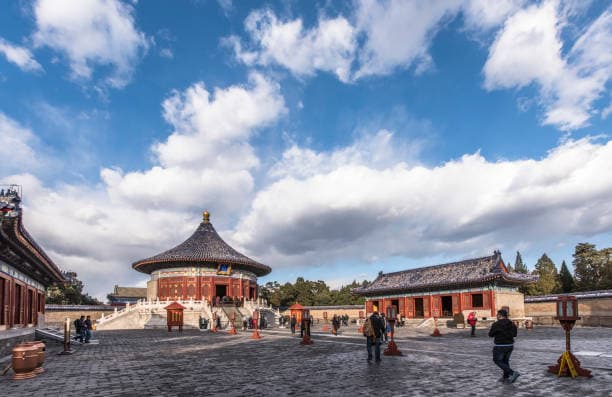
Explore Beijing's Imperial Vault Of Heaven in the Temple Of Heaven, a sacred repository for divine tablets renowned for its miraculous Echo Wall and rich history.
Overview
Nestled within the sprawling, sacred grounds of the Temple of Heaven in Beijing, China, stands the Imperial Vault of Heaven (Huangqiongyu). This magnificent circular edifice, though smaller than the iconic Hall of Prayer for Good Harvests, holds profound historical and cultural significance. It served as the revered repository for the divine tablets of the Emperor's ancestors and the Supreme Deity of Heaven, which were brought here for safekeeping on non-ceremonial days. Its exquisite architecture and remarkable acoustic properties make it a captivating highlight of the entire complex, drawing visitors into a world where imperial rituals and cosmic beliefs intertwined.
Constructed upon a single level of white marble, the Imperial Vault of Heaven is a testament to ancient Chinese architectural genius. It features a stunning blue-glazed, single-eaved pyramidal roof, giving it the appearance of a colossal sapphire umbrella with a gilded top. The surrounding circular wall, famously known as the Echo Wall, along with the unique Three Echo Stones and Dialogue Stone, showcases an extraordinary understanding of acoustics centuries ahead of its time. This sacred sub-spot is connected to other major structures, such as the Hall of Prayer for Good Harvests, by the elevated Vermilion Steps Bridge.
History & Cultural Background
The Imperial Vault of Heaven was first built in 1530 during the reign of Emperor Jiajing of the Ming Dynasty. It underwent a significant reconstruction in 1752, achieving its current form. Its primary function was to house the spirit tablets of the Heaven God and the deceased emperors' ancestors, which were essential for the grand sacrificial ceremonies performed at the nearby Circular Mound Altar.
During the Ming and Qing dynasties, the Emperor, known as the 'Son of Heaven', was considered the sole intermediary between the earthly and celestial realms. The Temple of Heaven complex was where these emperors conducted elaborate annual rites, praying for bountiful harvests and cosmic harmony. The Imperial Vault of Heaven was integral to these rituals, providing a sacred space to store the divine tablets that embodied the very presence of the deities and ancestors being worshipped. Its existence underscored the emperor's divine mandate to rule and maintained the spiritual integrity of these vital ceremonies.
What Makes It Special
What truly sets the Imperial Vault of Heaven apart are its extraordinary acoustic features. The most famous is the Echo Wall, a smooth, circular masonry wall that completely encircles the main hall. Its precise circular design and dense surface allow sound waves to reflect efficiently, enabling a whisper spoken close to one part of the wall to be heard clearly by someone standing far away along the wall.
In front of the main hall, visitors will find the Three Echo Stones. When standing on these stones and clapping or speaking, the sound creates distinct echoes – one echo from the first stone, two from the second, and three from the third. This remarkable phenomenon occurs due to their precise positioning at the center of the circular courtyard, allowing sound waves to reflect back simultaneously. Further enhancing this acoustic marvel is the Dialogue Stone, an 18th stone along the path, where two people standing at specific points can engage in clear conversations across a distance, facilitated by the wall's unique sound-amplifying properties and the formation of an equilateral triangle between speakers.
Architecturally, the main hall itself is a marvel, constructed without any cross-beams. Instead, a triple-layered caisson ceiling with interwoven brackets creates a striking three-dimensional visual effect as it tapers upward. At its center is a massive, gilded relief of a coiling dragon, symbolizing imperial power and celestial connection. The exterior, with its sapphire-blue roof and red wooden lattice doors, balances understated elegance with grandeur, embodying ancient cosmic views.
Stories, Fun Facts & Local Details
The acoustic properties of the Echo Wall and Three Echo Stones were not merely architectural feats; they held deep symbolic meaning in imperial China. Emperors and their officials might have interpreted these clear, amplified sounds as a sign of divine approval, a direct communication from Heaven during their sacred rites. The belief was that the Emperor's prayers, however softly spoken, would ascend and be heard by the celestial deities.
The Imperial Vault of Heaven is also known as the 'Residence of the Heavenly Deity,' reflecting its solemn purpose. The building's design incorporates numerical symbolism deeply rooted in ancient Chinese cosmology. For instance, the main hall's floor tiles are arranged in eight concentric circles, and the roof is supported by eight pillars. The central dragon motif in the ceiling is surrounded by 360 smaller golden dragons, representing the 360 days in an ancient year and the vastness of the heavens. These details are not just decorative; they reinforce the structure's profound connection to the cosmos and the natural order.
Visitor Perspective
Visiting the Imperial Vault of Heaven offers a unique opportunity to step back in time and connect with the spiritual heart of imperial China. While the interior, housing the sacred tablets, is generally viewed from the outside, the surrounding courtyard invites interaction with its famous acoustic features. Testing the Echo Wall or the Three Echo Stones provides a playful yet insightful experience into the ingenious design. It's a moment many travelers cherish, trying to hear their whispers travel or their claps reverberate, creating a tangible link to the past.
The Imperial Vault of Heaven is smaller in scale compared to the Hall of Prayer for Good Harvests, allowing for a more intimate observation of its intricate detailing. Its serene setting, amidst ancient cypress trees, offers a tranquil contrast to the bustling city outside. For those curious about ancient Chinese science, cosmology, and imperial power, this sub-spot provides clear explanations and a tangible connection to the celestial beliefs that shaped a dynasty. It's an essential stop for anyone exploring the Temple of Heaven, offering both historical depth and a touch of engaging wonder.
Coordinates: 116.4068, 39.8822
View on Google Maps💬 How Travelers Describe This Place
Based on community votes
Must See
797Interesting
695Unique
396Beautiful
286Photogenic
22
Traveler Stories
Discover memorable experiences shared by travelers who have visited this place.
No traveler stories yet.
Be the first traveler to share what made this place memorable.

Tour
By
Spot
Discover amazing places around the world. Your journey starts here.
Explore
© 2026 TourBySpot. All rights reserved.