Temple of Debod
Madrid, Spain
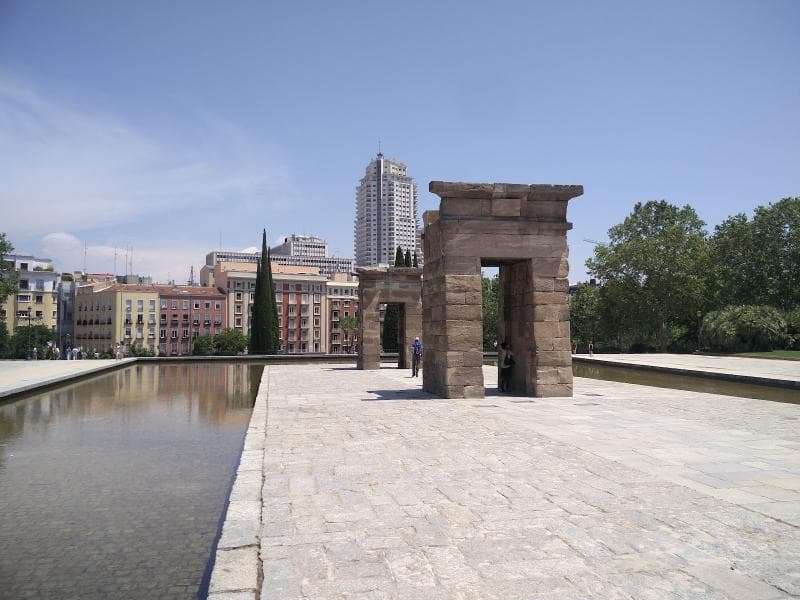
Discover the ancient Temple of Debod in Madrid, Spain. An authentic Egyptian temple gifted to Spain, offering rich history and stunning sunsets.
Overview
Nestled within the scenic Parque de la Montaña in Madrid, Spain, stands the Temple of Debod, a truly extraordinary ancient Egyptian temple. This remarkable structure, dating back to the 2nd century BC, offers a unique opportunity to experience a piece of ancient Egypt far from its original home. Gifted to Spain in the 1960s by the Egyptian government, the temple serves as a symbol of international cooperation and a testament to a rich historical legacy. It is one of the few authentic Egyptian monuments found outside of Egypt and the only one of its kind in Spain, inviting visitors to ponder its enduring journey and cultural significance.
The Temple of Debod is more than just an ancient ruin; it is a meticulously reconstructed sanctuary that preserves its original east-to-west orientation. Surrounded by a reflective pool and offering panoramic views of Madrid, it has become a beloved landmark, particularly renowned for its breathtaking sunsets.
History & Cultural Background
The story of the Temple of Debod begins over 2,200 years ago in Nubia, an ancient region along the Nile River in what is now southern Egypt, approximately 15 kilometers south of Aswan. Its construction commenced in the early 2nd century BC under the orders of King Adikhalamani of Meroë. The initial structure was a small, single-room chapel dedicated to the revered Egyptian gods Amun and Isis.
Over centuries, the temple was expanded by successive rulers. The Ptolemaic dynasty added new rooms, and Roman emperors such as Augustus and Tiberius completed its construction and decoration. For generations, it functioned as an important center of worship, with priests performing rituals and offerings to the deities. However, following Nubia's conversion to Christianity in the 6th century AD, the temple was sealed off and eventually abandoned.
Its fate took a dramatic turn in the 1960s with the construction of the Aswan High Dam. This colossal project threatened to submerge numerous ancient monuments along the Nile. UNESCO launched an international campaign to save these historical treasures. Spain provided significant assistance in this effort, particularly in saving the Abu Simbel temples. In gratitude for Spain's generous contribution, the Egyptian state donated the Temple of Debod to Madrid in 1968.
What Makes It Special
The Temple of Debod's primary distinction lies in its sheer existence outside of Egypt. It stands as a rare and tangible link to ancient Egyptian civilization in the heart of a European capital. The effort involved in its relocation and reconstruction underscores its immense historical value. Each stone was carefully numbered, dismantled, transported, and then meticulously reassembled in Madrid between 1970 and 1972.
Its location in Parque de la Montaña is another highlight. The temple is surrounded by a large reflective pool, which enhances its beauty, especially during dawn and dusk. This water feature creates stunning reflections of the temple's ancient stones and pylons, offering exceptional photographic opportunities. The surrounding gardens provide a serene setting, making it a peaceful escape within the bustling city.
The temple's authentic design, featuring its original east-to-west orientation, allows visitors to trace the path of the sun as the ancient Egyptians intended. Inside, detailed reliefs and hieroglyphs narrate scenes of worship and offerings to the gods, providing a window into ancient beliefs and practices.
Stories, Fun Facts & Local Details
The story of the Temple of Debod's journey to Madrid is a fascinating tale of international cooperation and dedication to preserving cultural heritage. The temple was transported in 1,350 boxes by barges down the Nile, then by cargo ship to Valencia, and finally by 90 trucks to central Madrid. While the reconstruction aimed for authenticity, some of the pylons were, in fact, reordered compared to their original sequence, a subtle detail that adds to its unique history.
The current site of the Temple of Debod also holds significant historical importance for Madrid. It stands on what was once Príncipe Pío Hill, the location of the Cuartel de la Montaña barracks. This site is infamous as the place where Napoleon's French troops executed rebels during the 2nd of May 1808 uprising, an event immortalized in Francisco Goya's iconic painting 'The Third of May 1808.' A century later, the same location witnessed the military uprising that sparked the Spanish Civil War in July 1936.
Locals and visitors alike flock to the Temple of Debod, particularly in the late afternoon, to witness one of Madrid's most spectacular sunsets. As the sun dips below the horizon, the temple's ancient stones glow, and its reflection shimmers in the surrounding waters, creating a truly magical and memorable experience. Many gather here to relax, picnic, or simply enjoy the captivating views.
Visitor Perspective
Visiting the Temple of Debod offers a tranquil and educational experience. Entry to the temple and its gardens is free, making it an accessible attraction for everyone. For those wishing to explore the interior, visits are self-guided and typically limited to a maximum of 30 minutes due to conservation efforts and a maximum capacity of around 30 people. It's advisable to check the official Madrid tourism website for current opening hours and any recommended advanced ticket reservations, especially during peak times.
Inside the temple, visitors can explore various rooms, some adorned with original hieroglyphs and scenes depicting offerings to deities like Amun and Isis. Information panels and audiovisual displays help to explain the temple's history and cultural significance. On the upper floor, a curious miniature model showcases various temples in Nubia, providing further context. Even if access to the interior is limited, the exterior walk around the temple and its picturesque setting is profoundly rewarding.
The Temple of Debod is easily reachable by metro, with nearby stops including Plaza de España and Ventura Rodríguez. Numerous bus lines also serve the area. Whether seen in the soft light of morning, under the dramatic hues of sunset, or beautifully illuminated at night, the Temple of Debod provides a unique cultural immersion and a peaceful escape in the heart of Madrid.
Coordinates: -3.7176, 40.4243
View on Google Maps💬 How Travelers Describe This Place
Based on community votes
Must See
981Photogenic
921Beautiful
617Unique
357Interesting
147
Traveler Stories
Discover memorable experiences shared by travelers who have visited this place.
No traveler stories yet.
Be the first traveler to share what made this place memorable.
Things to see at Temple of Debod



Tour
By
Spot
Discover amazing places around the world. Your journey starts here.
Explore
© 2026 TourBySpot. All rights reserved.