Viewing Platforms
Madrid, Spain
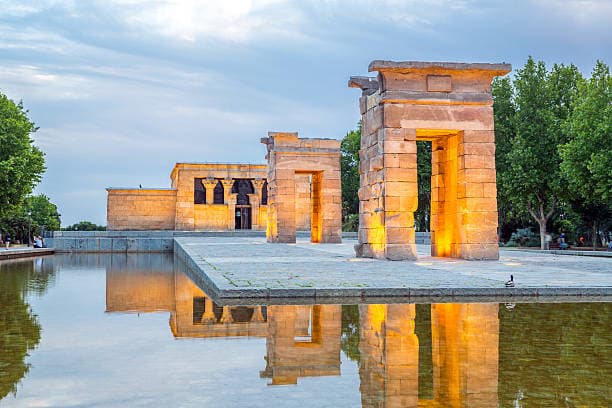
Discover the Temple of Debod's viewing platforms in Madrid, Spain, offering breathtaking panoramic views of the city skyline and stunning sunsets.
Overview
Perched atop the Montaña del Príncipe Pío in Madrid, Spain, the Temple of Debod is far more than just an ancient monument; it is a remarkable cultural bridge and a beloved local spot. This authentic Egyptian temple, dating back to the 2nd century BC, offers an extraordinary glimpse into a civilization millennia away, yet feels perfectly at home in the heart of the Spanish capital. While the interior of the temple provides historical context and architectural details, the 'Viewing Platforms' refer to the expansive areas surrounding the temple within the Parque del Oeste. These elevated vantage points are renowned for presenting some of Madrid's most breathtaking panoramic views, making it a prime destination for both historical appreciation and scenic beauty.
Visitors flock to these platforms not only to admire the ancient structure reflecting in its serene pool but also to witness spectacular vistas across the city. From here, one can gaze upon prominent landmarks such as the majestic Royal Palace, the grand Almudena Cathedral, the verdant expanse of Casa de Campo, and even the distant peaks of the Sierra de Guadarrama. The experience is particularly magical during sunset, when the sky transforms into a canvas of vibrant colors, casting a golden glow upon the temple and the cityscape, cementing its reputation as one of Madrid's most romantic and photogenic locations.
History & Cultural Background
The Temple of Debod's incredible journey to Madrid began in Nubia, approximately 15 kilometers south of Aswan, Egypt. Its construction commenced in the early 2nd century BC under the orders of King Adikhalamani of Meroë, who dedicated it to the gods Amun and Isis. Over centuries, the temple was expanded by various Ptolemaic and Roman emperors, incorporating new rooms and intricate decorations. Originally, the shrine was a small, single-room chapel before being extended into a larger complex, with a long processional way leading through three pylon gateways.
In the 1960s, the temple faced an existential threat: the construction of the Aswan High Dam. This colossal project risked submerging numerous ancient monuments beneath the rising waters of the Nile. In response, UNESCO launched an international campaign to save these invaluable historical sites. Spain generously contributed to these preservation efforts, particularly in saving the Abu Simbel temples. As a gesture of profound gratitude, the Egyptian government gifted the Temple of Debod to Spain in 1968. The temple was meticulously dismantled stone by stone, shipped across the Mediterranean, and painstakingly reconstructed in Madrid between 1970 and 1972, faithfully preserving its original east-west orientation. It officially opened to the public in 1972.
What Makes It Special
What truly sets the Temple of Debod and its viewing platforms apart is the unique convergence of ancient Egyptian heritage with the vibrant European cityscape of Madrid. It stands as one of the very few surviving ancient Egyptian architectural works located outside of Egypt, and notably, the only one of its kind in Spain. The temple's striking reflection in the surrounding shallow pool (when filled) creates a picturesque scene, especially captivating during the golden hours of dawn and dusk.
Beyond its historical significance, the location itself is strategically magnificent. Situated on a hill, it provides unobstructed vistas that stretch far beyond the immediate park. This geographical advantage makes it an unparalleled spot for observing the urban tapestry of Madrid, framed by natural landscapes. The blend of a 2,200-year-old temple, a reflective water feature, and sweeping cityscapes makes for a truly distinctive visual and cultural experience, drawing in countless visitors seeking both tranquility and awe.
Stories, Fun Facts & Local Details
The journey of the Temple of Debod to Madrid is a tale of international cooperation and cultural preservation. Each stone was carefully numbered before its long voyage, ensuring its faithful reconstruction in its new home. The site it now occupies, the Montaña del Príncipe Pío, carries its own layer of Spanish history. It was once the location of the Cuartel de la Montaña barracks, where, tragically, Napoleon's French troops executed rebels during the 1808 uprising, an event famously immortalized in Goya's painting, 'The Third of May 1808'. This historical depth adds a poignant contrast to the serene ancient temple now residing there.
Locally, the viewing platforms around the Temple of Debod are a cherished gathering spot. Madrileños often frequent the park for leisurely picnics, morning yoga sessions, or simply to unwind and soak in the atmosphere. In the evenings, especially as sunset approaches, the area often comes alive with the sounds of street musicians, adding to the relaxed and romantic ambiance that makes it a favorite among couples and photographers alike. The opportunity to witness such a profound piece of history against a backdrop of modern life and stunning natural beauty is a detail that resonates deeply with visitors.
Visitor Perspective
For those planning a visit to the Temple of Debod's viewing platforms, the experience is largely focused on enjoying the exterior and the surrounding park. While entry to the temple's interior is free, it often operates with limited capacity, typically allowing around 30 people at a time for a maximum visit duration of 30 minutes, and may require timed tickets booked in advance. The park itself, however, is generally accessible 24/7, allowing visitors to enjoy the exterior of the temple and the views at any time.
The optimal time to experience the viewing platforms is undoubtedly during sunset. Arriving an hour or so before the sun dips below the horizon is recommended to secure a good spot on the grassy slopes or low stone walls. Be mindful that this popularity can lead to crowds, especially on weekends, so it's advisable to be aware of your surroundings as pickpocketing can occur in busy areas. Despite the potential for crowds, the panoramic views, particularly of the Royal Palace and Almudena Cathedral bathed in the evening light, are consistently hailed as spectacular. Comfortable shoes are recommended for walking around the park, and checking the status of the reflective pool beforehand might be useful for those hoping to capture the temple's perfect reflection.
Coordinates: -3.71778, 40.4240528
View on Google Maps💬 How Travelers Describe This Place
Based on community votes
Must See
951Beautiful
491Unique
414Photogenic
310Interesting
277
Traveler Stories
Discover memorable experiences shared by travelers who have visited this place.
No traveler stories yet.
Be the first traveler to share what made this place memorable.

Tour
By
Spot
Discover amazing places around the world. Your journey starts here.
Explore
© 2026 TourBySpot. All rights reserved.