Upper Terrace
Madrid, Spain
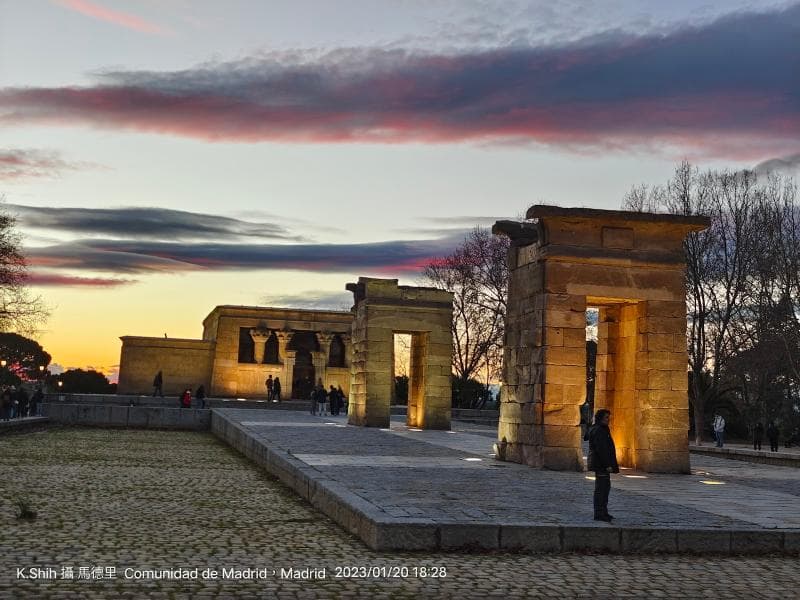
Explore the Upper Terrace of the Temple of Debod in Madrid, Spain, offering ancient Egyptian history and stunning panoramic city views.
Overview
Nestled atop a hill in Madrid's Parque de la Montaña, the Temple of Debod offers a surprising glimpse into ancient Egypt in the heart of Spain. This authentic Egyptian temple, dating back to the 2nd century BC, was meticulously relocated stone by stone to Madrid and reassembled, opening to the public in 1972. It stands as a unique cultural landmark, providing a serene escape and panoramic vistas of the city. More specifically, the 'Upper Terrace' within the temple structure itself, along with the elevated surroundings, grants visitors unparalleled views, particularly renowned for spectacular sunsets.
History & Cultural Background
The story of the Temple of Debod begins over 2,200 years ago in Nubia, approximately 15 kilometers south of Aswan, Egypt, near the first cataract of the Nile. Its construction commenced in the early 2nd century BC under the orders of King Adikhalamani of Meroë, who initiated a small single-room chapel dedicated to the god Amun and the goddess Isis. Over subsequent centuries, Ptolemaic kings and Roman emperors like Augustus and Tiberius expanded and adorned the temple, enlarging its structure and decorating its sanctuary with high reliefs. However, by the 6th century AD, following the region's conversion to Christianity, the temple was abandoned and eventually fell into disuse.
Its modern history took a dramatic turn in the 1960s. The construction of the Aswan High Dam threatened numerous ancient monuments with submersion. UNESCO launched an international campaign to save this invaluable heritage, and Spain contributed significantly to these preservation efforts, notably aiding in the rescue of the Abu Simbel temples. As a gesture of gratitude for Spain's assistance, the Egyptian government gifted the Temple of Debod to Madrid in 1968. The temple was then painstakingly dismantled, transported in 1,350 boxes by barges, cargo ship, and 90 trucks, and carefully reconstructed in its present location, preserving its original east-west orientation.
What Makes It Special
The Temple of Debod is exceptional because it is one of the very few authentic ancient Egyptian temples located outside Egypt, and the only one in Spain. Its historical journey across continents makes it a powerful symbol of international cooperation in cultural preservation. The temple's architecture features monumental gates (pylons) leading to the central sanctuary, with walls adorned with hieroglyphics and reliefs depicting offerings to gods like Amun and Isis. Its placement in Madrid, surrounded by a reflective pool (though sometimes dry due to maintenance), enhances its mystique, creating stunning reflections and photographic opportunities. A significant highlight is its 'Upper Terrace', an actual terrace on an upper floor of the temple structure itself, which, combined with its elevated position in the park, offers a privileged vantage point. From here, visitors can absorb breathtaking panoramic views of Madrid's cityscape, including the Royal Palace, the Almudena Cathedral, and the expansive Casa de Campo.
Stories, Fun Facts & Local Details
The site where the Temple of Debod now stands also carries a poignant history for Madrid. It was once the location of the Cuartel de la Montaña (Mountain Barracks), where Napoleon's troops executed rebels during the 1808 uprising, famously depicted in Goya's painting 'The Third of May 1808'. A century later, it was also a significant site during the Spanish Civil War. While the temple was meticulously reassembled, historical records indicate that the reassembled gateways were placed in a different order than their original configuration in Egypt. Local visitors and tourists alike flock to this spot, particularly in the late afternoon, drawn by the promise of witnessing one of Madrid's most spectacular sunsets. The interplay of light on the ancient stones and the reflection on the water (when present) creates a magical atmosphere, making it a beloved gathering place for relaxation and enjoyment.
Visitor Perspective
Visiting the Temple of Debod is a deeply atmospheric experience, inviting contemplation of millennia of history. As a free attraction, it is highly popular, especially during sunset hours. While entry inside the temple can involve queues and a limited capacity of visitors at a time, the surrounding gardens and the elevated 'Upper Terrace' area are always accessible, providing ample space to enjoy the monumental structure and its impressive surroundings. Many visitors describe the feeling of stepping back in time, marveling at the intricate hieroglyphics and the sheer scale of the relocation effort. The serene setting, complete with benches for resting, often features street musicians, adding to the vibrant yet peaceful ambiance. It's a place that connects Madrid's urban energy with the ancient world, leaving a lasting impression on anyone who experiences its unique charm, especially from its commanding viewpoints.
Coordinates: -3.708969702079181, 40.4155713400803
View on Google Maps💬 How Travelers Describe This Place
Based on community votes
Interesting
995Must See
989Unique
603Beautiful
581Photogenic
388
Traveler Stories
Discover memorable experiences shared by travelers who have visited this place.
No traveler stories yet.
Be the first traveler to share what made this place memorable.

Tour
By
Spot
Discover amazing places around the world. Your journey starts here.
Explore
© 2026 TourBySpot. All rights reserved.