Tashkent Metro
Tashkent, Uzbekistan
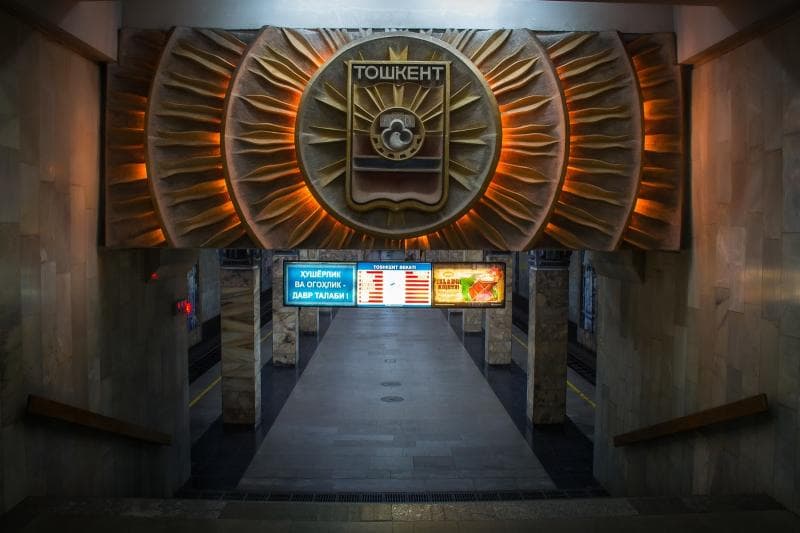
Explore the magnificent Tashkent Metro in Uzbekistan, an underground art museum with unique Soviet-era and Uzbek-themed stations. Discover its history and beauty.
Overview
The Tashkent Metro, nestled beneath the bustling capital of Uzbekistan, is far more than just a transportation system; it is an extraordinary subterranean art gallery. As the first metro system to be built in Central Asia, opening its doors in 1977, it immediately set itself apart with its stunning architectural and artistic design. Each station tells a unique story, transforming a daily commute into an immersive cultural experience.
Conceived in the aftermath of a devastating earthquake in 1966, the metro was designed with both practical utility and symbolic significance in mind, serving not only as an efficient mode of transport but also as a city-wide nuclear bomb shelter. For decades, its unique beauty remained largely a secret, with a strict photography ban in place until June 2018, when its doors—and its visual splendor—were finally opened to the world.
History & Cultural Background
The origins of the Tashkent Metro are deeply intertwined with a pivotal moment in the city's history. Following the catastrophic 1966 earthquake that largely destroyed Tashkent and left hundreds of thousands homeless, a massive rebuilding effort commenced. The metro became a symbol of renewal and Soviet ambition, part of a broader modernization plan for the rapidly growing city.
Construction began in 1972, and the first line, the Chilonzor Line, inaugurated on November 6, 1977, featured nine stations. As the seventh metro system in the former USSR, its design reflected monumental Soviet-era planning, yet it uniquely integrated rich Uzbek themes and local artistry. Prominent Uzbek architects and artists collaborated to ensure each station was an individual masterpiece, utilizing local materials like granite and marble from the Kyzyl Kum desert, intricate tilework, and motifs celebrating Uzbek poetry, cotton, and science.
What Makes It Special
What truly distinguishes the Tashkent Metro are its stations, each a distinct architectural showpiece. Stepping into one feels less like entering a transit hub and more like exploring a grand palace or an underground museum. From vaulted ceilings and sparkling chandeliers reminiscent of Russian ballrooms to walls adorned with detailed murals, mosaics, and polished stone, the stations offer an aesthetic journey.
The entire system was engineered to withstand earthquakes up to a magnitude of 9, providing both a robust transport network and a secure public space. This blend of monumental engineering with artistic flair ensures that functionality is seamlessly combined with profound cultural expression, making each ride an experience in itself.
Stories, Fun Facts & Local Details
One of the most fascinating aspects of the Tashkent Metro is its past as a 'secret.' Due to its strategic dual purpose as a nuclear bomb shelter, it was classified as a military facility, and photography was strictly forbidden for decades. The lifting of this ban in 2018 finally allowed the world to marvel at its hidden beauty.
Each station is themed, often reflecting its name or a significant aspect of Uzbek culture or history. For instance, Kosmonavtlar (Cosmonauts) Station is a tribute to Soviet space exploration, featuring deep blue walls transitioning to black, mimicking Earth's atmosphere, and suspended glass elements that evoke the Milky Way. Ceramic medallions depict famous cosmonauts like Yuri Gagarin and Valentina Tereshkova.
Alisher Navoi Station, named after the 15th-century poet, showcases elements of Timurid renaissance architecture with pale blue ceilings, gold accents, and murals inspired by his works, resembling an opulent mosque. O'zbekiston Station features wave-like blue glass mosaics and bulbous light fixtures that symbolize Uzbekistan's cotton heritage. Mustaqillik Maydoni (Independence Square) dazzles with pristine white marble columns and massive chandeliers, offering a sense of grandeur. Even the old Soviet-era trains contribute to the historical charm.
Visitor Perspective
For visitors to Tashkent, exploring the metro is an unmissable experience. It offers a unique and affordable way to see some of the city's most impressive artistry. A single ride is remarkably inexpensive, allowing travelers to hop on and off to admire various stations without paying multiple fares, as long as they don't exit the system.
The metro operates daily from early morning until midnight, with frequent trains, making it convenient for sightseeing. During peak hours, it is a bustling hub of local life, but during mid-day, it offers a quieter environment perfect for photography and appreciation. The stations are clean, safe, and often air-conditioned, providing a welcome respite during warmer months. Navigating the system is straightforward, even for first-time visitors, with signs and the distinctive themes of each station serving as easy markers.
Coordinates: 69.21627, 41.26465
View on Google Maps💬 How Travelers Describe This Place
Based on community votes
Interesting
931Beautiful
692Unique
491Photogenic
266Must See
261
Traveler Stories
Discover memorable experiences shared by travelers who have visited this place.
No traveler stories yet.
Be the first traveler to share what made this place memorable.
Things to see at Tashkent Metro



Tour
By
Spot
Discover amazing places around the world. Your journey starts here.
Explore
© 2026 TourBySpot. All rights reserved.