Pakhtakor Station
Tashkent, Uzbekistan
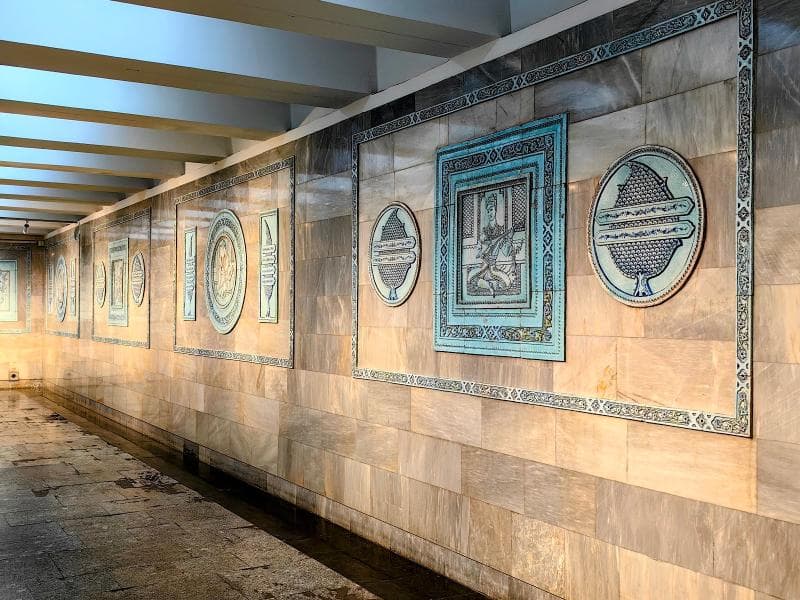
Discover Pakhtakor Station in Tashkent, Uzbekistan, a stunning metro stop adorned with vibrant mosaics celebrating the nation's cotton heritage and rich history.
Overview
Pakhtakor Station, an integral part of the renowned Tashkent Metro in Uzbekistan, stands as a captivating example of the city's unique underground artistry. Opened on November 6, 1977, it was among the first stations inaugurated on the Chilonzor Line, also known as the Red Line. This station is not merely a transit point but a significant cultural landmark, serving as an important interchange with Alisher Navoiy Station on the O'zbekiston Line, facilitating easy exploration of the metro system. Like many stations in the Tashkent Metro, Pakhtakor is celebrated for its elaborate design, transforming a functional space into an 'underground museum' filled with aesthetic wonder.
For many years, photography within the Tashkent Metro was prohibited due to its classification as a strategic military installation. However, since 2018, this ban has been lifted, allowing visitors to capture and share the breathtaking beauty of stations like Pakhtakor.
History & Cultural Background
The Tashkent Metro holds a special place in Central Asian history, being the region's first subway system. Its construction began in the aftermath of the devastating 1966 earthquake that largely destroyed Tashkent. The metro was part of a grand Soviet-era initiative to rebuild the city as a modern socialist capital. The design philosophy behind the metro stations often harmoniously blended Soviet ideological motifs with traditional Uzbek cultural elements, creating a distinctive architectural style.
Pakhtakor Station, whose name translates to 'cotton farmer' or 'cotton picker' in Uzbek, is a direct homage to Uzbekistan's historical and economic reliance on the cotton industry. Cotton, often referred to as 'white gold,' played a central role in the country's development for decades. The station's design reflects this profound connection, serving as a constant reminder of cotton's historical significance to the nation.
What Makes It Special
What truly sets Pakhtakor Station apart is its stunning visual narrative. The station's walls are adorned with intricate green and blue mosaics that vividly depict cotton plants and blooming cotton flowers. These colorful artistic representations are not merely decorative; they serve as a tribute to the agricultural heritage that shaped Uzbekistan. Unlike some Soviet monumental art, the mosaics at Pakhtakor are more abstract and decorative, offering a nuanced artistic expression rather than overt propaganda.
The station features elegant marble columns that line the platform, contributing to its grand and palatial atmosphere. As a column-type station with both underground and ground-based lobbies, Pakhtakor exemplifies the detailed architectural planning characteristic of the Tashkent Metro. Its artistic integrity and thematic consistency make it a standout example within a system already celebrated globally for its unique beauty, often compared to an art gallery or palace rather than a typical subway stop.
Stories, Fun Facts & Local Details
The theme of cotton at Pakhtakor Station, while celebrating a cornerstone of Uzbek economy, also carries a more complex historical context. The intensive cotton cultivation in Uzbekistan, particularly during the Soviet era, has been linked to significant environmental challenges, such as the shrinking of the Aral Sea, and historical accusations of forced labor. This makes the station a subtle, yet powerful, testament to the country's past. A fascinating detail for visitors is that the entire Tashkent Metro system, including Pakhtakor, was built with impressive earthquake resistance, designed to withstand tremors up to a magnitude of 9.
The lifting of the photography ban in 2018 was a significant event, opening up these 'underground palaces' to global appreciation after decades of being considered classified infrastructure. Travelers can experience this unique blend of art and history at a very affordable price; a single metro token, costing around 3,000 Uzbek soms (approximately US$0.25), allows for unlimited travel and transfers across the entire network, making it an accessible cultural tour.
Visitor Perspective
For the curious traveler, visiting Pakhtakor Station is an immersive journey into Uzbekistan's artistic and historical landscape. The station's distinctive aesthetic, from its vibrant cotton mosaics to its stately marble columns, offers a visual feast that transports visitors beyond a mere commute. Walking through Pakhtakor feels akin to stepping into a grand hall or an elaborate art exhibit, a common sentiment echoed by those who experience the Tashkent Metro.
As an interchange station connecting to the Alisher Navoiy Line, Pakhtakor serves as an excellent starting point or stop for those embarking on a self-guided tour of Tashkent's most beautiful metro stations. Its proximity to significant city landmarks, including the Pakhtakor Central Stadium, also adds to its appeal as a convenient and culturally rich destination. Exploring the Tashkent Metro, and Pakhtakor Station in particular, provides a unique and memorable insight into the city's architectural prowess and profound cultural narratives.
Coordinates: 69.254325, 41.321264
View on Google Maps💬 How Travelers Describe This Place
Based on community votes
Must See
491Photogenic
443Beautiful
414Interesting
310Unique
277
Traveler Stories
Discover memorable experiences shared by travelers who have visited this place.
No traveler stories yet.
Be the first traveler to share what made this place memorable.

Tour
By
Spot
Discover amazing places around the world. Your journey starts here.
Explore
© 2026 TourBySpot. All rights reserved.